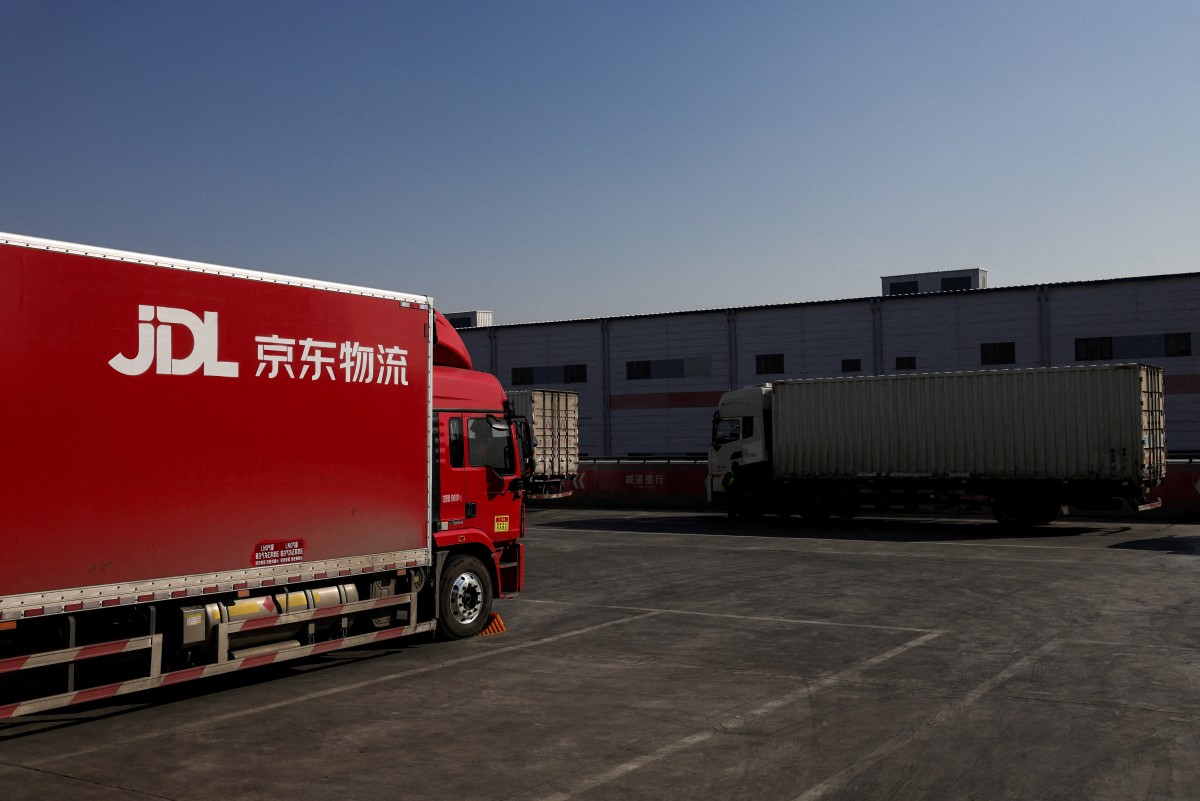
The European Commission's investigation into JD.com's proposed $2.5 billion takeover of Ceconomy has entered a critical phase after competitors told the EU competition enforcer that the Chinese e-commerce giant's proposed concessions fall short, according to people familiar with the matter.
The Commission, which acts as the bloc's competition watchdog, informed JD.com earlier this week of the negative feedback on remedies the company submitted last month. The response increases pressure on JD.com to strengthen its offer before the October 23 deadline for a final decision.
First major test of the Foreign Subsidies Regulation
The case represents one of the most significant applications yet of the EU's Foreign Subsidies Regulation, which entered into force in 2023 and gives the Commission powers to investigate financial contributions from non-EU governments that distort the single market. The regulation was designed precisely for situations like this: a large non-European acquirer whose competitive position may have been shaped by state support.
The Commission's preliminary review in May concluded that JD.com may have benefited from foreign subsidies including preferential financing, tax incentives and grants provided by entities possibly attributable to the Chinese state. Those findings were formalised in a statement of objections in July, setting out specific concerns the company must address to win approval.
What JD.com has offered so far
Under the concessions submitted last month, Ceconomy would gain access to JD.com's European logistics network and technological capabilities at market rates. Smaller rivals would also be granted access on fair and non-discriminatory terms. The structure is intended to address fears that the combined entity could foreclose competitors from essential infrastructure or data advantages.
The Commission and JD.com both declined to comment on the rival feedback. That silence is standard procedure during an ongoing investigation, but it leaves the market guessing how far apart the two sides remain.
Why rivals are unconvinced
Competitors argue that "market rates" defined by the acquirer are not the same as genuinely competitive access, according to the people familiar with the discussions. They also question whether non-discriminatory terms can be enforced in practice once JD.com controls both the infrastructure and the retail chain. The concern is structural: a vertically integrated player that owns both the platform and a major downstream customer has both the incentive and the ability to favour its own operations.
Ceconomy operates MediaMarkt and Saturn, the two largest consumer electronics chains in Europe, with more than 1,000 stores across the continent. JD.com, China's second-largest e-commerce company by revenue after Alibaba, has been expanding its logistics footprint in Europe for years, running warehouses in Germany, the Netherlands, France and the UK. The combination would give the Chinese group a physical retail network it has lacked, while Ceconomy would gain a sophisticated supply chain and data operation.
A wider pattern of scrutiny
The JD.com case is not isolated. The Commission has opened several investigations under the Foreign Subsidies Regulation since it became operational, targeting sectors from renewable energy to rail rolling stock. But this is the first large-scale consumer-facing acquisition to reach the remedies stage, making it a benchmark for how the EU will handle Chinese investment in strategic retail and logistics infrastructure.
European policymakers have grown increasingly wary of dependencies on Chinese supply chains since the pandemic and the war in Ukraine. The European Economic Security Strategy, published in 2023, explicitly flags foreign investment screening and subsidy control as tools to protect critical infrastructure and technological sovereignty.
What happens before October 23
JD.com now has a narrow window to submit improved concessions. The Commission can accept them, request further changes, or open a full investigation that would extend the timeline significantly. If the parties cannot reach agreement, the Commission can prohibit the acquisition outright or clear it with binding conditions.
The company could also choose to withdraw the notification and refile later, though that would signal weakness and delay any integration benefits. For Ceconomy, which has struggled with declining footfall and margin pressure in a market increasingly dominated by online specialists, the deal represents a potential lifeline.
Organisations
European Commission · JD.com · Ceconomy