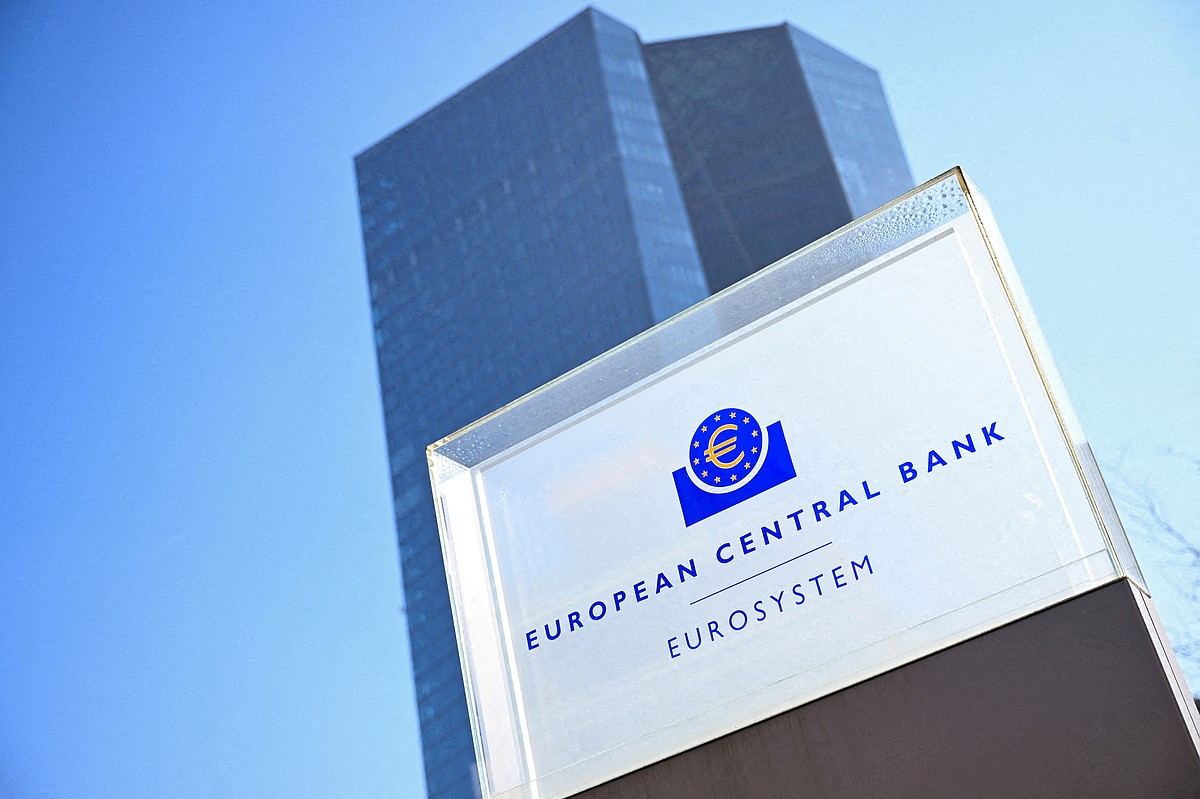
European Central Bank governors have settled on a quarter-point interest rate increase at their September meeting, moving the deposit facility rate to 2.50%, but they do not intend to signal that further tightening will follow. Three people familiar with the Governing Council's discussions told Reuters that the hike was effectively locked in, constrained by the inflationary fallout from the Iran war, yet the same officials saw little reason to prepare markets for additional moves beyond September.
The decision, due at the ECB's rate-setting meeting on 9 and 10 September, would be the second increase in as many quarters. The first, in June, ended a near-three-year pause and took the policy rate from 2.00% to 2.25%. That move was framed as a pre-emptive strike against the second-round effects of rising energy costs. The September hike, by contrast, is being presented less as a bold intervention than as a mechanical follow-through already baked into the ECB's June projections.
Why the Iran war changed the calculus
The ongoing conflict involving Iran has disrupted energy markets in ways that echo, if not yet replicate, the shock that followed Russia's invasion of Ukraine in 2022. Natural gas prices, a critical input for European industry and household heating, have climbed steadily. Petrol prices at the pump have risen in kind. For a currency bloc that imports the vast majority of its energy, those price movements feed directly into the headline inflation figure, which currently sits just below 3%.
Policymakers are determined not to repeat what they regard as the error of 2022, when the ECB was slow to respond to the initial energy shock and inflation surged well into double digits before eventual rate rises caught up. The sources described the September move as part of a deliberate effort to demonstrate that the central bank will act early and decisively, rather than waiting for price pressures to become embedded in wage negotiations and corporate pricing decisions.
That determination, however, has limits. The same officials who favour a September hike are notably reluctant to commit to anything beyond it. Their reasoning rests on two observations: that long-term inflation expectations remain firmly anchored at the ECB's 2% target, and that the euro zone economy, while resilient, is not so strong that it can absorb an extended tightening cycle without consequence.
The resilience argument and its limits
Output data and business surveys from recent months have come in stronger than expected. The euro zone avoided the recession that many forecasters predicted for early 2026, and purchasing managers' indices have stabilised around the expansion threshold. For ECB hawks, that resilience is proof that monetary policy can afford to withdraw some accommodation without triggering a downturn.
The more cautious reading is that resilience is relative. Germany, the bloc's largest economy, has been hovering close to stagnation for more than a year. Southern European economies, particularly Spain and Greece, have grown more quickly, but from lower bases and with structural weaknesses intact. A 2.50% policy rate, while still low by historical standards, represents a significant shift from the sub-2% environment that prevailed between late 2022 and early 2026. The further rates climb, the more the burden falls on indebted governments and overleveraged firms, particularly in countries where debt-to-GDP ratios remain well above the Eurostat benchmarks set out in the Stability and Growth Pact.
There is also the question of transmission. ECB rate increases take between 12 and 18 months to feed fully through the banking system into lending conditions for businesses and households. The June hike has barely begun to bite. A September increase will compound its effects just as the first signs of drag from June become visible in credit data. Governors who argue for pausing after September point out that the full impact of two consecutive hikes will not be clear until well into 2027.
A disconnect with financial markets
One notable feature of the current discussion is the gap between what ECB policymakers intend to signal and what markets have already priced in. Investors expect one or two further rate increases after September, a more aggressive path than the Governing Council currently appears willing to endorse.
That gap is not necessarily a problem for the ECB. Central banks sometimes welcome market expectations that run slightly ahead of their own guidance, because those expectations do part of the tightening work by pushing up borrowing costs in bond and money markets before the policy rate itself moves. But the risk is that if the ECB delivers a September hike and then pauses, markets may interpret the silence as a dovish pivot, causing bond yields to fall and financial conditions to loosen prematurely. Managing that expectations gap without explicit forward guidance will require careful communication from the president, Christine Lagarde, at the post-meeting press conference.
The ECB's reluctance to pre-commit beyond September also reflects genuine uncertainty about the path of the Iran conflict and its effect on energy prices. A de-escalation that brought oil and gas prices down quickly would remove much of the inflationary pressure that is driving the September move. An escalation, or a prolonged disruption to shipping routes in the Persian Gulf, could push energy costs significantly higher and force the ECB into a more aggressive stance than any governor currently envisages.
What the data will show before September
The Governing Council will not be deciding in the dark. Euro zone inflation figures for August are due to be published next week, providing the first hard look at whether price pressures have intensified, stabilised, or begun to ease since the June reading. Those numbers will shape the discussion in ways that no amount of prior positioning can override.
At the same meeting, ECB staff will present updated economic projections covering growth, inflation and employment through 2028. The June projections already assumed a September hike, which means the baseline forecast will incorporate the rate move that governors now intend to deliver. The more interesting question is what the staff assume for the path after September. If the new projections show inflation converging on 2% by late 2027 without further rate increases, it will strengthen the hand of those who want to pause. If they show inflation stuck above target, the doves will find it harder to argue against additional tightening later in the year.
The ECB's own assessment of the risks will matter as much as the point forecasts. In June, the bank described the risks to inflation as tilted to the upside, largely because of energy. Any shift in that language, either towards balance or towards a more symmetric risk profile, would signal a change in the internal consensus that markets would read closely.
The 2022 parallel and why it matters
Sources familiar with the Governing Council's thinking made a specific comparison to the inflationary episode that followed Russia's invasion of Ukraine. In 2022, the ECB held rates at negative levels for months after the invasion, arguing that the energy shock was supply-driven and would reverse. It did not reverse quickly. By the time the bank began raising rates in July 2022, inflation had already become entrenched, and the subsequent tightening cycle, which took the deposit rate from minus 0.50% to 4.00% in barely a year, contributed to a sharp slowdown in growth across the bloc.
The lesson that several governors have drawn is that waiting too long carries higher costs than moving early. A quarter-point hike in September, when inflation is at 3% rather than 8%, is a much smaller intervention than a full percentage point hike when prices are already spiralling. The parallel is not exact: the Iran conflict has not yet caused the same magnitude of disruption as the loss of Russian pipeline gas, and European gas storage levels heading into winter 2026 are healthier than they were in 2022. But the institutional memory of 2022 is shaping the current response.
The limits of a cautious consensus
For all the apparent unanimity around a September hike, the Governing Council is not a monolith. Hawks, primarily from the northern euro area, have argued that the ECB should move more aggressively to prevent a repeat of the 2022 episode and should not rule out further tightening. Doves, including some southern European governors, point to the still-fragile recovery in their economies and the risk that overtightening could push the bloc into an unnecessary recession.
The compromise, as it stands now, is a single quarter-point hike with no explicit promise of what comes next. That is a position that can hold the centre of the council together, but it is also a position that satisfies nobody completely. Hawks get their rate increase but not the forward guidance that would cement a hawkish trajectory. Doves accept the hike on the condition that it is not presented as the first in a long series. The risk is that both camps end up disappointed if the data in the autumn forces the ECB's hand in one direction or the other.
Organisations
European Central Bank