When the European Central Bank's Governing Council convenes in Frankfurt on Thursday, one decision is effectively already made. LSEG data show markets assigning a 100% probability to a rate increase of at least 25 basis points, which would lift the deposit facility rate to 2.5%. The real argument starts the morning after.
A quarter-point hike, and then what?
The certainty around Thursday's move contrasts sharply with the confusion that follows it. Since the outbreak of the U.S.-Iran war, ECB officials have adopted a meeting-by-meeting approach, refusing to signal their intentions beyond the current gathering. That silence has left investors, economists and even the bank's own audience reading tea leaves.
Felix Feather, an economist at Aberdeen, described Thursday's increase as "all but certain" in a note published on Wednesday. The more consequential question, he argued, is whether the ECB's accompanying language points towards a protracted tightening cycle or a single additional adjustment followed by an extended pause.
Feather expects a hawkish tone. The euro zone economy has held up better than policymakers anticipated, forward-looking wage indicators have strengthened, and market-based measures of inflation expectations remain elevated. These factors keep the Governing Council focused on upside risks to prices.
Energy prices drive inflation above target
Euro zone inflation came in at 3.3% for August, well above the ECB's 2% objective. The headline figure conceals an even sharper divergence beneath the surface: energy inflation surged to 14.3%, a direct consequence of the conflict in the Middle East disrupting commodity shipments through the Strait of Hormuz.
The euro zone imports most of its energy. When oil prices spiked after the U.S.-Iran confrontation threatened one of the world's most important shipping chokepoints, the cost landed quickly on European businesses and households. Eurostat's inflation figures have now shown price growth above target for every month since the war began reshaping commodity markets.
The war that reshaped ECB calculus
Before the conflict, the ECB's last rate move had been in 2023. The June hike, which brought the key interest rate to 2.25%, made the ECB the first major central bank to tighten policy specifically in response to the war's economic fallout.
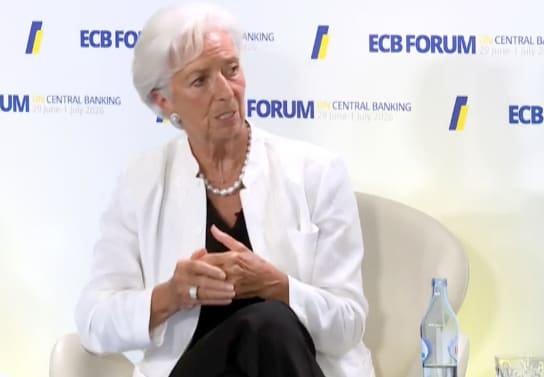
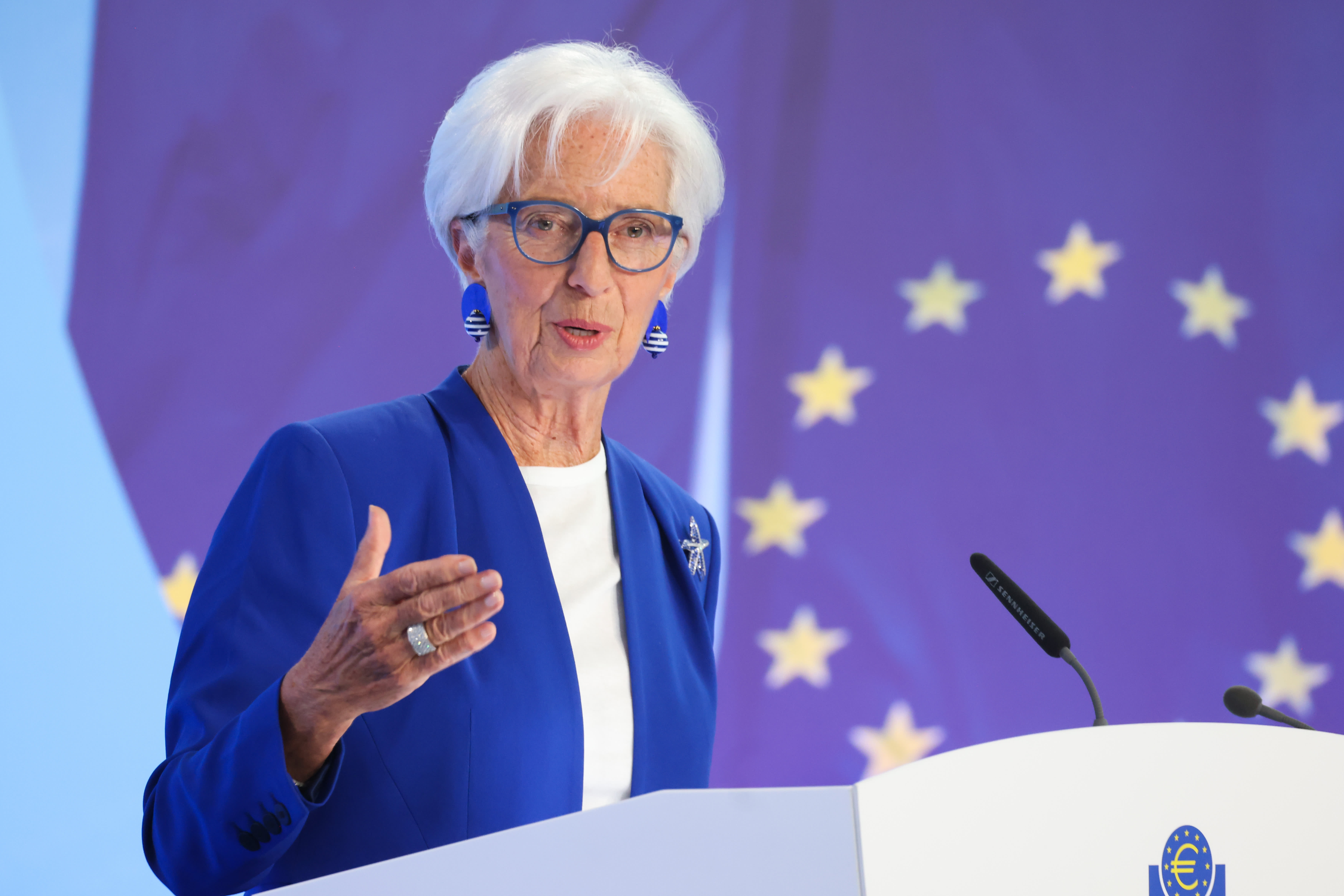
At the time, Christine Lagarde, president of the ECB, acknowledged that inflation carried upside risks while growth faced downside ones. She was explicit that the Governing Council was "not pre-committing to a particular rate path." The subsequent meeting produced a hold, with the council stating it was "closely monitoring the intensity and duration of the [energy] shock, as well as its indirect and second-round effects."
That monitoring continues. Feather noted that underlying inflation measures have continued to ease, wage pressures remain relatively contained, and evidence of widespread second-round effects from the energy shock is still sparse. These are the arguments for restraint. Against them, the oil price remains volatile, and there is no sign of de-escalation between Washington and Tehran.
Investors split on the terminal rate
A survey of Deutsche Bank's own clients over the past week found no consensus on where Thursday's decision sits within the broader cycle. The bank's economists reported that slightly more than a third of respondents agreed with their view that the ECB would take its key rate to 2.75%, implying one further hike after this week. Roughly one in four saw only one more increase in total. Another quarter put the terminal rate at 3%, requiring three additional moves beyond Thursday.
The spread between those three scenarios, from 2.5% to 3%, is wide by the standards of central bank forecasting. It reflects not merely disagreement about inflation but fundamental uncertainty about whether the Middle East confrontation escalates, stabilises, or recedes.
Bond spreads complicate the picture
Government borrowing costs across the currency bloc have climbed sharply. European bond yields have reached multi-decade highs as investors price in both higher inflation and further rate increases.
Jonathan Pryor, co-head of dealing and head of private markets at Marex FX, warned that the ECB could "get caught out" once Thursday's decision is behind it. If the bank treats the move as a one-off adjustment and other G10 central banks continue tightening, the credibility of both Lagarde and the institution could suffer.
Pryor also pointed to a problem the ECB prefers not to discuss publicly: the divergence in sovereign borrowing costs across member states. Coordinating a single monetary policy for 20 economies with very different fiscal positions and bond yields is a persistent structural challenge, and one that becomes more acute when rates rise. Any signal from the Governing Council about bond market conditions, Pryor noted, would be significant, since the ECB typically avoids such commentary.
Hawkish tone, uncertain destination
Thursday's meeting will almost certainly deliver a rate increase. The question is what language accompanies it. Feather argues there is a plausible path towards the ECB holding at 2.5% for an extended period, provided underlying price pressures continue to moderate and the energy shock does not feed through into broader wage and price setting. That path, however, depends on geopolitical de-escalation that shows no sign of materialising.
The Governing Council's own staff projections may offer clues. Feather expects the ECB to revise its growth forecasts higher, since the economic damage from the war has been more limited than initially feared. Better growth gives the bank more room to tighten without choking off the expansion. But better growth also feeds into wage demands, and the council has made clear it is watching second-round effects closely.
People mentioned
-
Felix Feather
-
Jonathan Pryor
Organisations
European Central Bank · Aberdeen · Marex FX · Deutsche Bank · LSEG