The European Commission has published a draft regulation that would rewrite the rules governing how national, regional and local authorities spend roughly €2.6 trillion each year on goods, services and works. The proposal, unveiled on Wednesday, stops short of imposing "buy European" quotas but introduces mandatory quality weightings designed to make it legally safer for public buyers to choose European suppliers over cheaper competitors from countries that do not offer reciprocal market access.
The scale of the lever
Public procurement accounts for about 15 per cent of the EU's gross domestic product, a figure the Commission has long regarded as an underused policy instrument. Washington and Beijing both use their procurement budgets to support domestic champions; Brussels now wants the same freedom of action without violating the bloc's international obligations. The regulation merges three existing directives into a single text, a simplification the Commission says will reduce administrative burden while giving purchasers clearer legal cover.
Quality thresholds replace lowest-price logic
The most concrete change is a requirement that contracting authorities assign at least 30 per cent of the evaluation score to quality criteria, environmental performance, social standards, supply-chain resilience, rather than price alone. For labour-intensive contracts such as cleaning, catering or care services, the quality threshold rises to 50 per cent. Authorities that wish to deviate must publish a justification. The aim, officials say, is to end the reflexive award of contracts to the lowest bidder when that bidder undercuts European firms through lower labour or environmental standards.
China in the crosshairs
Although the text never names China, the concern driving the overhaul is unmistakable. Brussels has watched Chinese state-backed firms expand in European transport and infrastructure markets, often pricing below European rivals. In April the Commission blocked a Chinese rolling-stock manufacturer from joining a consortium for a new Lisbon metro line after an investigation concluded the company benefited from state subsidies that gave it an "unfair competitive edge". A separate probe into Nuctech, a Chinese security-scanner supplier to European airports and ports, remains open; EU officials suspect subsidies and tax breaks there too.
China is not a signatory to the World Trade Organization's Government Procurement Agreement, which commits its 22 parties, including the EU, the UK, the US, Canada and Japan, to non-discriminatory access to each other's procurement markets. That absence gives the EU a legal basis to restrict or reject Chinese bids under the new regulation, something Séjourné made explicit: purchasers can "restrict or reject bids from countries which do not have a public procurement agreement or do not play by binding rules in terms of public procurement internationally".
Political accountability for procurement choices
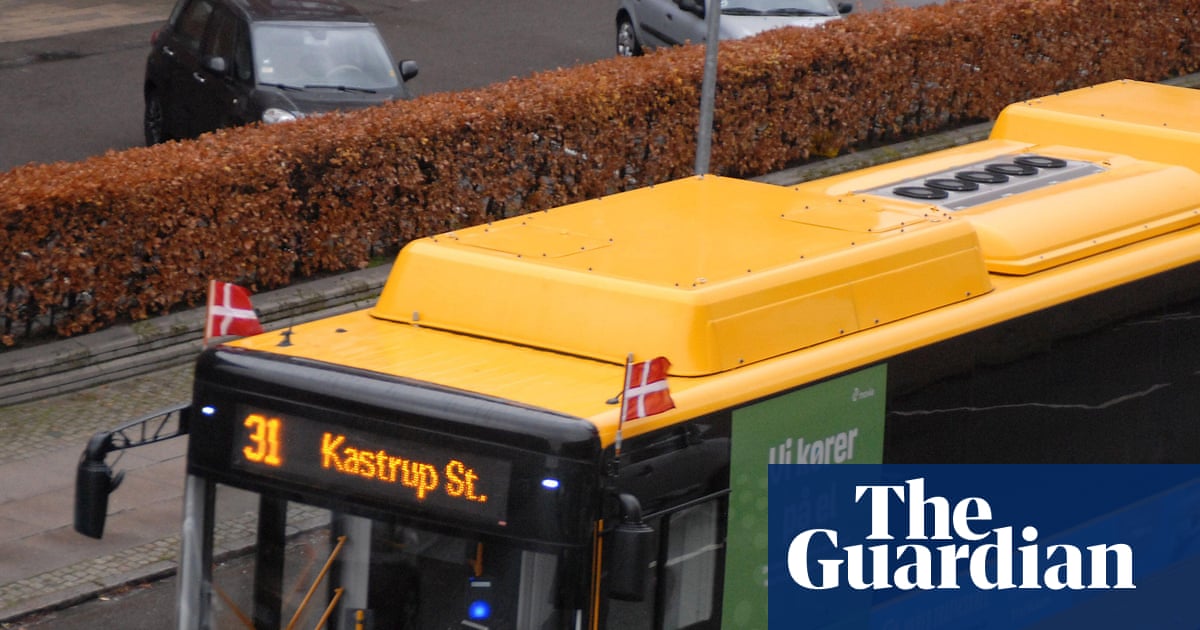
Séjourné, a close ally of French President Emmanuel Macron, framed the reform as a democratic upgrade. He wants local councillors, mayors and regional assemblies to face voters when they choose a foreign supplier over a European one. "It won't be the European Commission's fault if purchasers were to prefer Chinese buses to European buses because … in the [draft regulation] there is every possibility to give preference to European buses," he told reporters. An online tool will let buyers check which countries are covered by EU free-trade or procurement agreements, making the legal position transparent at the moment of tender design.
The UK question
British ministers have watched the "Buy European" agenda with alarm, fearing exclusion from a market their firms have long accessed. The Commission insists the Trade and Cooperation Agreement preserves reciprocal procurement rights. "There should not be any difficulties for the UK," Séjourné said, pointing to the WTO GPA membership both sides share. The regulation's country-check tool will confirm UK coverage alongside other GPA parties.
Parallel track for clean tech
The procurement regulation is not the only instrument. Séjourné is also steering the Industrial Accelerator Act, which would introduce "made in Europe" requirements for public purchases of renewable-energy equipment and electric vehicles. That bill, still in early negotiation, marks a sharper departure from open-market orthodoxy than the procurement text. Both files must survive the European Parliament and the Council of the EU, where member states with export-dependent industries, Germany, the Netherlands, Ireland, have historically resisted protectionist moves.
People mentioned
Organisations
European Commission · European Parliament · Council of the European Union · World Trade Organization