European foreign ministers gathered in Ireland on Wednesday confronted a familiar dilemma: how to punish a adversary that has already absorbed nearly two dozen sanction packages without resorting to military escalation. The immediate trigger was a drone laden with explosives discovered on 4 August at Leipzig/Halle Airport, a major freight hub for military and humanitarian aid to Ukraine. The device was found near a Ukrainian cargo plane and defused before it could detonate.
The Leipzig incident and Germany's response
Berlin announced on Tuesday that it holds Russia responsible for the attempted attack and would close a Russian consulate among other measures. Johan Wadephul, the German foreign minister, said his government had carefully prepared its response and that Russia must now live with the consequences. He also emphasised that Germany is "not at war" but has become a "daily target" of what he described as the Kremlin's hybrid campaign. The airport handles significant volumes of freight destined for Ukraine, making it a logical target for anyone seeking to disrupt Western support.
The German attribution is notable for its directness. Previous hybrid incidents, cyber intrusions, sabotage of undersea cables, arson at defence facilities, have often been met with careful language about "hybrid threats" rather than explicit state attribution. The decision to name Russia publicly and close a consulate signals a shift in Berlin's tolerance threshold. It also puts pressure on EU partners to match that clarity with collective action.
Sanction fatigue and the search for new levers
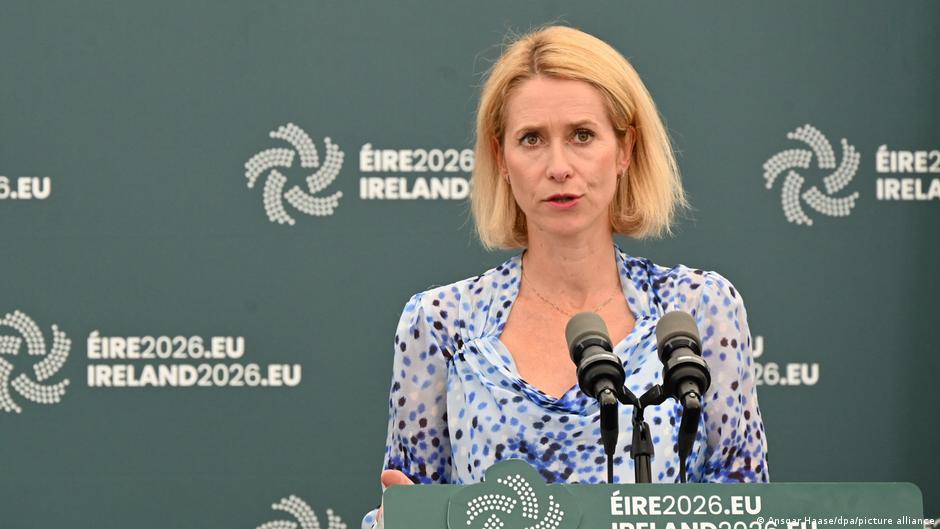
The EU has now adopted almost two dozen sanction packages since February 2022, targeting more than 3,000 officials, oligarchs and entities including banks, energy companies and drone manufacturers. Hundreds of vessels making up the so-called shadow fleet that ships Russian oil in violation of the price cap have also been listed. Yet the flow of revenue to the Russian war machine persists, albeit at reduced margins. Kaja Kallas, the EU's foreign policy chief, told reporters before the meeting that the bloc was preparing travel bans and asset freezes on another 1,600 people. The question she posed, "What do we do about this?", captured the frustration of a sanctions regime that has exhausted the most obvious targets.
Jean-Noël Barrot, his French counterpart, said Paris had summoned Russia's envoy to "protest strongly" and wants to extend sanctions to more shadow fleet ships. Ursula von der Leyen, the Commission president, said the incident "marks a new escalation on European Union soil" and that her services "are looking at ways to cut deeper into Russia's war chest." She did not elaborate. The repetition of "deeper" and "more" across capitals suggests a narrowing menu of options: secondary sanctions on third-country facilitators, tighter enforcement of existing oil price caps, or targeting the financial architecture that enables shadow fleet operations.
Russia's denial and the risk of tit-for-tat
Moscow's reaction was swift. The Russian foreign ministry summoned Bernd Finke, Germany's ambassador in Moscow, and told him it "categorically rejects the completely trumped-up accusations leveled by Berlin regarding Russia's involvement in the alleged incident at the Leipzig airport." A ministry statement warned that "the actions of the German authorities will be met with a harsh response," without specifying what that might entail. Previous cycles of diplomatic expulsions and consulate closures have followed a predictable pattern: each side matches the other's moves, gradually reducing the diplomatic footprint available for crisis management.
The Kremlin's denial follows a well-established playbook. Russian officials have rejected responsibility for the 2018 Salisbury poisoning, the 2014 downing of MH17, and numerous cyber operations attributed to its intelligence services by Western agencies. The "harsh response" language leaves room for asymmetric retaliation, further hybrid operations, energy pressure where leverage remains, or harassment of European diplomats in Moscow. The ambiguity is deliberate: it forces European capitals to factor in unknown risks when calibrating their next steps.
The southern flank enters the conversation
While the meeting in Ireland focused on the eastern threat, José Manuel Albares broadened the frame. Spain's foreign minister accused Russia, along with Israel, of using disinformation to incite migrants to cross from Morocco into Ceuta, Spain's north African enclave. He also criticised unnamed EU partners for echoing what he called fake information about the situation. "There are a lot of people outside the European Union that want to divide us, to make us weak," Albares told reporters. "The land borders of the south of the EU are as important as the eastern borders."
His intervention highlights a persistent tension within the EU. Eastern member states prioritise the Russian threat; southern members argue that migration pressure, often exacerbated by deliberate destabilisation campaigns, deserves equal attention and resources. The Spanish accusation against Israel adds another layer of complexity, given the EU's divided positions on Gaza. Albares's claim that some EU partners are amplifying Russian disinformation, without naming them, suggests the unity on display in Ireland may be thinner than the joint statements imply.
British presence signals post-Brexit alignment
Ed Miliband's attendance at the informal foreign ministers' meeting, alongside officials from Ukraine, Canada, Norway, Switzerland and Iceland, underscored the UK's continued alignment with EU foreign policy on Russia. "We see an attempt by Russia to divide us in Europe and to deter us from our support for Ukraine," the British foreign secretary said. "This attempt will fail. It will fail because we will stand up to Russian aggression. We will stand shoulder to shoulder with our friends in Ukraine," he added, for "as long as it takes for them to prevail in this conflict." The language mirrored the EU's standard formulation, a reminder that whatever the domestic politics in London, the strategic convergence on Russia remains intact.
The UK's own sanction regime has largely tracked the EU's, though London has occasionally moved faster on designations of individuals and vessels. Miliband's presence also serves a practical purpose: coordination on enforcement. The shadow fleet operates through complex ownership structures often involving British insurance, legal and financial services. Closing those loopholes requires cooperation that neither side can achieve alone.
What the sanctions have and have not achieved
Two years of escalating sanctions have reshaped the Russian economy but not halted the war. Oil exports have been redirected to India and China, often carried by ageing tankers with opaque ownership and limited insurance. The G7 price cap has compressed Russian revenues but not stopped the flow. Drone production has expanded despite component sanctions, relying on smuggling networks and dual-use imports. The 3,000-plus listed individuals and entities represent a fraction of the Russian elite. The next 1,600 names will likely include mid-level officials, procurement agents and facilitators, people who matter operationally but whose designation generates fewer headlines.
Enforcement remains the weak link. Customs data shows continued flow of high-priority goods, semiconductors, machine tools, aviation parts, into Russia via third countries including Kazakhstan, Armenia, Turkey and the United Arab Emirates. The EU's latest packages have introduced anti-circumvention tools, including a "no-Russia" clause for exporters and the ability to restrict access to the EU market for third-country entities that facilitate sanctions evasion. These tools are new and untested at scale. Their effectiveness will depend on the willingness of member states to pursue politically sensitive investigations against companies in partner countries.
The enforcement gap and what comes next
The ministers in Ireland did not announce new measures. They discussed options. The gap between discussion and decision is where the story now sits. Germany's consulate closure is a national measure, not an EU one. The 1,600 additional listings require legal preparation and political agreement among 27 member states. Shadow fleet designations need evidence of specific voyages and ownership links that can withstand court challenges, Russian oligarchs have successfully appealed several listings at the EU's General Court. Secondary sanctions on third-country entities would be a significant escalation, likely to face resistance from members with strong commercial ties to the Gulf or Central Asia.
The next formal Foreign Affairs Council is scheduled for mid-September. Between now and then, the Commission's services will prepare options papers. The German government will share intelligence on the drone, its origin, components, launch method, with partners. If that intelligence is compelling, it may unlock measures that have previously stalled, such as a ban on Russian gas transiting Ukraine to Europe (due to expire at year-end) or restrictions on Russian nuclear fuel exports that several members still rely on. The Leipzig attack has changed the political atmosphere. Whether it changes the legal and economic calculus remains to be seen.
People mentioned
-
Johan Wadephul
-
Ed Miliband
-
Bernd Finke
Organisations
European Union · European Commission · German Federal Foreign Office · Russian Ministry of Foreign Affairs · French Ministry for Europe and Foreign Affairs · Spanish Ministry of Foreign Affairs