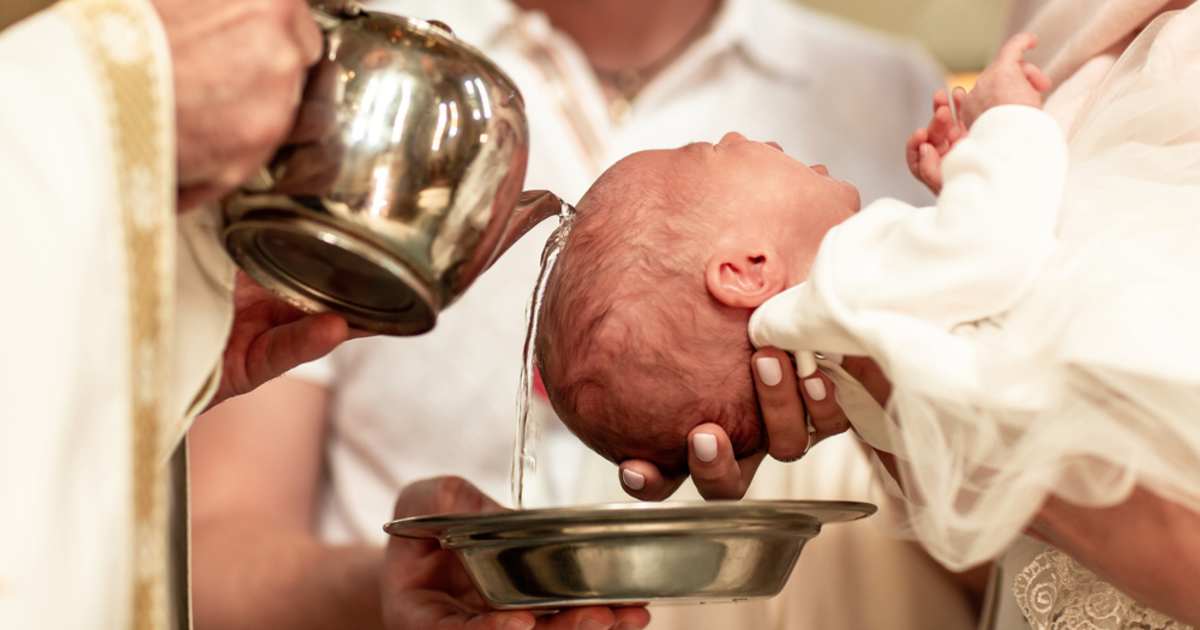
The Commission of the Bishops' Conferences of the European Union (COMECE) has warned that allowing baptised individuals to erase their names from Church baptismal registers would infringe religious liberty and disrupt the internal governance of the Catholic Church. In a position paper published on 2 September, the bishops' conference disputed the characterisation of baptismal registers as membership lists, insisting they function instead as historical records of events that have lasting canonical consequences.
The legal dispute reaching Luxembourg
The Court of Justice of the European Union (CJEU) is currently hearing a preliminary ruling reference from the Brussels Court of Appeal. The Belgian court asked whether the Catholic Church's refusal to delete a person's data from baptismal registers, when requested under the General Data Protection Regulation (GDPR), constitutes a violation of EU law. The case turns on whether a baptismal entry qualifies as personal data subject to the right to erasure under Article 17 of the GDPR, or whether it falls within exemptions for religious freedom and the establishment of legal obligations.
Alessandro Calcagno, a lawyer and assistant general secretary for COMECE, said last year that the proceedings were not an initiative against the Church by the European Union
but rather a response to clarifications requested at the national level.
The distinction matters: the referral comes from a Belgian court applying Belgian implementations of EU law, not from an EU enforcement action.
Registers as evidentiary instruments
The bishops' paper argues that a baptismal register serves as a fundamental evidentiary instrument
for numerous matters relating to the internal life of the Church,
including whether a person has married, made a profession in a religious institute, or been confirmed. Removing the foundational entry, they say, would make it impossible
to verify those subsequent canonical acts. The register, in their view, records a historical fact, that a baptism took place on a certain date, in a certain place, administered by a certain minister, not an ongoing affiliation that the subject can revoke.
This theological claim has legal consequences. If the register is a record of a past event, the argument runs, the data subject's current wishes cannot alter the historical record any more than a person could demand removal of their birth certificate from civil archives because they no longer identify with the nationality recorded there.
Church autonomy and theological integrity
The bishops go further, contending that mandatory deletion would require the Church to adapt to [a person's] feelings or opinions
in how it understands its own sacramental records. That, they say, would mandate a shift in theological reflection
protected by Church autonomy under Article 17 of the EU Charter of Fundamental Rights and the Treaty on the Functioning of the European Union. The paper warns that erasures could mislead
both Catholics and non-believers into thinking the sacrament of baptism is repeatable and optional,
constituting an infringement on the substance of the sacrament and not merely of the manner in which it is administered or carried out.
The Ghent origin
The dispute began in 2023 when an individual in the Diocese of Ghent, Belgium, requested the complete removal of their data from the local Church register. The diocese refused, citing canonical obligations to maintain sacramental records. The matter escalated through Belgian courts to the Brussels Court of Appeal, which referred the GDPR interpretation question to Luxembourg. The Ghent case is not isolated; similar requests have surfaced in other European dioceses as data protection authorities and individuals test the boundaries of the right to be forgotten against religious record-keeping.
Pastoral versus emotional framing
Bishop Mario Vaccari of Massa Carrara-Pontremoli in Italy framed the tension differently, saying he made his decision because emotional ties
have been prioritised over pastoral ones. His comment reflects a divide within the Church between those who see accommodation of deletion requests as a pastoral response to people who have left the faith, and those who view the register as an immutable record that serves the person's future canonical needs, for instance, proving baptism for a future marriage, regardless of their present sentiments.
Comparative context
Other European jurisdictions have reached different accommodations. In Germany, the Church allows a formal act of leaving the Church (Kirchenaustritt) which ends church tax liability but does not erase the baptismal entry; the register is annotated to record the departure. In France, the 1905 law on separation of church and state places religious records outside most state regulation, though GDPR applies. The CJEU ruling will set a precedent across all 27 member states, potentially harmonising, or disrupting, these national approaches.
What the Court must decide
The CJEU will need to interpret the scope of the GDPR's religious exemption in Article 9(2)(d), which permits processing of special category data where carried out by a religious association in the course of its legitimate activities with appropriate safeguards. The Court must also weigh Article 17 of the Charter, freedom of religion, against Article 8, protection of personal data. Advocate General opinions in similar cases have tended to favour narrow exemptions, but the sacramental nature of baptismal records presents a distinct factual matrix from ordinary membership databases.
People mentioned
-
Alessandro Calcagno
-
Mario Vaccari
Organisations
Commission of the Bishops' Conferences of the European Union · Court of Justice of the European Union · Brussels Court of Appeal · Diocese of Ghent