Western intelligence officials assess that Russia has no intention of starting a direct military confrontation with NATO, despite a steady escalation of threats, sabotage operations and bellicose rhetoric from Moscow. The judgement, delivered by senior officials speaking on condition of anonymity, draws a deliberate line between what Russia says and what it is prepared to do.
The assessment follows a visit to Moscow this week by John Radcliffe, the director of the Central Intelligence Agency. Some reports suggested that Radcliffe's trip included an explicit warning to Russia against attacking any member of the Atlantic alliance. Western officials, however, played down the prospect of such an attack, telling journalists that recent Russian threats, including warnings that British forces could be targeted and that UK weapons factories might be struck, were consistent with established military doctrine designed to pressure Western governments. They described the rhetoric as "nothing new".
Rhetoric as a weapon of pressure
The distinction officials drew is an important one. Moscow's threats, they argued, serve a political purpose rather than signalling imminent military action against NATO states. Russian military doctrine has long incorporated the idea of using escalation, or the threat of it, to coerce adversaries into backing down. The recent warnings about British targets fit this pattern: they are intended to make Western governments question whether continued support for Ukraine is worth the risk, without crossing the threshold into a war that Russia's own leadership does not want.
President Donald Trump appears to accept this framing. Speaking this week, Trump said of Putin: "he's not going to attack a Nato territory." Putin and his officials have repeatedly dismissed warnings about Russian plans to attack NATO countries as hysteria. The irony is hard to miss: not long before launching his full-scale invasion of Ukraine in 2022, Putin gave public assurances that he had no intention of attacking Russia's neighbour, even as US intelligence showed preparations for exactly that operation were well advanced. The precedent explains why some European capitals remain wary of taking Russian assurances at face value, even when Western intelligence agrees that a direct attack on NATO is unlikely.
Hybrid warfare below the threshold
What Western officials do expect to continue, and intensify, is Russia's campaign of hybrid activity: operations that fall short of direct military action but are designed to weaken Western resolve. This includes cyber-attacks, sabotage, and even assassination attempts on European soil. The purpose, officials said, is to break Western support for Ukraine by making the cost of that support feel tangible and immediate.
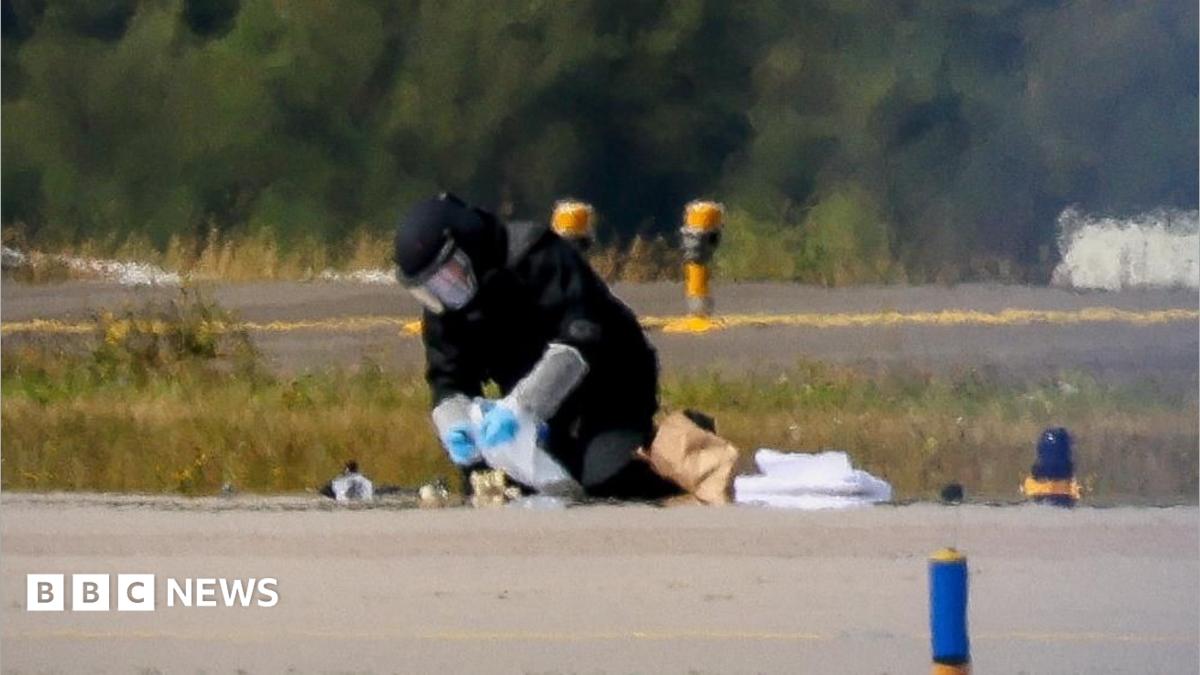
The most visible recent manifestation has been a string of drone incidents at European airports and military bases, beginning last year and continuing through this summer. Earlier this month, a drone loaded with explosives reached a runway at Leipzig airport in Germany. Leipzig is a significant logistics hub for transferring military equipment to Ukraine, which makes the incident particularly unsettling even though there is no direct proof linking it to Russia. Moscow has denied any role.
The head of France's security services responded to the Leipzig incident with a blunt warning. France, he said, must consider the possibility of "direct, more violent hostile actions on our national soil." The language marks a shift: European security officials are no longer treating hybrid operations as a nuisance to be managed but as a persistent campaign that could escalate.
Mounting pressure inside Russia
Western officials linked the intensification of Russian rhetoric to the growing pressure Vladimir Putin faces at home. The war in Ukraine has not been going as Moscow planned. Russian gains in the eastern Donbas region are slow and come at a heavy cost. Ukrainian long-range strikes have reached deep inside Russian territory, demonstrating that the war's effects are no longer confined to the front. And petrol shortages inside Russia are starting to erode public support for the conflict.
The officials said these pressures are real but do not yet pose a critical challenge to Putin's hold on power. There is no sign, they added, that the Kremlin intends to declare mass mobilisation, a step that would carry significant political risks inside Russia. Instead, the regime appears to be trying to manage the strain through a combination of financial incentives for military service, tighter social control, and an outward posture of confidence that conceals the growing strain.
The casualty mathematics
One figure from the officials' briefing stands out. Russia, they said, is losing 6,000 more soldiers each month, either killed or wounded, than it can recruit. The shortfall is staggering. It means that even with financial incentives and the continued recruitment from prisons and marginalised communities that has sustained Russian manpower so far, the military is slowly bleeding out. The war has become, in the most literal sense, unsustainable at the current rate of attrition.
And yet Russia is still making gains in the Donbas. The paradox is instructive. Progress on the ground is measured in metres, paid for in casualties that outstrip the ability to replace them. Ukrainian defences are being worn down, but so is the Russian army. The question, which officials did not answer directly, is how long this can continue before something gives, either on the battlefield or in Moscow.
Escalation on both sides
The officials also noted that the war itself has escalated this year. Both Moscow and Kyiv have stepped up long-range strike campaigns. Ukraine's deep strikes into Russian territory have been among the most visible signs of this escalation, forcing Russia to confront the war's consequences at home. Russia has responded with its own intensified bombardment of Ukrainian cities and infrastructure.
Putin's objectives, the officials stressed, have not changed. Despite the slow progress and mounting costs, he remains committed to maximalist goals in Ukraine. There are no signs of a negotiated settlement being prepared, and no indication that the Russian leadership has accepted anything short of the subordination of Ukraine to Moscow's interests. The domestic frustrations, the petrol shortages, the recruitment shortfalls: none of these have altered the strategic calculus in the Kremlin.
The miscalculation problem
One Western official highlighted what may be the most serious risk in the current situation: not that Russia decides to attack NATO, but that its hybrid campaign produces a miscalculation that spirals into a military confrontation. The more sabotage operations, drone incursions and assassination attempts Russia runs, the greater the chance that one of them goes wrong in a way that forces a NATO response.
The Leipzig drone is a case in point. If it had detonated on the runway and disrupted military shipments, or if it had caused casualties among NATO personnel, the alliance would have faced immense pressure to respond. Russia's deniability would have been thin. The incident illustrates how a campaign designed to stay below the threshold of armed conflict can, through accident or overreach, cross that threshold regardless of Moscow's intentions.
The UK government has already stated that recent Russian threats will not deter its support for Ukraine. Other NATO members are making similar calculations. The alliance's challenge is to maintain this resolve without allowing a hybrid incident to force an escalation that no one planned for.
People mentioned
-
John Radcliffe
Organisations
North Atlantic Treaty Organization · Central Intelligence Agency