Serbia enters 2025 at a crossroads that would be familiar to anyone who has watched the Western Balkans over the past three decades. A president re-elected under a cloud of documented fraud. A prime minister forced out by protests sparked by a concrete roof collapsing on commuters. An EU accession process that moves only when Brussels applies pressure, and a refusal to recognise Kosovo that keeps the country tethered to a past it claims to have left behind.
The numbers from the December 2023 snap election tell their own story. Aleksandar Vucic's Serbian Progressive Party (SNS) took 47% of the vote. The opposition Serbia Against Violence (SPN) coalition managed 23%. But the International Election Observation Mission was blunt: serious irregularities, including vote-buying and ballot box stuffing were observed. The mission's statement did not use conditional language. It did not say "alleged". It said observed.
The election that wasn't free
The December 2023 vote was the third national election in three years. Each has reinforced the same pattern: SNS dominance of state resources, media coverage that functions as campaign advertising, and an opposition fragmented enough to be manageable but visible enough to maintain the veneer of competition. CRTA, Serbia's most respected domestic election monitor, complained before the vote of a "chronic lack of pluralism". That phrase, chronic, is deliberate. It describes a condition, not an event.
Freedom House, the Washington-based democracy advocacy group, has tracked the deterioration for years. Its assessments note steady pressure on independent media, the political opposition, and civil society organisations. Amnesty International went further in 2021, characterising Vucic's mandate as one of human rights violations, restrictions on freedom of expression, and campaigns of harassment against opposition figures, journalists and media outlets. These are not opposition talking points. They are the conclusions of organisations that apply the same methodology across dozens of countries.
A decade of SNS dominance
The SNS has held power since 2012. In that time it has refined a model common in the region: formal democratic institutions wrapped around informal control of the levers that matter. The judiciary, the regulatory agencies, the state-owned enterprises that distribute contracts and employment, these operate with a loyalty that transcends legal obligation. The party's origins matter here. Formed in 2008 as a split from the far-right Serbian Radical Party, the SNS rebranded as a pro-European, centre-right force. That rebranding was the condition for Western engagement. Twelve years later, the European Commission's own progress reports describe limited progress on judiciary independence and media freedom.
Vucic himself embodies the trajectory. A former information minister under Slobodan Milosevic during the 1990s wars, he reinvented himself as a technocratic moderniser. The transformation was convenient for Brussels, which needed a partner in Belgrade after the wars ended. But the authoritarian instincts did not disappear; they were channelled. The snap elections, 2020, 2022, 2023, were called not because governments fell but because Vucic calculated the timing favoured him. Each reset the mandate clock.
The Kosovo impasse and EU conditionality
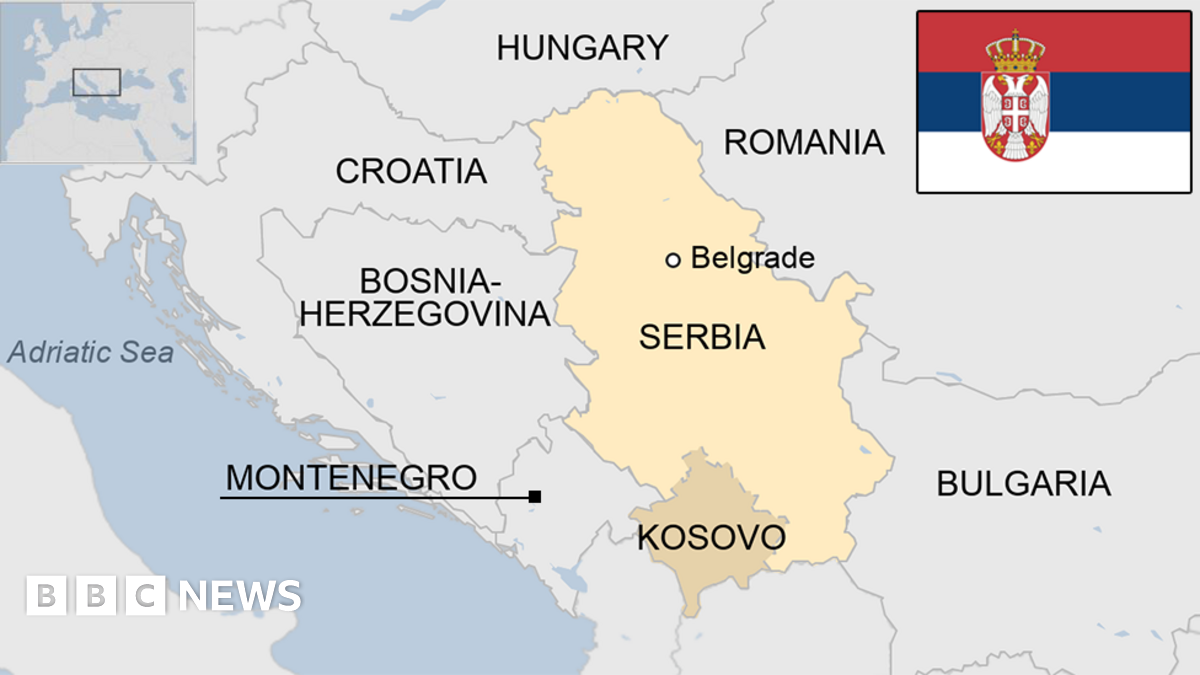
No issue defines Serbia's European trajectory more than Kosovo. The 2008 unilateral declaration of independence by Pristina has been recognised by more than 100 UN members, including most EU states and the United States. Serbia refuses, backed by Russia, China and five EU members, Spain, Slovakia, Cyprus, Romania and Greece, who have their own separatist concerns. The deadlock is structural. The EU has made normalisation of relations a condition for accession. Serbia wants accession without recognition. Brussels has tried to square this circle through the Brussels-facilitated dialogue, which produced a 2013 landmark agreement and a 2023 implementation plan. Neither has been fully implemented.
Vucevic, in his brief tenure as prime minister, articulated the Serbian position with unusual candour. Addressing parliament after his May 2024 appointment, he said EU membership remained the goal but that the "burdens" introduced into the process "cannot be ignored." He described EU expectations as tied to Serbia "humiliating" itself by recognising Kosovo and joining sanctions against Russia for its invasion of Ukraine. The word "humiliating" was not accidental. It signals to a domestic audience that compromise equals surrender.
Protests and the fall of a prime minister
The catalyst for Vucevic's resignation was concrete, literal and deadly. On 1 November 2024, the roof of the newly renovated railway station in Novi Sad collapsed, killing 15 people. The station had been reconstructed as part of a Chinese-led infrastructure project. The disaster triggered student-led protests that expanded into a broader anti-corruption movement demanding accountability for construction oversight, procurement practices, and the political culture that enables both.
Vucevic resigned in January 2025, seven months after taking office. His departure removed a symptom but not the condition. The SNS remains in control. The president remains in place. The system that produced the Novi Sad contract, opaque tenders, political patronage, limited oversight, remains intact. Protests in Serbia have a history of burning bright and fading fast. The 2018-2019 "One of Five Million" demonstrations against media censorship and electoral fraud dissipated without structural change. The current movement faces the same institutional barriers.
Media capture and the information environment
Understanding Serbian politics requires understanding Serbian television. The average viewer spends more than five hours a day watching television, the highest figure in Europe. There are more than 90 channels, but six national broadcasters attract around 70% of the audience. The flagship public network, RTS1, commands up to a quarter of all viewing. The leading commercial network, TV Pink, is owned by a businessman with close ties to the government. The distinction between public service and state service has eroded.
This matters because television remains the primary source of political information for the majority of the electorate, particularly outside Belgrade. Online media exists, and independent outlets like N1 and Nova S operate, but their reach is a fraction of the national broadcasters. During election campaigns, the imbalance becomes decisive. The SNS controls the narrative not through censorship, though that occurs, but through saturation. When the president speaks, every channel carries it live. When opposition figures speak, they are filtered, interrupted, or ignored.
Balancing East and West
Serbia's foreign policy is often described as a balancing act. It is more accurately a transactional management of dependencies. The country receives EU pre-accession funds, trades predominantly with the EU, and aspires to membership. Simultaneously, it maintains a free trade agreement with the Eurasian Economic Union, purchases Russian gas at preferential rates, and welcomes Chinese infrastructure investment. It refuses to impose sanctions on Russia despite EU pressure. Vucevic's "humiliation" framing captures the domestic political cost of alignment: any move toward Brussels is portrayed by the ruling party as capitulation to foreign pressure.
This is not unique to Serbia. The Western Balkans have long practiced multi-vector foreign policies. But Serbia's size, history, and the Kosovo issue give its choices regional weight. When Belgrade refuses to align with the EU's Common Foreign and Security Policy, it undermines the credibility of the enlargement process for everyone. When it allows Russian disinformation networks to operate freely, it creates vulnerabilities that extend beyond its borders. The EU's response has been inconsistent, sometimes pressing hard, sometimes accepting vague commitments to avoid crisis.
Demographics and the long view
Serbia's population stands at 6.7 million, excluding Kosovo. Life expectancy, 71 years for men, 77 for women, lags behind EU averages by roughly a decade. The country has lost roughly 600,000 people since the 2002 census, driven by emigration and low birth rates. The demographic drain disproportionately affects the educated young, the very cohort most likely to demand accountability and least likely to tolerate the status quo. Those who remain are older, poorer, and more dependent on state patronage networks. This is not a detail. It is the structural foundation of the current political equilibrium.
People mentioned
-
Ana Brnabic
Organisations
Serbian Progressive Party (SNS) · European Union · Freedom House · Amnesty International · International Election Observation Mission · CRTA