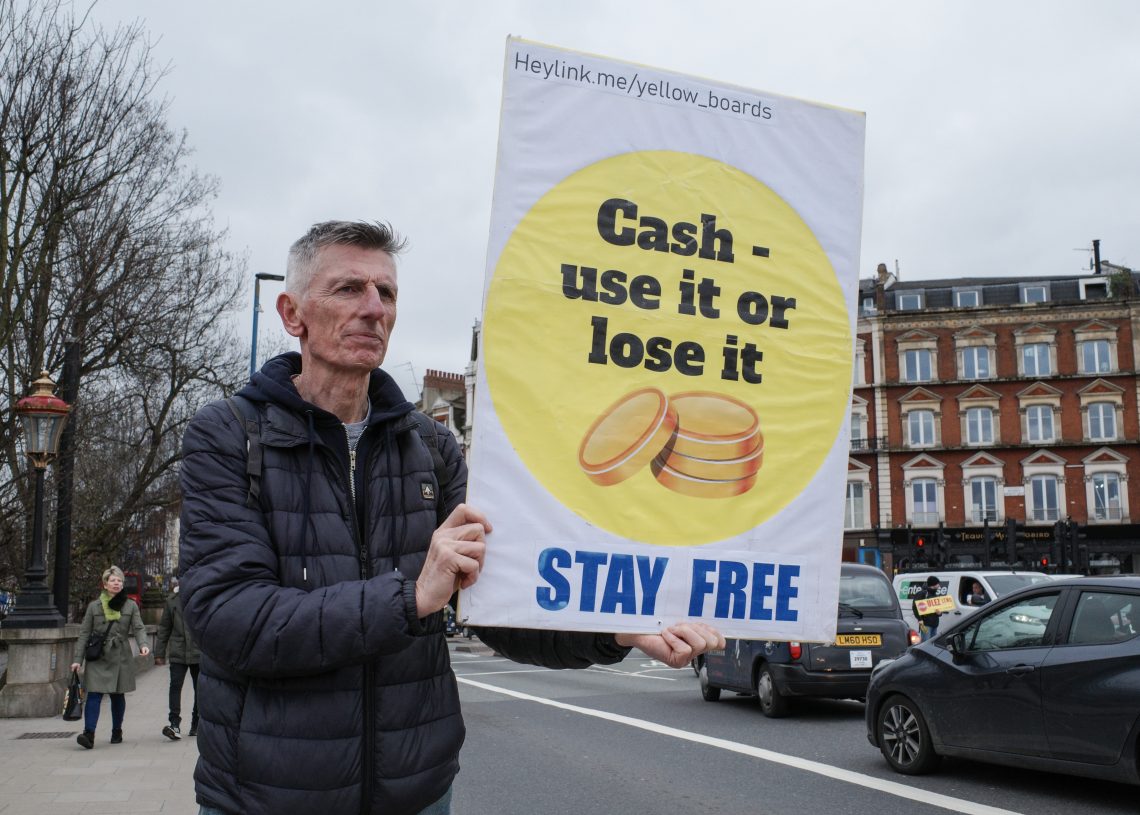
Sweden, the country that came closer than any other to dispensing with physical money, has ordered shops to take it back. Since 1 July, grocery stores and pharmacies have been legally required to accept cash at the till. The mandate is a striking reversal for a nation where, according to the Riksbank, just 5 per cent of consumers reported using cash for their most recent in-store purchase in 2025, down from 10 per cent two years earlier and 40 per cent fifteen years ago.
Civil defence, not nostalgia
The legislation did not emerge from consumer complaints alone. Sweden's central bank and civil defence authorities have told households to keep at least 1,000 kronor, roughly 100 dollars, on hand per adult. Cash, in the official framing, is no longer a relic of a pre-digital age. It is a component of national preparedness, valued precisely because it functions without electricity, network access or authentication servers. The subtext is unmistakable: a payments system that ceases to operate when the power goes out, or when a foreign adversary disrupts telecommunications infrastructure, is a strategic liability.
Sweden is not alone in reassessing the costs of going cashless. Norway amended its Financial Contracts Act in 2024 to give consumers an enforceable right to pay with notes and coins for transactions up to 20,000 kroner, approximately 2,000 dollars. Regulators were empowered to fine merchants that refused, with enforcement provisions taking effect in May 2025. Two of the Nordic countries that once competed to be first past the cashless post are now legislating to keep physical currency in circulation.
A continent at odds with itself
The Nordic rethink sits awkwardly alongside policy elsewhere in Europe, where the direction of travel has been towards tighter restrictions on cash. The European Union has agreed a bloc-wide ceiling of 10,000 euros on cash transactions, due to take effect in July 2027. Individual member states already enforce far lower thresholds: 1,000 euros in France, Spain and Portugal, and 500 euros in Greece. Greek authorities can impose a fine equal to twice the value of the cash payment on anyone breaching the limit.
The stated rationale for these caps is efficiency and the fight against money laundering. The practical effect is to penalise the use of notes and coins, even as some governments now say those same notes and coins are essential for national resilience. The contradiction is hard to ignore: requiring businesses to accept cash while progressively restricting the circumstances in which it can be used is a policy that pulls in two directions at once.
There is no continent-wide consensus on the merits of digital payments. The European Central Bank's own survey data, from its Study on the Payment Attitudes of Consumers in the Euro Area, confirms that cash remains the most frequently used method at physical points of sale across the eurozone. In Italy, Germany, Austria, Spain, Greece and Malta, consumers have not abandoned notes and coins despite the availability of card and mobile alternatives. Privacy concerns, a preference for tangible budgeting and deep-seated scepticism about institutional surveillance keep physical currency in regular use.
The digital euro's vulnerability problem
All of this complicates the ECB's plans for a digital euro. The institution has spent years developing a retail central bank digital currency, arguing that it would modernise payment infrastructure across the eurozone, provide a state-backed alternative to commercial payment rails and protect monetary sovereignty against foreign private platforms. The project has been presented as a necessary modernisation.
Yet the vulnerabilities that prompted Sweden and Norway to row back on cashlessness would apply with even greater force to a digital euro. A centralised electronic payments architecture depends on electrical grids, telecommunications networks, data centres and satellite links. Any of these can be disrupted by cyberattack, sabotage or simple technical failure. Physical cash, by contrast, settles instantly between buyer and seller with no intermediary, no power supply and no network connection. If the entire eurozone were to lean heavily on a single digital payments rail, the target for disruption would be considerably larger than Sweden's domestic system.
What happens when the network goes down
Precedent exists for the kind of outage that would turn inconvenience into emergency. In 2018, a Visa Europe network failure left cardholders across the United Kingdom and continental Europe unable to complete transactions for up to ten hours. That incident was contained because cash remained an option. Remove the fallback and the same technical disruption would leave millions unable to buy food or medicine.
Beyond systemic risk, forced digitalisation creates a public-choice problem. Elderly citizens, people with visual or cognitive impairments, low-income households without banking access and those who simply lack digital literacy are systematically marginalised when physical currency is phased out. Even among those who can participate, many prefer cash for budgeting or privacy reasons. Policy that removes that choice is, at minimum, an incursion into consumer autonomy.
What the digital euro faces next
The ECB has shown no sign of abandoning the digital euro. How it will be introduced remains undecided. One scenario, discussed in central banking circles, is deployment during a crisis: a banking collapse, an energy emergency or a period of heightened geopolitical tension, much as pandemic-era governments in the United States distributed stimulus payments directly into accounts.
Whether physical euros would continue to circulate alongside the digital version, or would be phased out over time, would determine whether the system retains any redundancy. Public opinion may settle the question before regulators do. If citizens conclude that a digital euro erodes financial privacy or hands excessive control to the state, adoption could stall. Countries with deep attachments to cash could legislate acceptance mandates or opt-out mechanisms, producing a patchwork in which the digital euro functions as a voluntary supplement rather than the dominant means of exchange.
Organisations
Riksbank · European Central Bank · Visa Europe