Sweden's armed forces have formally requested the seizure of a beachfront property on Muskö island in the Stockholm archipelago, a plot of land that sits within direct sightline of one of the country's most strategically sensitive naval installations. The request, made public on 25 August 2026, rests on two stated grounds: the threat posed by Russian drone warfare, and the ownership structure of the property itself.
The registered owner is a woman who holds both Russian and Swedish citizenship. Her husband, described in Swedish reporting as a businessman with links to the Russian state, has been building a luxury residence on the plot. The property has been under construction on the shoreline directly adjacent to Muskö Naval Base, a facility whose strategic importance has grown sharply since Sweden joined NATO in 2024.
A luxury house in the line of sight
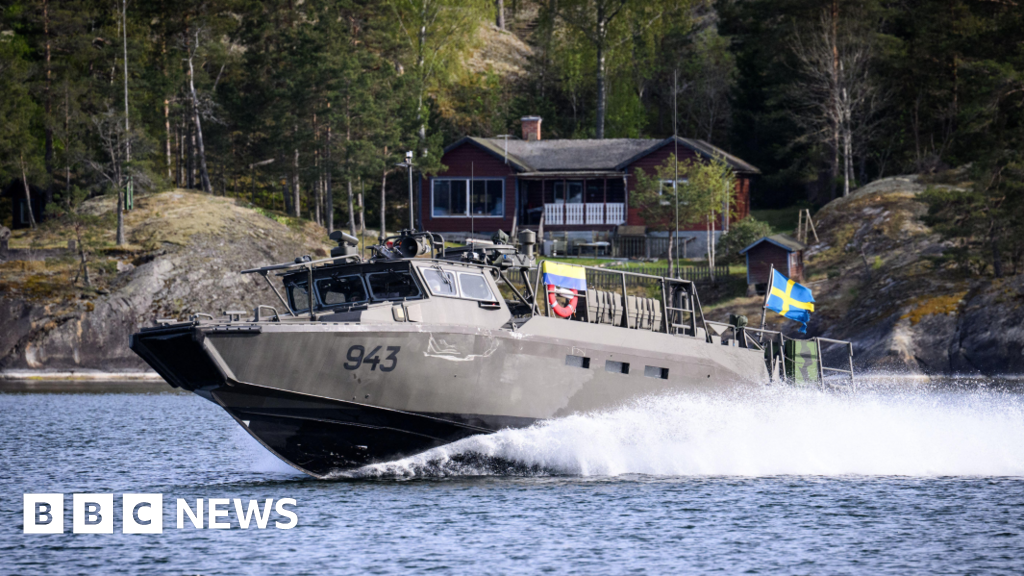
Muskö island sits roughly 50 kilometres south of Stockholm city centre, reachable by a road tunnel cut through solid rock. The naval base itself is built into the island's interior, a Cold War-era construction designed to shelter Swedish warships and submarines from prying eyes and incoming fire. For decades, the base's security depended partly on the difficulty of observing its approaches from outside.
That calculation shifts when a large residential property goes up on the nearest beach. Sweden's public broadcaster SVT described the estate as having been "a thorn in the armed forces' side", a phrase that captures both the physical proximity and the diplomatic awkwardness of the situation. The property's vantage point over the base's maritime approaches means that anyone positioned there could, in theory, observe naval movements, monitor signal activity, or even guide unmanned systems toward the facility.
The registered owner acquired the property in 2017, well before Russia's full-scale invasion of Ukraine in February 2022 transformed Sweden's security calculus. At that point, Sweden was still a militarily non-aligned state, and a Russian-linked buyer on Muskö might have attracted limited attention. The context has since changed entirely.
The drone threat that reshaped the argument
In its statement, the Swedish military was explicit about what had altered the threat assessment. The development of Russian drone warfare, it said, had "changed the threat landscape for Sweden". The location of the property, it continued, had "unique conditions for strengthening the defence of Muskö Naval Base, particularly against drones".
The reference to drones is not abstract. Russia's war in Ukraine has demonstrated how small, commercially available or adapted unmanned aerial vehicles can be used for reconnaissance, target designation and strike operations at relatively low cost. A building close to a naval base could serve as a relay point, a launch site, or an observation post for such systems. The military's request to seize the property amounts to an argument that the risk cannot be mitigated so long as the estate remains in private hands with connections to a hostile state.
Sweden has experienced drone incidents near its own territory in recent years. In early 2022, before the NATO accession process formally began, Swedish authorities investigated drone flights over the country's nuclear power plants, though attribution remained uncertain. The broader pattern across northern Europe, from the Baltic states to Finland and Norway, has been one of increased aerial surveillance activity linked to Russian interests. The Muskö request can be read as part of a wider Swedish effort to close off vulnerabilities that would have been considered manageable a decade ago.
The ownership structure and its complications
The property's legal ownership adds a layer of difficulty. The registered owner is not the Russian businessman himself but his wife, a dual citizen of Russia and Sweden. This distinction matters. Swedish property law, like that of most European states, protects the rights of owners who are citizens, and any seizure process would need to navigate the fact that the nominal owner holds a Swedish passport.
Swedish reports have not named the couple. What has been reported is that the husband has connections to the Russian state, a phrase broad enough to cover anything from business dealings with state-owned enterprises to more direct ties. Whether he currently lives in Sweden is unclear. The armed forces' statement cited both "the threat from Russian drones and the ownership situation of the property", linking the two concerns rather than resting the case on either one alone.
The decision to cite ownership as a separate factor suggests the military recognises that drone technology alone might not justify seizure. After all, a property in any private hands close to a base could theoretically be used to launch or guide drones. The ownership connection to Russia is what converts a general vulnerability into a specific and immediate concern.
Sweden's security transformation after NATO accession
Sweden's decision to seek NATO membership, finalised in March 2024, ended more than 200 years of military non-alignment. The decision was driven directly by Russia's invasion of Ukraine. It represented a fundamental reorientation of Swedish defence policy, from a posture of neutrality to one of collective security under Article 5 of the NATO treaty.
That reorientation has practical consequences, and the Muskö property case is one of them. As a non-aligned state, Sweden managed its security independently, relying on territorial defence and the geographic advantages of the Baltic Sea. As a NATO member, Sweden hosts allied forces and infrastructure. A naval base that once served Swedish national purposes now has a role in alliance operations. The stakes of a vulnerability at Muskö are correspondingly higher.
Defence Minister Pål Jonson put the matter plainly. Sweden needed, he said, to "make sure there's no risk of anyone gaining visibility into the site or any kind of tactical edge". The phrasing is careful: Jonson did not accuse the property's owners of espionage or sabotage. He framed the issue in terms of risk and tactical advantage, a broader standard that reflects how the Swedish government now assesses security threats.
Legal and diplomatic ramifications
The seizure request raises questions about property rights and the limits of state power in a democratic society. Sweden has expropriation laws that allow the state to take private land for public purposes, including defence, but the process normally requires compensation and a demonstration that the public interest cannot be served by other means. The involvement of a foreign state in the ownership structure may strengthen the government's case, but it also introduces diplomatic considerations.
Russia has not yet commented publicly on the request. Any diplomatic response would need to weigh the fact that the registered owner is a Swedish citizen, even if the underlying concern is about her husband's connections. Moscow has previously objected to European states seizing Russian-linked assets, framing such actions as unlawful expropriation. The Swedish case, however, rests on a specific security argument tied to a military installation, which may make it harder to challenge on purely property-law grounds.
There is also a precedent question. If Sweden seizes this property, other Russian-linked holdings near sensitive installations could come under scrutiny. The Baltic coast is dotted with properties owned by Russian nationals or entities. A successful seizure at Muskö would signal that Sweden is prepared to act on security grounds even when the legal ownership is complicated by dual citizenship.
The broader pattern across the Baltic
Sweden is not alone in confronting this problem. Finland, which joined NATO in April 2023, has faced similar questions about Russian-owned property near military sites. The Finnish government has moved to restrict property purchases by Russian citizens in certain areas, though outright seizures have been less common. The Baltic states, with their long borders with Russia and Belarus, have taken a harder line, with Estonia in particular pursuing legislation to strip Russian citizens of residence rights tied to property ownership.
What distinguishes the Swedish case is the specificity of the military's request. Rather than a broad prohibition, the armed forces are targeting one property, making a direct argument about its strategic value and the ownership risk. This approach is more surgical but also more legally exposed, because it requires demonstrating that this particular plot, owned by this particular person, constitutes a threat that cannot be managed through surveillance or other less intrusive measures.
People mentioned
-
Pål Jonson
-
Carl-Johan Edström
Organisations
Swedish Armed Forces · Muskö Naval Base · North Atlantic Treaty Organization