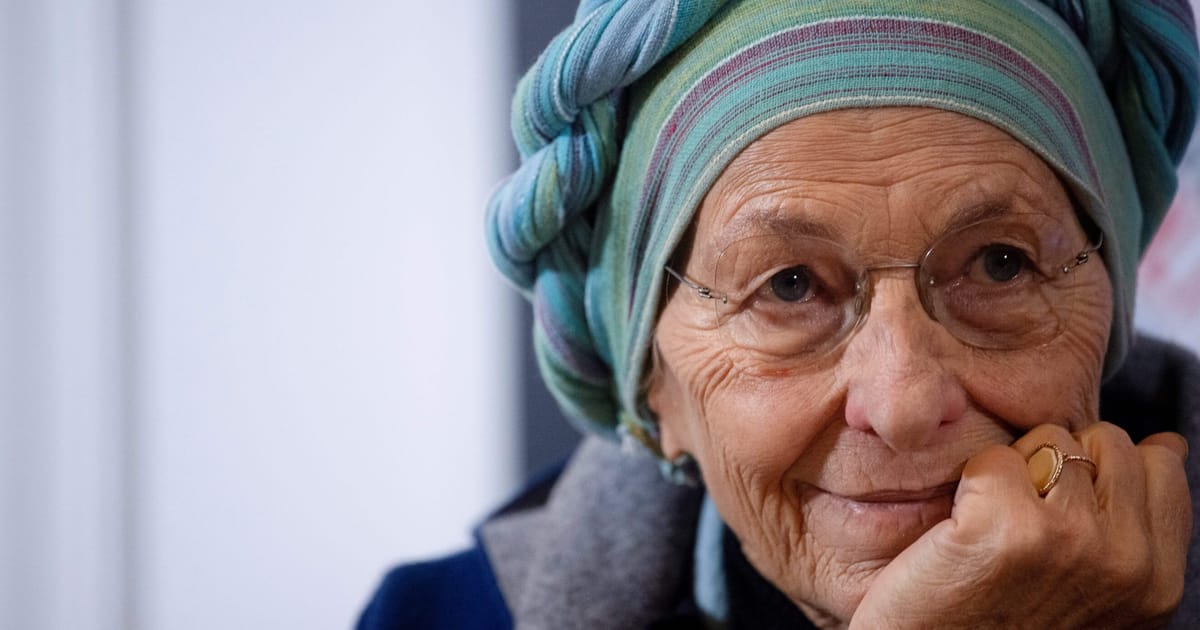
Emma Bonino, who has died at 78, spent half a century turning conviction into policy. The Italian activist-turned-commissioner shaped European humanitarian aid, pushed abortion rights through civil disobedience, and spent her final years arguing that the EU needed to become what she called a "big dog" on the world stage. Her party, Più Europa, announced the death on Friday.
From illegal abortion to the Radical Party
Born in rural Piedmont, Bonino's political life began with a personal crisis. In 1974 she had an illegal abortion, an experience that pushed her into Italy's feminist movement and towards the Radical Party. She was 28 when she won a parliamentary seat in 1976, one of the youngest women in the chamber, and she used it as a platform rather than a quiet corner. Divorce legalisation, abortion rights, nuclear power opposition, secularism: she treated the hemicycle as a continuation of street protest by other means.
The strategy worked. Italy legalised abortion in 1978, a victory that owed a great deal to the civil-disobedience campaigns Bonino had organised. She had already shown she was willing to be arrested for her beliefs, a pattern that would repeat across borders and decades.
Learning Brussels from the ground up
When the first direct elections to the European Parliament took place in 1979, Bonino won a seat and arrived in Luxembourg, where the institution was then partly based. She found it inert. Rather than settle, she moved to Brussels, which she identified as the real centre of European decision-making, and began learning how the bloc's power dynamics could be turned to activist ends.
She used her parliamentary immunity and profile to campaign far beyond Europe's borders. In 1987, Poland's Communist authorities briefly imprisoned her for joining a pro-democracy demonstration in Warsaw. Two years later, New York police detained her for handing out sterile syringes to drug users in protest at American AIDS-prevention policies. Each arrest was deliberate, each calculated to draw attention to a cause she thought governments were ignoring.
A reluctant commissioner who remade the role
Her path to the European Commission ran through Rome's byzantine coalition politics. After Italy's 1994 elections, Silvio Berlusconi needed the Radical Party's parliamentary support to form a government. The price was a commissioner's post for Bonino. She called the appointment a disappointment and the portfolio, covering humanitarian aid, consumer policy and fisheries, mere "crumbs."
She changed her mind quickly. Travelling to conflict zones in the Balkans, Rwanda and Zaire, she decided that the ideas she had championed on the street could be pursued more effectively at transnational level. Marco Zatterin, a journalist who served as her spokesperson in 1995, told Politico that her willingness to speak with "literally anyone" unsettled Brussels officials accustomed to more cautious commissioners.
"She was nothing like the commissioners that had come before her," Zatterin said. "The EU is disliked by most people because it often projects its status through bureaucratic norms that are removed from the world everyone else lives in, and she was the opposite of that."
The Turbot War and its aftermath
Directness had costs. During the 1995 "Turbot War" with Canada, Bonino accused Ottawa of "piracy" after Canadian authorities seized a Spanish fishing trawler in international waters. The dispute later revealed that European fleets she had defended were overfishing and misreporting catches, undermining her position.
A more serious blow came in 1998, when investigators opened a fraud probe into €2.4 million of fictitious humanitarian aid contracts awarded by the EU. No evidence connected Bonino to the wrongdoing, but her time as commissioner ended abruptly in March 1999 when Jacques Santer's entire College resigned over broader allegations of fraud and mismanagement centred on France's Édith Cresson.
Return to Rome and a federalist vision
Bonino bounced back within three months, winning a seat in the European Parliament. She would later re-enter Italian government, serving as minister for European affairs in Romano Prodi's centre-left administration from 2006, then as foreign minister under Enrico Letta in 2013, and as senate vice president. Her willingness to work across the aisle made her unusual in Italian politics and kept her under repeated consideration for the presidency.
Her later years brought frustration with the EU's direction. She argued that the union, "such as it is, doesn't work" and called for progress towards a "political union" that would let Europe match China and the United States in influence. But she rejected the idea of a European super-state, insisting instead on an EU with strength in limited competences.
An unlikely friendship with the Pope
Bonino's willingness to cooperate across ideological lines extended to the Vatican. Despite her fierce anticlericalism and her role in legalising abortion, she formed a friendship with Pope Francis. The two bonded over shared support for migrants, and the pontiff described her as an "example of freedom and resistance."
As Zatterin put it: "She was never an opportunist. Her priorities were her causes."
People mentioned
-
Marco Zatterin
Organisations
European Commission · European Parliament · Radical Party · Più Europa