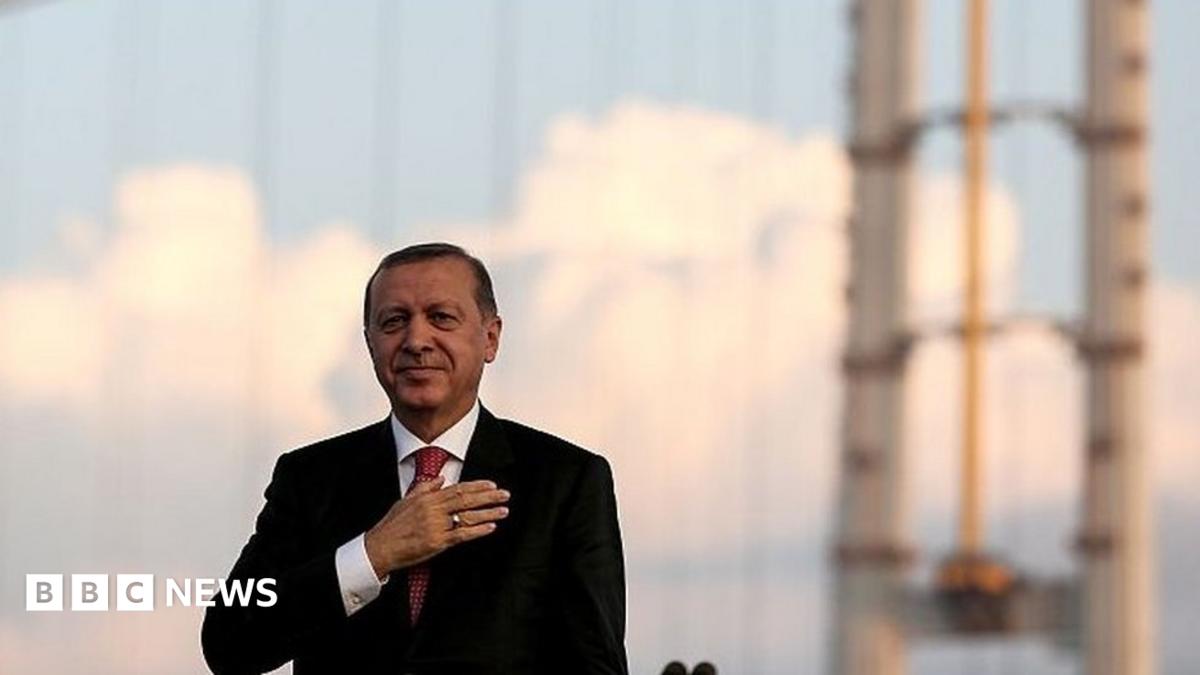
Turkey's longest-serving leader has crossed a new threshold. On 19 March 2025, police detained Ekrem Imamoglu, the mayor of Istanbul and the only politician to beat Recep Tayyip Erdogan's party in a straight fight, on charges of terrorism and corruption. The arrest came days after the main opposition Republican People's Party (CHP) designated Imamoglu as its presidential candidate for the next election, due by 2028. Within hours, hundreds of thousands of protesters filled streets across Istanbul, Ankara and Izmir in the largest demonstrations since the Gezi Park uprising of 2013.
The move has drawn sharp condemnation from the European Commission, which warned Ankara it must demonstrate commitment to democratic norms. The European Parliament has repeatedly criticised the erosion of judicial independence and media freedom under Erdogan. Yet the response from NATO capitals has been notably restrained. With the war in Ukraine entering its fourth year, Turkey's position as a Black Sea power controlling the straits, a mediator in the grain corridor, and a buyer of Russian S-400 missiles makes it too awkward to pressure.
From Black Sea coast to the Ak Saray
Erdogan's trajectory reads like a Turkish political novel. Born in 1954 in Rize, the son of a coastguard, he sold lemonade and sesame buns on Istanbul streets before graduating from Marmara University with a management degree. In the 1970s and 1980s he rose through Necmettin Erbakan's Islamist Welfare Party, winning the Istanbul mayoralty in 1994. Four years later he was jailed for four months for reading a nationalist poem that likened mosques to barracks and minarets to bayonets, a conviction that turned him into a martyr for the religious right.
When the Welfare Party was banned in 1998 for violating secular principles, Erdogan and Abdullah Gul founded the Justice and Development Party (AKP) in 2001. They presented a reformed, pro-European face: Muslim Democrats rather than Islamists. The strategy worked. In 2002 the AKP won a parliamentary majority, and by March 2003 Erdogan became prime minister.
The reformer who delivered growth
His first decade in power brought genuine transformation. Inflation fell from triple digits to single digits. Per capita GDP tripled. The AKP built highways, bridges, airports and hospitals at a pace that reshaped Anatolia. Millions entered the middle class. Brussels opened accession negotiations in 2005, and Erdogan pushed through reforms that curtailed military influence over civilian politics, a prerequisite for EU membership that also conveniently removed the main check on his own authority.
But the reformist impulse faded. By 2013, when plans to redevelop Gezi Park sparked nationwide protests, Erdogan dismissed demonstrators as "looters" and "terrorists." Eleven people died. The heavy-handed response marked a turning point. Western diplomats who once praised him as a model for the Muslim world began speaking of authoritarian drift.
The Gulen rupture and the coup that changed everything
The rupture with Fethullah Gulen, the Pennsylvania-based preacher whose network had helped the AKP win three elections and sideline the military, proved decisive. By 2013 the two were openly at war. Then came 15 July 2016. Rebel soldiers seized bridges, bombed parliament, and came close to capturing Erdogan at a Marmaris resort. He flew to Istanbul, appeared on FaceTime urging supporters into the streets, and returned to Ataturk Airport as a victor. Nearly 300 civilians died resisting the putsch.
The aftermath was a purge of staggering scale. Some 150,000 public servants, teachers, judges, police, academics, journalists, were dismissed by decree. More than 50,000 were detained. The Gulen movement was designated a terrorist organisation. The crackdown hollowed out institutions and deepened the freeze with the European Commission, which has kept accession talks effectively frozen since.
A presidency rebuilt in his image
Barred by party rules from a fourth prime ministerial term, Erdogan stood for the presidency in 2014, winning the first direct election with 52 per cent. But the office was still largely ceremonial. He wanted more. A narrow 2017 referendum, 51.4 per cent to 48.6 per cent, replaced the parliamentary system with an executive presidency. Erdogan gained the power to issue decrees, appoint ministers without parliamentary approval, pack the judiciary, and declare states of emergency. He moved into the 1,000-room Ak Saray palace in Ankara, a symbol of the new order.
The 2018 election, held under a state of emergency, gave him a fresh mandate with 52.6 per cent. Yet cracks appeared. In 2019 the AKP lost Istanbul, Ankara and Izmir. Imamoglu's victory in Istanbul, Erdogan's own former mayoralty, was annulled and rerun; he won again by a wider margin. The president never accepted the result.
Foreign policy as a shield
Erdogan's diplomatic balancing act has become his best domestic insurance. As a NATO member, Turkey hosts the alliance's second-largest army and controls the Montreux Convention governing Black Sea straits. Yet Erdogan has cultivated Vladimir Putin, buying S-400 air defence systems despite US sanctions threats, and positioning himself as the indispensable mediator in Ukraine. Turkish drones have helped Kyiv; Turkish diplomacy reopened the grain corridor. Meanwhile, Sweden's NATO bid was delayed for 20 months over Kurdish extradition demands.
This transactional approach frustrates European capitals. The EU's 2016 migration deal, six billion euros for border control, gave Ankara leverage it has used repeatedly. When the European Parliament voted in 2021 to condemn democratic backsliding, Erdogan dismissed it as interference. The accession process remains moribund; the Commission's 2024 report again highlighted "serious deterioration" in rule of law and fundamental rights.
The Imamoglu calculation
Imamoglu's arrest on terrorism charges, linked to alleged ties with the PKK, and corruption allegations regarding municipal tenders marks an escalation. Previous mayors from the pro-Kurdish DEM party were replaced by government-appointed trustees. But Imamoglu is different: a secular, telegenic figure who polls ahead of Erdogan in head-to-head matchups. His 2022 conviction for insulting a public official was under appeal, allowing him to remain in office. The new charges carry sentences that would bar him from politics entirely.
Analysts in Ankara and Brussels see timing. With the US administration focused elsewhere and European leaders preoccupied with Ukraine and defence spending, the political cost of eliminating a rival appears manageable. Erdogan's base in conservative Anatolia remains solid. The CHP, despite Imamoglu's popularity, struggles to expand beyond its coastal strongholds.
People mentioned
-
Ekrem Imamoglu
-
Fethullah Gulen
-
Abdullah Gul
Organisations
Justice and Development Party (AKP) · Republican People's Party (CHP) · North Atlantic Treaty Organization (NATO) · European Union · European Commission