Mondelez International, the American conglomerate behind Cadbury, Toblerone and Oreo, has spent the months since securing a second delay to the EU's deforestation law lobbying European and American officials to weaken it further. An investigation into lobbying records and meeting disclosures reveals the extent of a campaign that runs through the Trump administration's Brussels embassy, the American Chamber of Commerce, and sympathetic MEPs in the European Parliament.
A law weakened before it takes effect
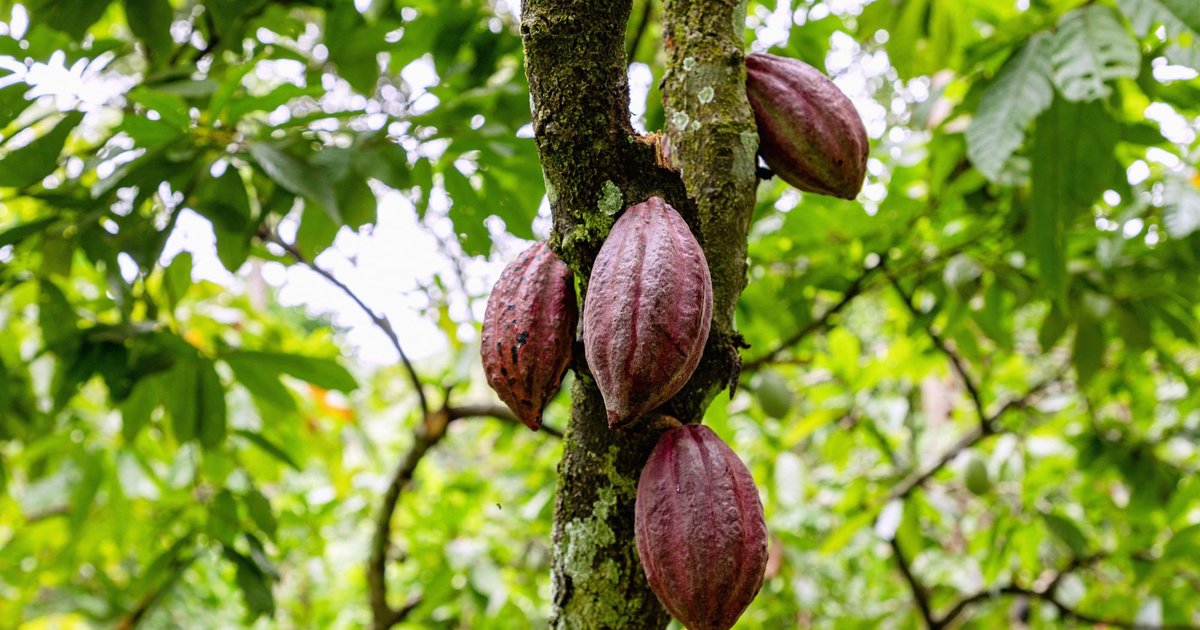
The EU Deforestation Regulation, passed in 2023, requires companies importing commodities linked to forest destruction, including cocoa, palm oil and cattle, to conduct due diligence on their supply chains. Cocoa is the largest single driver: EU chocolate consumption accounts for roughly 40 percent of the bloc's deforestation footprint abroad. The regulation was the first of its kind and has prompted similar proposals in the UK and the United States.
It has also attracted intense opposition. After lobbying from agribusiness and commodity traders, the European Commission delayed implementation by two years. In July 2026, it removed leather from the list of covered commodities through a delegated act. The European Parliament and Council are now scrutinising that act. If either objects, the regulation could be thrown back into limbo.
From supporter to sceptic
Mondelez's position has shifted markedly. In its 2020 response to the EU's public consultation on the regulation, the company wrote that it "supports the adoption of harmonized due diligence legislation in the European Union." It belonged to the Cocoa Coalition alongside Mars, Nestlé, Ferrero and Tony's Chocoloney, which jointly urged Brussels not to delay the law in 2024.
By mid-2025, Mondelez had broken with that coalition, publicly calling for a second 12-month delay on the grounds that cocoa farmers "are far from being ready." Mars, Nestlé and Ferrero continued to press for regulatory certainty and an end to delays.
Antonie Fountain, who leads the VOICE Network and is part of the EU Sustainable Supply Chains Coalition, is blunt about the reason. "Mondelez are clearly still pushing back against the EUDR," he said. "They aren't compliant, and haven't done enough to get ready for the law."
Mondelez says it "fully supports the objectives" of the regulation and remains "committed to deforestation-free supply chains." A spokesperson said the company engages "openly with policymakers" and that those discussions are disclosed in transparency registers.
The Trump channel
In late June 2026, Mondelez CEO Dirk Van de Put met Andrew Puzder, the US ambassador to the EU appointed by President Trump. Puzder, a close Trump ally whose donations to Trump's 2016 campaign totalled $332,000, has been an outspoken critic of EU regulation. After the meeting, Puzder posted on X: "Fewer non-tariff barriers and greater regulatory stability help business invest, innovate, create jobs, and grow the economy. That was the theme of a great conversation with Mondelez CEO Dirk Van de Put." He described the EUDR as a "non-tariff trade barrier" that "risks adding significant compliance burdens and administrative costs across supply chains."
The following day, Puzder published an opinion piece in Agence Europe calling for further "simplifications" to the regulation. The Trump administration has listed the EUDR as a non-tariff barrier to trade, despite the law applying equally to EU-headquartered companies. In March 2026, US agriculture and trade representatives toured European capitals lobbying against it.
AmChamEU as access route
Mondelez's access to the Trump administration has been facilitated by its position on the board of the American Chamber of Commerce to the EU. A senior Mondelez representative joined the board in June 2025, one month before the company first publicly requested an EUDR delay.
Analysis of photographs and meeting records on the AmChamEU website shows a Mondelez representative present at least five times when the chamber hosted meetings with senior US diplomats between November 2025 and mid-2026, including sessions with Deputy Secretary of State Christopher Landau and US Trade Representative Jamieson Greer. No minutes were published.
AmChamEU is a powerful presence in Brussels. Its website records three meetings with the European Commission president, eight with commissioners, 17 delegations to EU member states and over 110 meetings with MEPs in the past year. Its executive council vice-chair is Chevron's European manager. The chamber has called for a penalty-free phase-in of the EUDR during its first year, which would allow companies to import products from deforested land without consequence, effectively extending the delay. AmChamEU denied trying to undermine the regulation, saying it supported the law's objectives and sought simplification to ensure legislation is "clear, proportionate and implementable."
Direct lobbying in Brussels and capitals
Mondelez has also lobbied directly within EU institutions. According to Lobbyfacts.eu, the company has spent between €1.2 million and €1.5 million on EU lobbying since the EUDR's passage in 2023. The records do not break down spending by topic.
In March 2026, Mondelez met Norbert Lins, vice-chair of the European Parliament's Agriculture Committee and a vocal EUDR critic, and Christine Schneider, the European People's Party rapporteur on the regulation, who played a central role in securing the second delay. It also met Danish MEP Asger Christensen, who subsequently submitted a parliamentary question asking the Commission to keep the EUDR "focused on the commodities and supply chains with the greatest deforestation risk."
A Mondelez senior EU public affairs manager sits on the board of the European Food Forum, an MEP-led body that civil society groups have criticised as an industry lobbying vehicle. In June 2026, the forum held an EUDR event hosted by two MEPs sceptical of the regulation, including Italian EPP member Pietro Fiocchi, who used it to call for a further delay.
In France and Germany, Mondelez spent between €570,000 and €680,000 on lobbying in 2025. In France, it met agriculture minister Annie Genevard, who told the French Senate in June that the EUDR "poses significant problems for European livestock farmers." It also met a civil servant at the Ministry of Ecological Transition responsible for forests. The French lobbying register does not specify which directives were discussed. In Germany, Mondelez wrote to Bundestag members in September 2025 asking them to endorse an EUDR delay.
People mentioned
-
Dirk Van de Put
-
Antonie Fountain
-
Norbert Lins
-
Christine Schneider
-
Annie Genevard
Organisations
Mondelez International · American Chamber of Commerce to the EU · VOICE Network · European Food Forum · European Commission