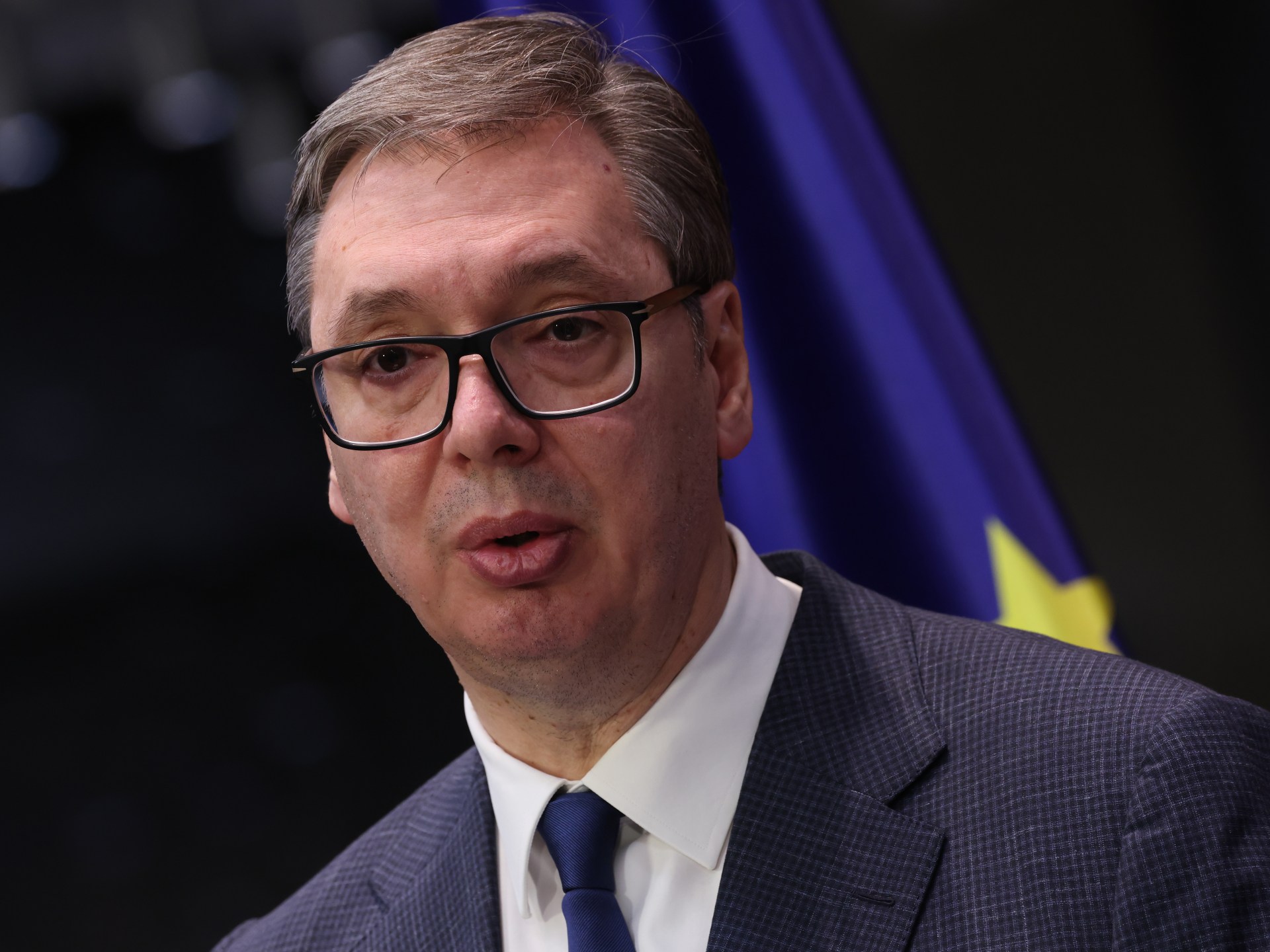
Serbia's government moved on Monday to dissolve parliament and trigger a snap election, a gambit by President Aleksandar Vucic to convert months of street unrest into a fresh mandate. Prime Minister Djuro Macut announced the proposal at a cabinet meeting in Belgrade, framing it as a response to public demand. The vote is expected on either 18 or 25 October, cutting short a parliamentary term that was not due to expire until December 2027.
A calculated reset
Vucic has dominated Serbian politics for 12 years, alternating between the premiership and the presidency since 2014. His Serbian Progressive Party (SNS) nominated him on Saturday to run for prime minister again, a move that would return him to the executive office he held from 2014 to 2017. The constitution requires between 45 and 60 days of campaigning, a timeline Vucic has already accepted.
The announcement came as Mladic, the former Bosnian Serb army commander convicted of genocide and crimes against humanity by the UN war crimes tribunal, was buried in Belgrade with full military honours. The ceremony, attended by senior Serbian officials, drew sharp criticism from Brussels and complicated an already fraught relationship with the European Union.
Protests that would not subside
The catalyst for the current crisis was the collapse of a concrete canopy at Novi Sad's railway station on 1 November 2024, which killed 16 people. What began as grief turned into a sustained anti-corruption movement led by students, who blocked faculties and highways for months. Their core demand was early elections, arguing that the disaster exposed systemic rot in construction oversight and public procurement.
Macut acknowledged the pressure directly. "Serbia has faced protests, blockades, deep divisions, problems in education and heavy pressure on institutions," he told ministers. "For some time, parts of the public have been calling for early parliamentary elections," adding that "a responsible government never ignores such demands."
Opposition fragments, institutions tested
The opposition remains fractured. Several parties boycotted the 2020 parliamentary election, citing unfair conditions, and only returned to the chamber in 2022. They accuse Vucic and his allies of violence against political opponents, rampant corruption, ties with organised crime and stifling media freedoms. The president and his circle deny all wrongdoing.
Independent journalists and watchdogs have documented a steady erosion of press freedom. Serbia ranked 98th out of 180 countries in Reporters Without Borders' 2025 World Press Freedom Index, down from 93rd in 2023. The regulatory environment for electronic media has been tightened, and state advertising revenue is distributed in ways that favour pro-government outlets.
EU accession frozen, eastern ties deepened
Serbia has been an EU candidate since 2012, but accession negotiations have barely advanced. Of 35 negotiating chapters, only two have been opened and none closed. The European Commission's 2025 report highlighted backsliding on rule of law, media freedom and the normalisation of relations with Kosovo. Vucic has instead deepened energy and infrastructure ties with Russia and China, including a gas pipeline deal with Gazprom and Chinese investment in mining and surveillance technology.
The EU's leverage is limited. Serbia depends on the European market for over 60 percent of its trade, but Vucic has calculated that Brussels will not risk destabilising a country that hosts NATO's Kosovo Force and manages migration flows across the Western Balkans. The Mladic funeral, however, forced a sharper tone from EU foreign policy chief Kaja Kallas, who said it "sends a worrying signal about Serbia's commitment to European values."
The electoral arithmetic
Polls suggest the SNS would remain the largest party but could lose its parliamentary majority. A December 2025 survey by the Belgrade-based Centre for Free Elections and Democracy gave the SNS 42 percent support, down from 48 percent at the 2023 election. The opposition coalition, if it holds together, could reach the mid-30s. Turnout will be decisive: student organisations have urged a boycott, arguing the election is a trap, while others insist participation is the only way to force change.
Background: from canopy collapse to constitutional crisis
What happens next
The election will also be a referendum on Serbia's foreign policy orientation. Vucic has portrayed his balancing act between Brussels, Moscow and Beijing as pragmatic statecraft. His critics call it a protection racket for domestic impunity. The voters, many of whom have never known another leader, will decide which narrative holds.
People mentioned
-
Djuro Macut
Organisations
Serbian Progressive Party · European Union · United Nations