The United States State Department has confirmed that French organisations will be shut out of a grant programme explicitly designed to advance the administration's political agenda in Europe, a move that follows a formal warning from Paris that the scheme risked constituting foreign interference in next year's presidential election.
A programme built on political alignment
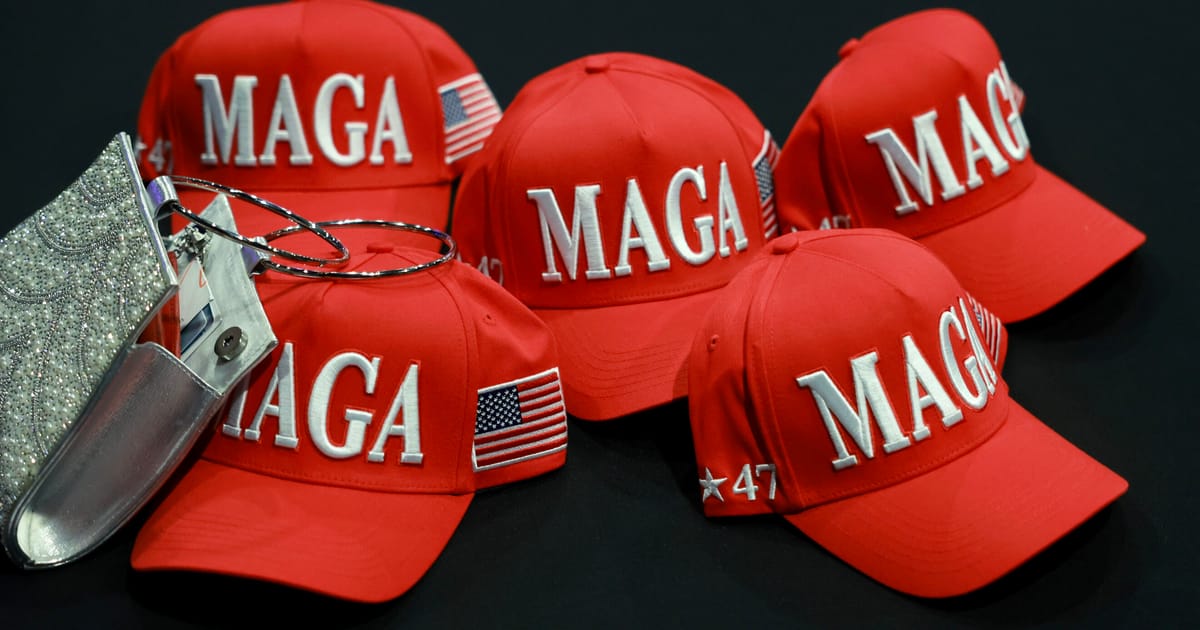
The grant programme was formally advertised during the summer of 2026, after State Department officials held talks earlier in the year with think tanks and advocacy groups aligned with the Make America Great Again movement. Its stated aims include fighting what the administration describes as democratic backsliding in Europe, specifically targeting what it calls "overbroad and vague hate-speech laws." The language mirrors rhetoric used by Vice President JD Vance, who has repeatedly framed the European Union's content-moderation legislation and election-integrity measures as attacks on free expression.
A State Department spokesperson said the programme's objectives included "collaborating with European partners to jointly support European revitalization and civilizational self-confidence." The same spokesperson insisted the scheme "does not and will not fund political parties, in Europe or elsewhere" and added that the allocation of grants "was still in active deliberation."
Paris draws a red line
The French response was swift. Foreign Minister Jean-Noël Barrot warned that the programme could amount to "foreign interference in [European] electoral processes." The language was deliberate: France is in the final stretch before a presidential election scheduled for spring 2027, and the government has made countering external influence a centrepiece of its domestic security agenda.
Barrot's intervention reflects a broader anxiety in European capitals. The administration's high-profile embrace of Viktor Orbán's government in Hungary and its National Security Strategy pledge to support "patriotic European parties" have been read in Paris, Berlin and Brussels as a signal that Washington intends to back political forces that challenge the EU's regulatory consensus.
France builds its own defences
While the diplomatic exchange played out, the French parliament has been advancing its own legislative response. A law aimed at strengthening the country's arsenal against online disinformation and foreign interference is set to be examined by the Senate in October 2026. The text expands the powers of the Viginum service, the state agency created in 2021 to detect and attribute digital manipulation campaigns, and introduces new transparency obligations for online platforms during election periods.
The legislation follows a pattern established since the 2017 presidential campaign, when the Macron team published a dossier accusing Russian actors of hacking and leaking internal documents. Since then, France has treated foreign digital interference as a structural threat rather than an episodic one. The upcoming law is intended to be in force well before the official campaign opens.
The transatlantic free-speech dispute
The friction over the grant programme sits inside a wider argument about the balance between free expression and democratic protection. The European Union's Digital Services Act, which entered full application in February 2024, requires very large online platforms to assess and mitigate systemic risks including the spread of illegal content and disinformation. The US administration views these obligations as a form of state-sponsored censorship. European officials counter that the rules are content-neutral and designed to protect the integrity of public debate.
Vance has made this disagreement a personal theme. In speeches to European audiences he has argued that "democratic resilience" cannot be built by silencing dissent, a line that resonates with parties on the European right who regard the DSA as a tool to entrench establishment control. The grant programme appears to be the practical extension of that argument: financial support for civil-society actors who share the administration's diagnosis.
A French applicant left waiting
Nicolas Conquer, founder of the Paris-based think tank Western Arc, confirmed he had applied for funding. Western Arc positions itself as a MAGA-aligned voice in French intellectual life, publishing commentary on immigration, identity and what it calls the "civilisational crisis" of the West. Conquer said he had yet to receive a formal response to his application. With French applicants now explicitly excluded, that response is effectively a rejection.
The exclusion raises questions about the programme's scope. If France, the EU's second-largest economy and a permanent UN Security Council member, is disqualified on interference grounds, the logic would seem to apply to any member state holding a national election. Germany votes in 2025 for its federal parliament; Poland's presidential election is due in 2025; Romania's presidential rerun is scheduled for May 2025. The State Department has not clarified whether similar restrictions will apply elsewhere.
Why this matters
How we got here
What happens next
People mentioned
-
Nicolas Conquer
-
Spokesperson for the US State Department
Organisations
US State Department · French Ministry for Europe and Foreign Affairs · Western Arc · European Union