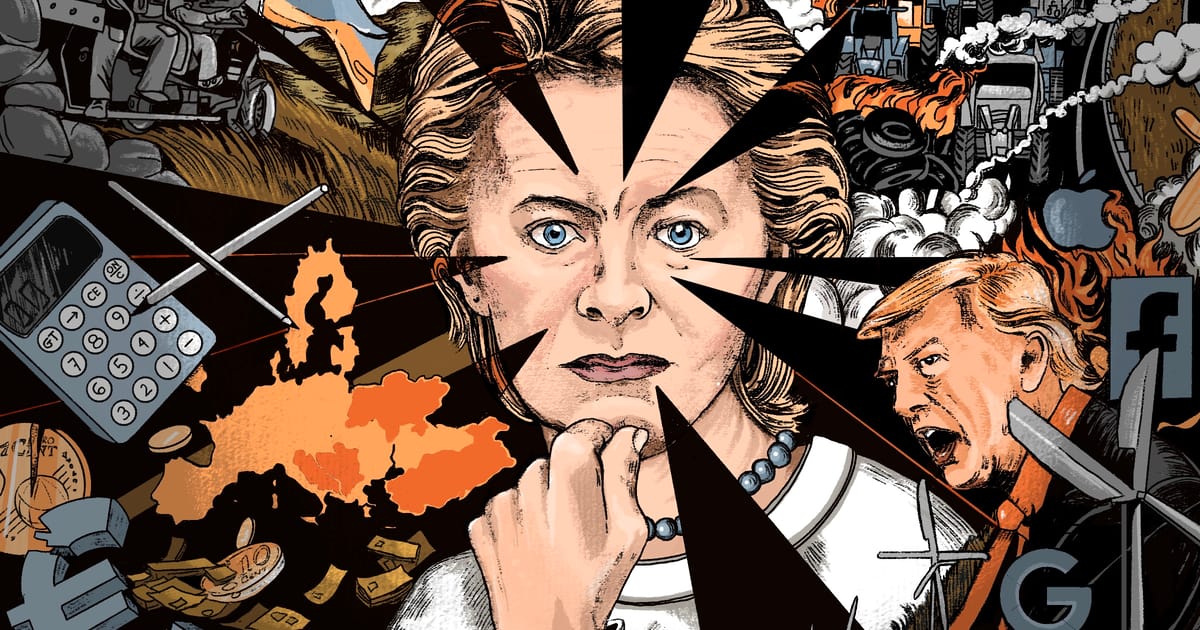
Ursula von der Leyen delivers her State of the European Union address on 16 September with three years left in a second term that, barring a surprise, will close a decade running the European Commission. She is not expected to seek a third mandate. The speech will set out priorities. The harder question is what can actually be delivered when the major objectives all compete for the same scarce resources: money, political consent, and time.
The budget that binds everything else
The Commission has proposed a near-€2 trillion multiannual financial framework for 2028-2034. Two entrenched camps have already formed. The so-called Friends of Cohesion, including Italy, Greece, Poland and Spain, want traditional spending on cohesion policy and the Common Agricultural Policy preserved and routed through existing national channels. The frugal group, led by Germany, Sweden, Denmark and the Netherlands, wants a smaller overall budget directed toward innovation, defence and industrial capacity.
The timetable leaves little room. The next MFF must take effect on 1 January 2028, which means negotiations need to conclude well before that date. But 2027 brings national elections in France, Italy, Spain and Poland. The closer those elections loom, the harder it becomes for governments to explain concessions to domestic voters. A Commission official argued that the election calendar is actually a reason to move fast, calling those pressures "fantastic factors to get the job done now."
What makes this fight consequential is that nearly everything else von der Leyen wants to achieve depends on the outcome. Industrial subsidies, defence procurement, enlargement support, green investment: all require budgetary headroom that does not currently exist. The Council's MFF overview shows how the previous round was delayed and cut, a precedent that should not comfort anyone hoping for a quick deal this time.
Chinese overcapacity and the industrial squeeze
Von der Leyen commissioned the former European Central Bank president Mario Draghi to examine Europe's competitiveness. His assessment was blunt: without action, Europe would have to compromise on welfare, the environment, or freedom. He called for an additional €800 billion in annual investment to reverse the productivity slump pushing the continent behind the United States and China.
Chinese state subsidies have built capacity in electric vehicles, batteries, solar panels and steel that far exceeds domestic demand, and that surplus is being directed at European markets. Beijing's control over critical minerals needed for the green transition adds a second layer of dependency. A Commission official, granted anonymity, said there is "near-total agreement" on diagnosing the problem and on the solutions. The disagreement is over how far member states are willing to go in confronting Beijing.
Trade commissioner Maroš Šefčovič has set an October deadline for talks with China. Failure would make China the next front in a trade conflict that has already drawn in the United States. The dilemma is structural: European companies need Chinese markets and supply chains, but the current terms are hollowing out the industrial base at home.
A Green Deal under pressure from its own side
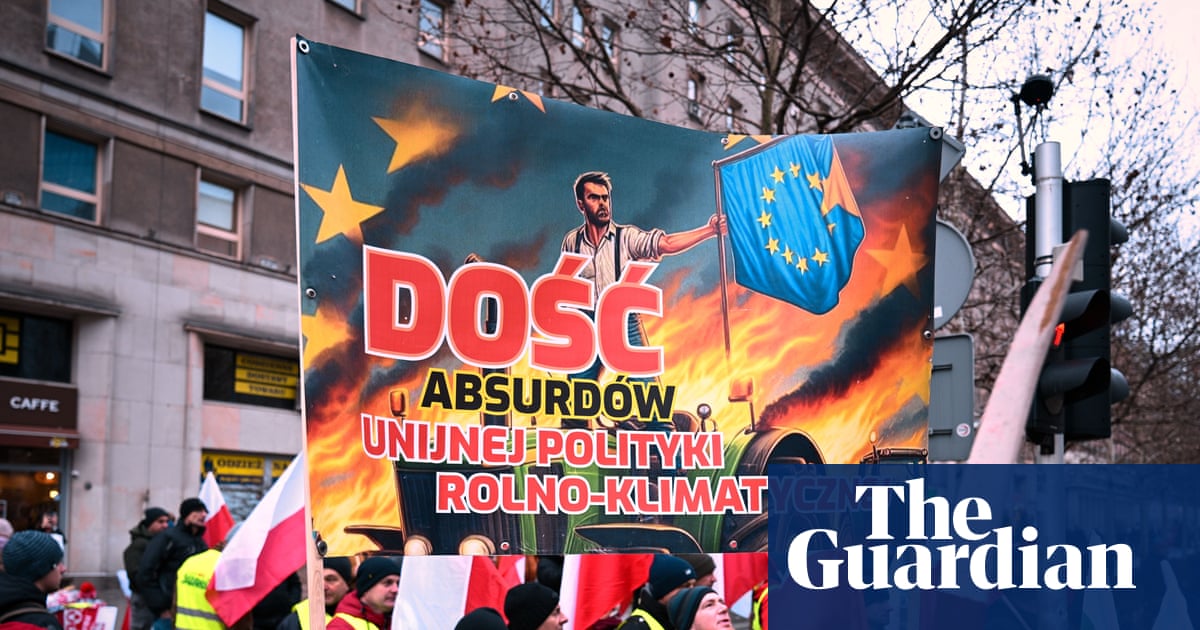
The European Green Deal defined von der Leyen's first term. Her second is being shaped by the backlash against it. Farmers have protested across the continent. Industry groups and national governments argue that environmental regulation adds cost and complexity at precisely the moment European manufacturers are struggling with high energy prices and foreign competition. Extreme heat and wildfires, meanwhile, are intensifying.
Marie Toussaint, a French Green MEP, conceded that "some environmental policies were adopted without thinking about the social issues," pointing to household energy bills that are already unaffordable for many. Von der Leyen now has to decide how far to pull back from her own signature policy without gutting its substance or alienating the green parties that support her coalition in the European Parliament.
Digital rules and the transatlantic cost
The Digital Markets Act and Digital Services Act have moved from legislation to enforcement. The Commission has levied fines against Apple, Meta and Google, drawing sharp criticism from Washington. Von der Leyen's plan to restrict social media access for children under 13 could provoke a Trump administration already hostile to European tech regulation.
A Commission official framed the position in sovereign terms: Europe would not presume to tell the United States how to regulate on its own territory, and asks the same in return. The principle is straightforward. The politics are entangled with Europe's simultaneous need for American engagement on Ukraine and defence, where Washington's cooperation cannot be taken for granted.
Defence, Ukraine and the risk of political erosion
Europe's security discussion has shifted from abstract strategic autonomy to the practical question of whether the continent can arm itself without relying on Washington. The €150 billion SAFE programme is meant to expand European defence industrial capacity and support joint procurement. Member states still disagree on how much to spend and how to organise that spending.
Estonian foreign minister Margus Tsahkna was blunt about dealing with Moscow: "We know exactly how to talk to Russians. Pressure, no compromises, and only from a position of strength." Keeping Ukraine adequately armed and financed, while securing credible long-term security guarantees, is the prerequisite for any peace process that does not simply reward aggression. The risk is that elections in 2027 could bring more Kremlin-friendly governments into the EU's decision-making circle.
Enlargement credibility running thin
Ukraine, Moldova and Western Balkan countries have moved closer to membership, but enthusiasm for enlargement has not been matched by institutional readiness. Candidate countries face demanding reforms on rule of law, corruption and judicial independence. Existing members worry about the cost of absorbing new members and whether EU institutions can function with more than 30 participants.
North Macedonia's foreign minister Timčo Mucunski said his country had been treated unfairly and deserved "to be in a much more advanced position." Von der Leyen needs to keep the accession process credible, or countries in the EU's waiting room will start looking elsewhere for alliances. The Commission's enlargement process overview lists the formal steps, but formal steps mean little without political momentum behind them.
People mentioned
-
Victor Negrescu
-
Marie Toussaint
-
Timčo Mucunski
-
Martin Hojsík
Organisations
European Commission · European Parliament