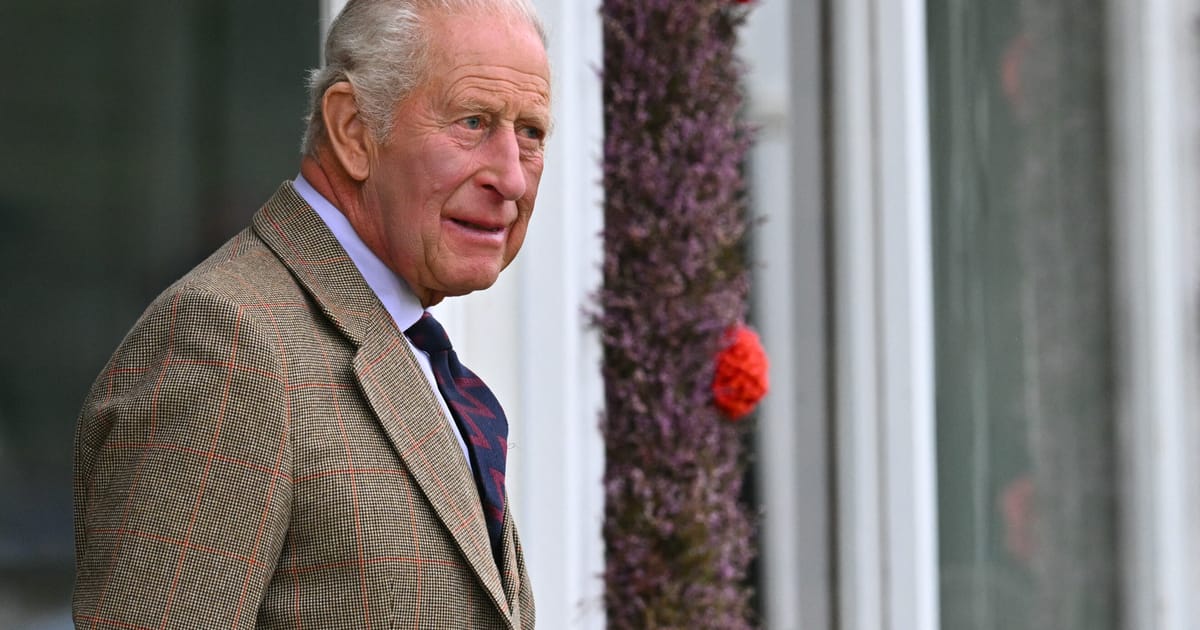
King Charles III is preparing to host a private gathering of artificial intelligence leaders at Dumfries House, his foundation's headquarters in Ayrshire, Scotland, later this month. Two people familiar with the plans, granted anonymity because the event has not been publicly announced, said around 30 high-profile figures from industry, government and ethics bodies have been invited.
The guest list is expected to include Jensen Huang, chief executive of Nvidia; Demis Hassabis, the British founder and now chair of Google DeepMind; and Paolo Benanti, a Franciscan friar who serves as the Vatican's adviser on artificial intelligence. A Royal official confirmed the King's role as convener, stating he wishes to "convene, engage, listen and encourage debate" on what the official described as one of the biggest issues of the age, without issuing his own thoughts.
A deliberately eclectic guest list
The selection of attendees signals an attempt to bridge commercial, scientific and ethical perspectives. Huang leads the company whose graphics processors have become the default infrastructure for large-scale model training. Hassabis, a former chess prodigy turned neuroscientist, has steered DeepMind from game-playing breakthroughs toward protein folding and, more recently, the Gemini family of multimodal models. Benanti represents a distinct strand: the Holy See has been unusually vocal on AI ethics, with Pope Francis addressing the G7 summit in June on the need for algorithmic accountability.
One person familiar with the invitations said the total cohort numbers roughly 30, suggesting a format closer to a Ditchley-style roundtable than a large conference. The Ditchley Foundation, which has run off-the-record discussions on global issues since 1958, is handling organisation. Ministers are also expected, though no names have been disclosed.
Charles's growing engagement with the technology
The King's interest in artificial intelligence has been visible for at least a year. During the state visit to Washington in April, he met Huang alongside executives from Apple, Amazon and Google, emphasising collaboration between the United States and the United Kingdom. In November, Huang and other AI pioneers received an award from Charles at Buckingham Palace. Huang later said the King gifted him a copy of the address Charles delivered at the UK's AI Safety Summit, which warned that realising AI's benefits requires collective action to combat its significant risks.
That summit, hosted by then-prime minister Rishi Sunak at Bletchley Park in November 2023, produced the Bletchley Declaration signed by 28 countries and the European Union. Charles's recorded message to delegates stressed the need for international coordination. The Dumfries House gathering appears to be a continuation of that convening role, now shifted from a governmental summit to a more informal, foundation-led setting.
The Ditchley Foundation's method
Founded by philanthropist Sir David Wills, the Ditchley Foundation specialises in Chatham House Rule meetings that bring together decision-makers from governments, business and civil society. Its Oxfordshire estate has hosted discussions on nuclear non-proliferation, climate change and, more recently, digital governance. By entrusting the event to Ditchley, the King's Foundation ensures a format designed for candid exchange rather than public positioning.
A Ditchley spokesperson declined to comment on the programme. The foundation's typical model involves background papers circulated in advance, followed by plenary sessions and smaller working groups. Participants speak in a personal capacity, which may explain why corporate representatives such as Nvidia and Google DeepMind have not confirmed their executives' attendance.
Geopolitical undercurrents
The event takes place against a backdrop of shifting transatlantic technology relations. Last September's state visit by President Donald Trump coincided with the announcement of a US-UK Tech Prosperity Deal and significant investment pledges from American firms. That agreement was later suspended amid trade disagreements, leaving the future of formal cooperation uncertain.
Meanwhile, the European Union's AI Act entered into force in August 2024, establishing the world's first comprehensive regulatory framework for artificial intelligence. The United Kingdom has opted for a sectoral, principles-based approach rather than a single statute, though the new Labour government has signalled it may introduce targeted legislation for the most powerful models. Charles's gathering, while not a formal negotiating forum, could influence the tone of future UK-EU and UK-US dialogue.
Previous royal interventions on technology
Charles has a long record of engaging with scientific and environmental issues, from architecture to sustainable farming. His Prince's Trust has funded digital skills programmes for young people, and the King's Foundation runs educational courses at Dumfries House. However, artificial intelligence represents a departure: a general-purpose technology with military, economic and societal implications that cut across every portfolio. The November awards ceremony, where Huang received a crystal trophy, was the first time the monarchy explicitly honoured AI pioneers as a group.
What the participants might discuss
No agenda has been published, but three themes are likely. First, compute access: Nvidia's dominance in training hardware makes Huang's perspective central to any conversation about supply chains, export controls and sovereign capacity. Second, frontier model safety: Hassabis has advocated a global standards body, presumably modelled on the International Atomic Energy Agency, to evaluate the most capable systems before deployment. Third, ethical frameworks: Benanti has written on "algorethics", arguing that moral reasoning must be embedded in design rather than bolted on afterward.
The inclusion of ministers suggests policy translation is intended. The UK's Department for Science, Innovation and Technology is drafting its response to the AI Opportunities Action Plan, while the EU implements the AI Act's phased obligations. A private discussion among this group could inform both processes without committing any party to a public position.
The gathering reflects a broader trend: heads of state increasingly treating artificial intelligence as a strategic domain requiring personal diplomatic engagement. French President Emmanuel Macron hosted the AI Action Summit in Paris in February 2025; German Chancellor Olaf Scholz convened a similar industry roundtable in Berlin last June. Charles's version is distinct in its reliance on charitable infrastructure rather than governmental machinery, and in its explicit inclusion of a religious-ethical voice.
Whether the conversation yields tangible coordination or merely reinforces existing networks remains to be seen. The King's official emphasised listening over leading. In a field where hype cycles outpace policy cycles, a forum that forces competing perspectives into the same room may be the most valuable output of all.
People mentioned
-
Paolo Benanti
-
King Charles III
Organisations
Nvidia · Google DeepMind · Vatican · Ditchley Foundation · King's Foundation