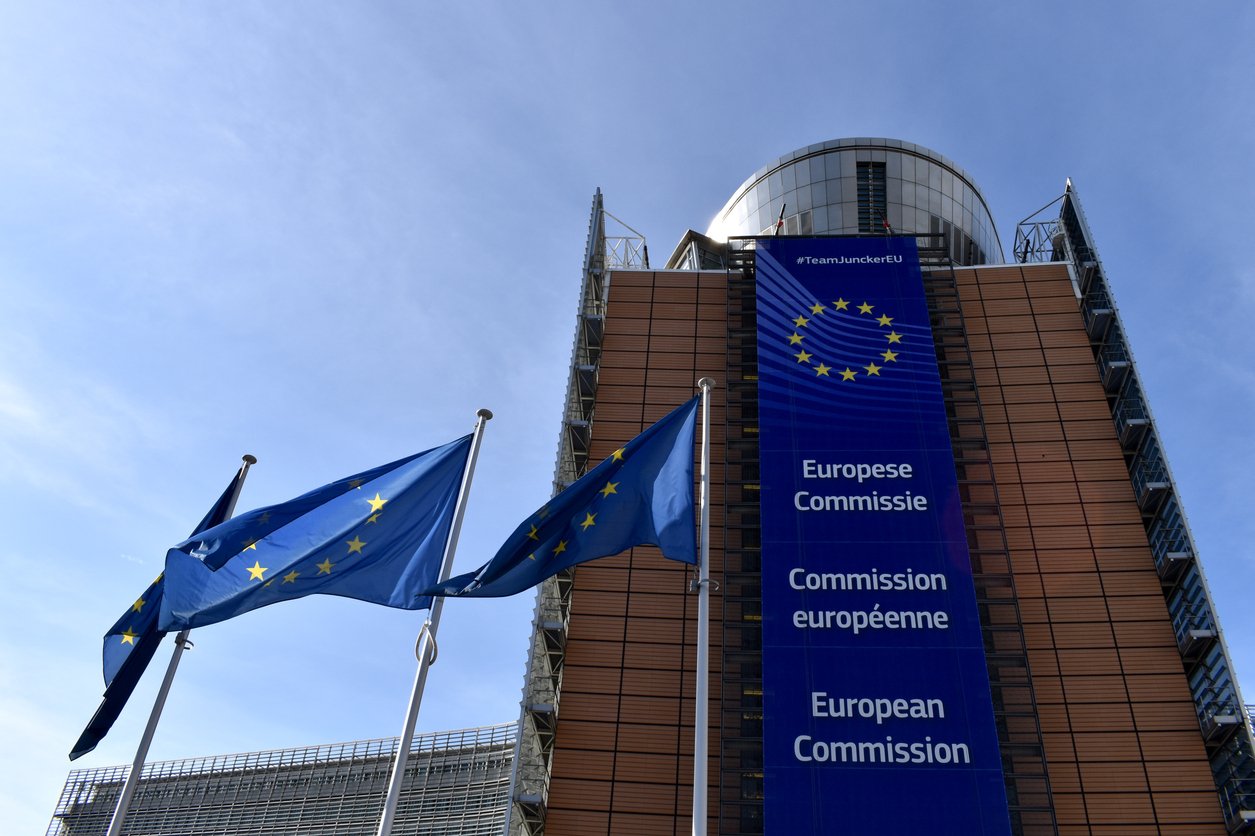
Somewhere in a product-design department, an engineer is staring at a CAD file wondering whether to tear up a year's work. The question is not whether the design is good. It is whether the design is necessary. By 18 February 2027, the EU Batteries Regulation requires that portable batteries in devices sold across the European Union be removable and replaceable by consumers using tools that are commercially available, not proprietary or specialised ones. The rule is clear. Whether a given product actually has to comply with it is, for dozens of manufacturers, anything but.
A rule built on good intentions
The regulation, adopted in 2023, aims to keep batteries and the materials inside them circulating longer. Batteries glued or sealed inside devices are a prime target: a dead cell should not consign an entire product to landfill. The rules cover safety, carbon footprints, recycled content and waste collection, and they apply differently across battery categories, from portable cells to electric vehicle packs to industrial storage.
The removable-battery requirement is one of the most visible provisions. If a consumer can swap out a depleted battery with a screwdriver and some patience, the logic goes, the device lasts longer and fewer raw materials are extracted for replacements. Medical devices and so-called wet appliances, such as electric toothbrushes, were already recognised as meriting exemptions before the regulation took full effect.
Exemptions that exist in theory but not yet in practice
The regulation permits exemptions where making a battery consumer-removable would compromise safety or undermine a product's functioning. That carve-out is reasonable enough. The problem is timing. In 2025, companies submitted 81 requests for exemption. As of April 2026, decisions on some of those requests were still pending. The European Commission has not disclosed exactly how many remain undecided, nor has it set a public timetable for ruling on them.
Euralarm, the industry body representing fire safety and security equipment makers, has been blunt about the consequences. "Manufacturers require a minimum transitional period of two years to redesign and adapt to the manufacture of devices if a requested exemption is rejected," the group said. Without that lead time, it warned, companies face "significant legal uncertainty and the risk of disproportionate economic burden."
The arithmetic is unforgiving. If a decision rejecting an exemption arrives in late 2026, the manufacturer has weeks, not years, to re-engineer a product, retool production lines and re-certify the result before the February 2027 deadline. Redesigning a sealed smartphone to accommodate a removable battery compartment is not a tweak. It affects casing thickness, internal layout, thermal management and water resistance, each of which must be tested and validated.
The Commission adds categories, slowly
Brussels has not been idle. In April 2026, the Commission launched a public consultation on six additional product categories that could be exempted. On 14 July, it adopted a delegated act adding them: wearable devices such as smartwatches and fitness trackers, electric toys, and certain equipment designed for use in potentially explosive environments. The additions are sensible on their own terms. A smartwatch battery is not easily made user-replaceable without compromising water resistance or adding bulk that consumers would reject.
Yet the slow pace of expansion illustrates the structural problem. Each new category is a de facto concession that the original rule caught products the legislators had not fully thought through. And for every category now exempted, there are individual exemption requests from companies arguing that their specific product, even within a covered category, should be let off the hook. Those case-by-case decisions are the ones piling up.
The Digital Battery Passport adds another layer
Removability is not the only obligation arriving on 18 February 2027. The same date triggers the requirement for a Digital Battery Passport covering electric vehicle batteries, batteries in light means of transport such as e-bikes and e-scooters, and industrial batteries with a capacity above 2 kWh. The passport is intended to make information about a battery's origins, performance and sustainability accessible throughout its lifecycle.
The Commission published updated guidance this month, setting out 71 data points and indicating which are mandatory, optional or conditional for different battery types. That guidance is supposed to help manufacturers and importers prepare their data systems. But compliance is not simply a matter of reporting what you already know. As the regulation reaches into carbon footprints, recycled content and responsible sourcing, companies may need to obtain and verify data from suppliers scattered across continents.
Verification from outside the EU
Researchers at Leiden University have raised a related concern that goes beyond product design. The regulation's requirements on carbon footprints, circularity and responsible sourcing of raw materials depend on data that originates far from Brussels. Edgar Hertwich, one of the researchers, put it plainly: "Most stages of battery production take place outside the EU." If the EU wants to reduce emissions through these rules, he argued, it must ensure that global supply chains can be monitored and verified, not merely that European importers fill in the right forms.
That observation cuts to the heart of a wider tension in European environmental regulation. The EU can set the terms of market access, but it cannot directly inspect a cobalt refinery in the Democratic Republic of Congo or a cathode plant in South Korea. The passport requirement creates an obligation for the importer, while the data flows that would make it meaningful remain largely outside European jurisdiction.
A deadline that does not move
For all the complexity, the date itself is fixed. 18 February 2027 is written into the regulation. There is no provision for a blanket extension if the Commission is slow to rule on exemptions. Individual companies can apply for derogations, but that is a separate process with its own uncertainty and cost.
Companies that gambled on receiving an exemption and lost will face a choice between withdrawing products from the EU market, selling non-compliant goods at legal risk, or rushing redesigns that may compromise quality. Those that assumed compliance from the start will have spent money on re-engineering that an exemption, had it arrived earlier, might have rendered unnecessary. Either way, the cost is real, and it falls disproportionately on smaller manufacturers without the legal and engineering resources of a Samsung or an Apple.
People mentioned
Organisations
European Commission · Euralarm · Leiden University