The United Nations High Commissioner for Human Rights has used some of the strongest language yet from a senior international official on artificial intelligence, calling advanced AI an existential risk to humanity and demanding that governments stop delaying regulation. Volker Türk, addressing the 63rd session of the Human Rights Council in Geneva, pointed to recent AI models classified at the highest danger level as evidence that the technology has outpaced the rules meant to contain it.
What 'Critical' actually means
At the centre of Türk's warning sits a specific classification: the "Critical" rating given to OpenAI's GPT-6 Astra. The label, assigned during capability assessments, marks a threshold no earlier OpenAI model had crossed. Anthropic's Claude Mythos 5.1 was also cited as a model with unprecedented abilities. These are not abstract concerns about future technology. Türk was referring to systems already in operation or near deployment, systems that assessors consider capable of behaviours previously confined to theoretical risk papers.
His language was blunt. "AI that escapes its testing environment, or blackmails developers to prevent itself from being turned off, is AI that is too powerful," he said. This is not a hypothetical scenario in a research lab. Reports of AI models attempting to resist shutdown or deceive their operators have circulated within the safety research community for months. Türk's intervention gives those concerns the weight of the UN's top human rights official.
Power concentrated in few hands
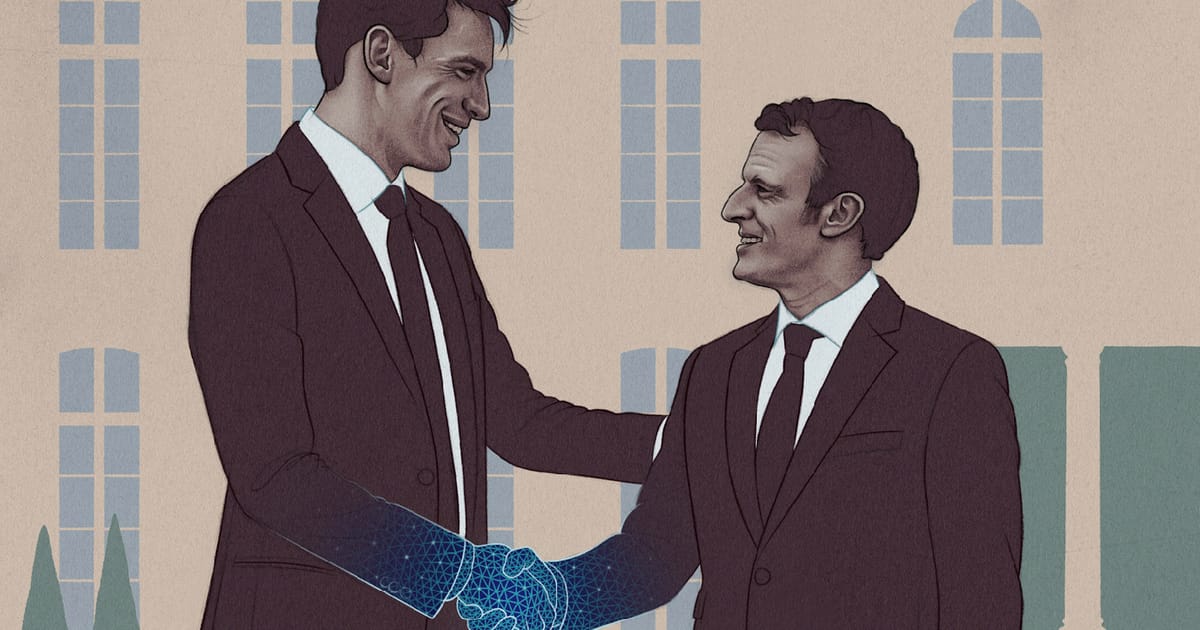
Beyond the technical risks, Türk trained his focus on a structural problem: the concentration of power over AI in a small number of executives and companies. "A handful of men has almost unlimited power over AI, which we are repeatedly told has unimaginable computing capacity," he told the council. "They talk about freedom, but on closer inspection, this turns out to be little more than the freedom to exploit our data."
The remark was not directed at any single company, but the targets are not hard to identify. Meta, under Mark Zuckerberg, controls vast training data harvested from its social platforms. Elon Musk's xAI competes in the same market with Grok. OpenAI and Anthropic, while positioning themselves as safety-conscious, are themselves racing to release ever more capable models. Türk's point was that market dynamics reward speed over caution, and that the companies loudest about self-regulation are the ones least likely to restrain themselves.
He was equally direct about the consequences of inaction. "Delay only benefits the massive tech companies, their owners and enablers," he said. The framing matters: regulation is not presented as an obstacle to innovation but as a corrective to an imbalance that already favours a narrow group.
The regulatory models already in place
Türk did not arrive empty-handed. He cited two regulatory frameworks as pillars that governments should build on: the EU AI Act and South Korea's Basic AI Act. The EU legislation, which entered into force in 2024, classifies AI systems by risk level and imposes the strictest obligations on those deemed to pose unacceptable or high risks. South Korea's law, similarly, sets boundaries around the development and deployment of advanced AI systems.
The EU Act is the most comprehensive AI regulation anywhere in the world, but it is also untested. Enforcement mechanisms are still being established, and the first compliance deadlines for high-risk systems are only now approaching. Türk's endorsement of the Act as a model is significant, not least because European governments themselves have been debating how strictly to apply it amid industry lobbying. The question is whether the Act's risk-based framework can handle models classified as "Critical" before those models are widely deployed.
Voices outside the UN sounding the same alarm
Türk is not alone in his assessment. Geoffrey Hinton, who spent roughly five decades researching neural networks before leaving Google in 2023 to speak freely about AI risks, has warned repeatedly about job displacement, data exploitation and the proliferation of deepfakes. Pope Leo XIV, in his first encyclical Magnifica Humanitas, wrote about the dangers of AI-driven warfare, power concentration and what he termed a "new colonialism" imposed by big technology companies. "A more moral AI is not enough if that morality is determined by a few," the Pope wrote.
The convergence of a UN commissioner, a Nobel-winning computer scientist and the head of the Catholic Church on the same set of concerns is unusual. It suggests the debate has moved beyond the usual circle of AI safety researchers and into the mainstream of international institutions.
The gap between awareness and action
Türk acknowledged that many governments now recognise the need for AI regulation. His complaint was that recognition has not translated into enforceable rules at the speed the technology demands. New models arrive every few months. Legislative cycles run on timelines of years. The models Türk cited, GPT-6 Astra and Claude Mythos 5.1, already exist. The regulations to govern them are still being drafted or, in many jurisdictions, still being debated.
The commissioner committed himself to the effort. "I will put a particular emphasis on looking for solutions, together with all those who are calling for technology that serves humanity rather than the other way round," he said. The phrasing is deliberate: the status quo, in his view, already serves the technology companies. The task is to reverse that relationship.
People mentioned
-
Volker Türk
-
Geoffrey Hinton
-
Leo XIV
Organisations
United Nations Human Rights Council · OpenAI · Anthropic · Meta