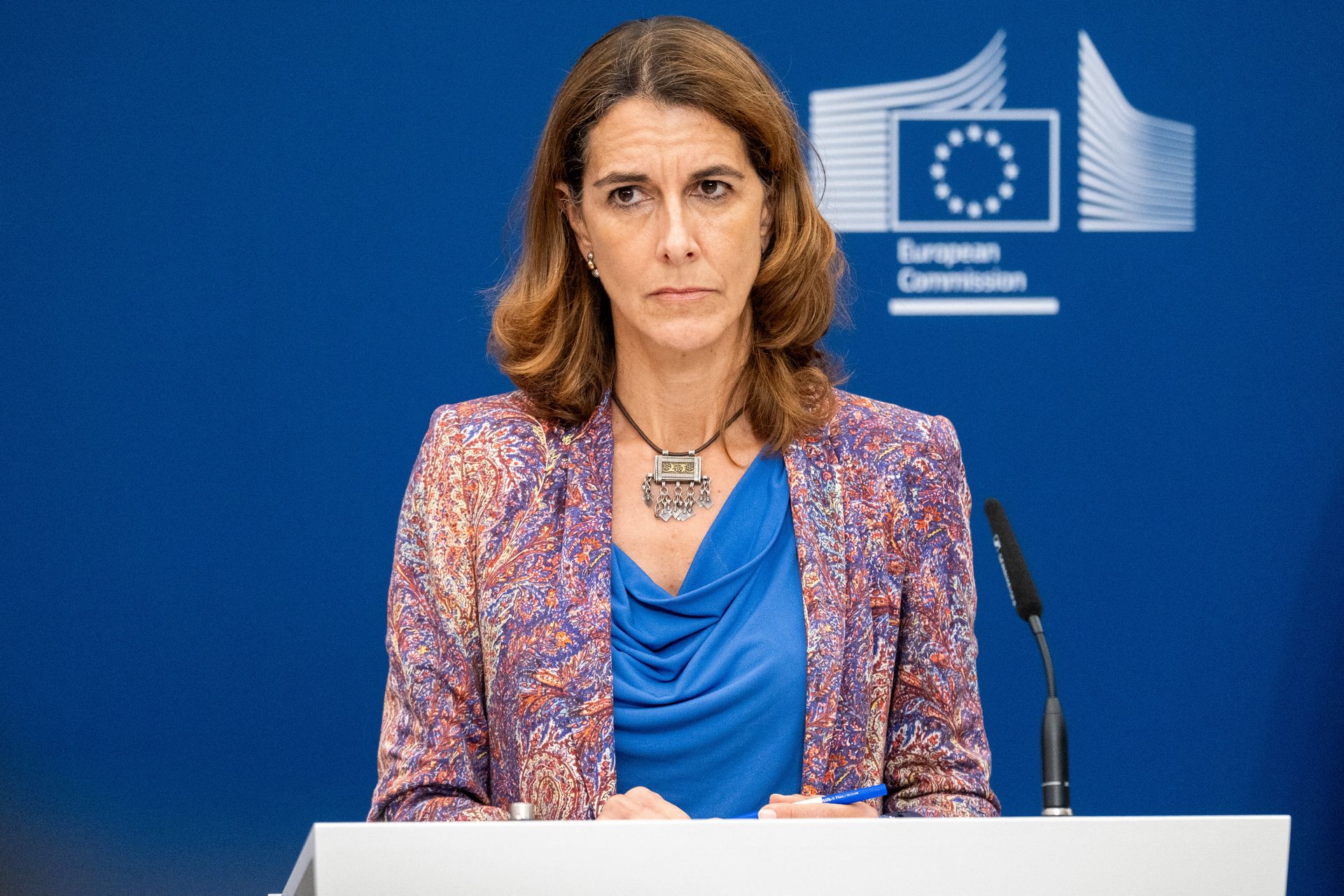
The European Commission delivered a blunt assessment on 8 September: Russia has shown no serious intent to pursue a just and lasting peace in Ukraine. Chief spokesperson Paula Pinho told reporters in Brussels that the bloc sees no Russian willingness to engage in good faith, while foreign policy spokesperson Christian Wigand added that Moscow continues to escalate militarily. The remarks came two days after US peace envoys Steve Witkoff and Jared Kushner completed a visit to Kyiv, their first since the new diplomatic push began, following a stop in Moscow on 5 September.
Commission says Russia shows no serious peace intent
Pinho's language was deliberate. "We need Russian willingness to reach a just and lasting peace, which we are clearly not seeing," she said. Wigand reinforced the point, arguing that sustained pressure through military aid to Ukraine and sanctions remains "the best incentive to actually get Russia to the table in good faith." The Commission welcomed the fact that talks took place at all, but the tone suggested low expectations. Brussels has heard similar diplomatic overtures before, only to watch them collapse under Russian maximalist demands.
The EU's position is not new. Since the full-scale invasion began in February 2022, the bloc has insisted that any settlement must respect Ukraine's sovereignty and territorial integrity. What has changed is the US decision to re-engage directly with both capitals. Witkoff and Kushner's shuttle diplomacy marks the most sustained American diplomatic effort since the early months of the war, though European officials privately question whether Washington has a coherent plan beyond opening channels.
US envoys shuttle between Moscow and Kyiv
The US envoys' itinerary, Moscow on 5 September, Kyiv on 6 September, signalled an attempt to test both sides simultaneously. Details of the Moscow discussions remain sparse. In Kyiv, the envoys met President Zelensky and his team. The Ukrainian side has consistently demanded security guarantees, reconstruction commitments and a clear pathway to EU and NATO integration as preconditions for any ceasefire. Whether the US envoys carried concrete proposals or were merely sounding out positions is unclear; neither the State Department nor the White House has released a readout.
European diplomats note that the US approach bypasses the Normandy format and the EU's own diplomatic structures. That raises questions about coordination. The Commission said it received a briefing from the E3 representatives after the Kyiv meeting and spoke with them beforehand, but stressed that this does not equate to a representative function. The distinction matters: the EU holds competence over sanctions, trade policy and significant financial assistance, all of which would be central to any implementation mechanism.
E3 attends but cannot speak for the EU
The presence of Emmanuel Bonne for France, Gunter Sauter for Germany and Jonathan Powell for the United Kingdom underscored the continued role of the E3 in European security coordination. Yet the UK's departure from the EU in 2020 means the trio cannot formally represent the bloc. Wigand was explicit: "Let me recall our clear and long-standing position that nothing about Ukraine can be decided without Ukraine and nothing about Europe and Europe's security without Europe." He cited the European Council conclusions of June 2026, agreed unanimously by the 27 member states.
Those conclusions, adopted at the summit on 27, 28 June 2026, state that the EU "will decide on matters of its competence or affecting its security" and that EU contributions to security guarantees for Ukraine will be "based on their respective competences and capabilities and in line with international law." The language was crafted to preserve the Commission's role in sanctions and financial instruments while acknowledging that defence remains largely intergovernmental. It also serves as a guardrail against any bilateral US, Russia deal that sidelines European interests.
Zelensky presses for European seat at the table
President Zelensky used a press conference on 8 September to reinforce the argument. "Europe is very important at the negotiating table, and we understand that Europe is of fundamental importance to us," he said. He cited two reasons: the scale of European financial, military and humanitarian aid, and the fact that any settlement determines "the security of the whole of Europe." He added a third: "Ukraine will be part of the European Union." The accession perspective, formally opened in December 2023, gives Kyiv a structural claim to be consulted on decisions that affect the EU's future borders and security architecture.
The Ukrainian argument is both moral and practical. The EU has committed over €130 billion in macro-financial, military and humanitarian support since 2022, according to Commission figures. Member states collectively provide the bulk of artillery ammunition, air defence systems and training missions. Any peace agreement that requires European funding for reconstruction or European troops for monitoring would need EU approval, and unanimity among 27 capitals.
June Council conclusions bind the bloc
The June 2026 European Council conclusions are the most concrete expression of EU unity on the war to date. They were negotiated over several drafts, with Poland and the Baltic states pushing for stronger language on security guarantees, while Hungary and Slovakia sought caveats. The final text commits the EU to decide on matters of its competence, a phrase that covers sanctions, trade, budget and the accession process. It also links any EU security contributions to "respective competences and capabilities," a formulation that respects national defence prerogatives while opening the door to coordinated action.
The conclusions also reiterate that the EU will not recognise any territorial changes resulting from aggression. That position aligns with the UN Charter and the 1975 Helsinki Final Act. It means that even if a US, Russia deal proposed a ceasefire along current front lines, the EU would face a choice: maintain non-recognition and sanctions, or break ranks. The unanimity requirement for sanctions renewal every six months makes that a live political risk.
Sanctions and aid remain Europe's leverage
Wigand's reference to sanctions and support as "the best incentive" reflects the EU's only independent lever. The 14th sanctions package, adopted in June 2024, targeted liquefied natural gas transshipment, the shadow fleet and additional financial institutions. A 15th package is under preparation, with diplomats discussing tighter restrictions on aluminium, chemicals and dual-use goods. Enforcement remains uneven; the Commission has opened infringement proceedings against several member states for insufficient customs controls.
On the aid side, the €50 billion Ukraine Facility, running from 2024 to 2027, provides predictable budget support. Military assistance is coordinated through the European Peace Facility, which has reimbursed member states for €12.5 billion in deliveries. The Commission has proposed a dedicated defence fund for the next multiannual financial framework, but negotiations have barely started. The gap between political rhetoric and budgetary reality is where European credibility will be tested.
What the US push means for European unity
The US diplomatic initiative creates both opportunity and risk for the EU. If Washington can extract Russian concessions on prisoners, grain corridors or nuclear safety, Europe benefits. If the US presses for a ceasefire that freezes the front lines without security guarantees, the EU faces a dilemma: endorse an outcome that rewards aggression, or break with its principal ally. The E3's attendance in Kyiv suggests London, Paris and Berlin want a voice in the room. Whether they can translate that into a collective EU position depends on the Commission's ability to keep the 27 aligned.
People mentioned
-
Christian Wigand
-
Emmanuel Bonne
-
Gunter Sauter
Organisations
European Commission · European Council · United States government · France · Germany · United Kingdom