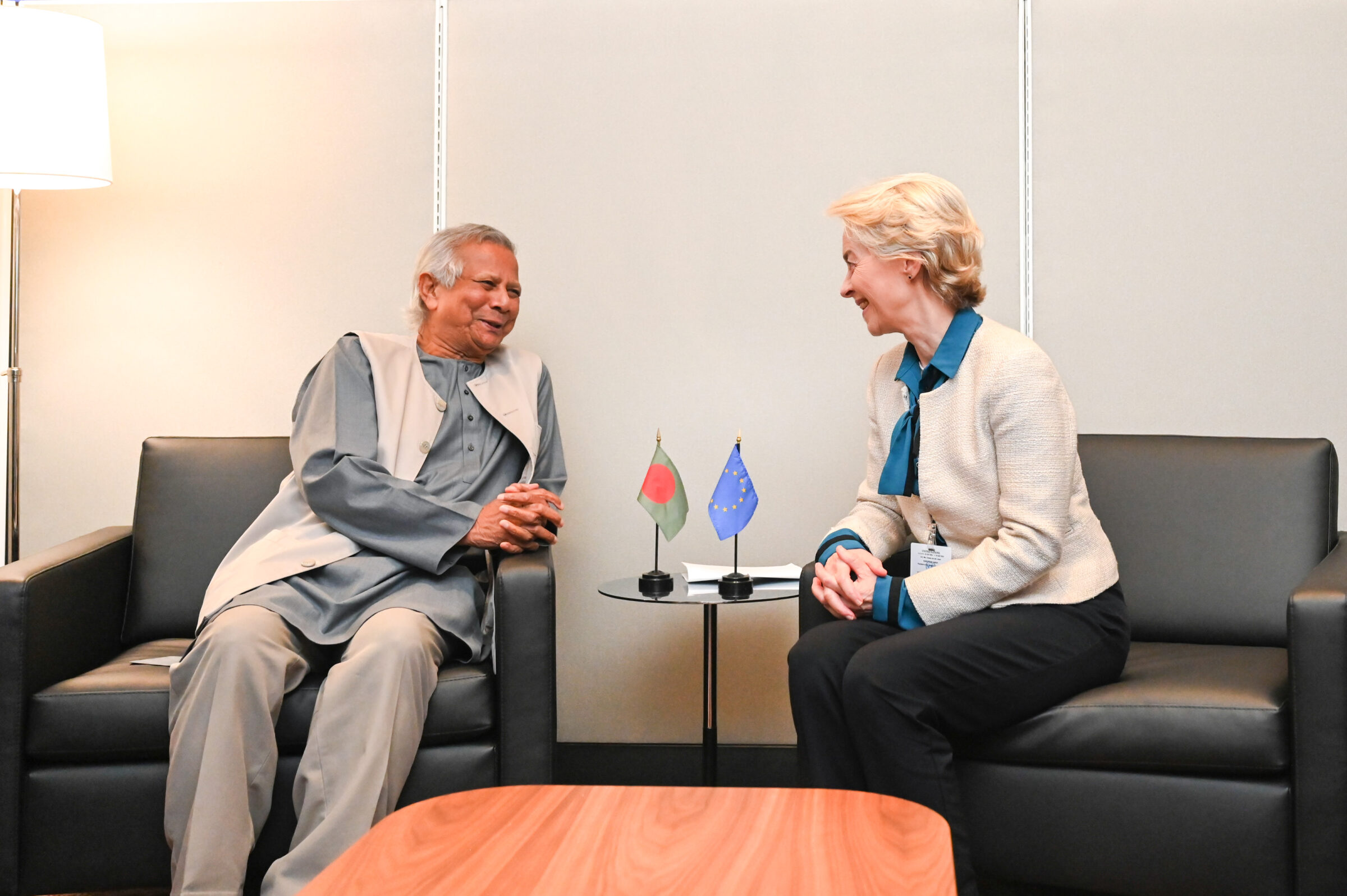
Roughly 200 observers from all 27 EU member states will fan out across Bangladesh this week for a general election that Brussels wants to be able to call legitimate, and that civil society groups are quietly warning it cannot. The mission, led by Latvian MEP Ivars Ijabs for the European Parliament, is the largest the bloc has deployed anywhere in South Asia in recent memory. It also coincides with the final stretch of negotiations over an EU-Bangladesh Partnership and Cooperation Agreement (PCA), the first such deal the Union has pursued with any country in the region.
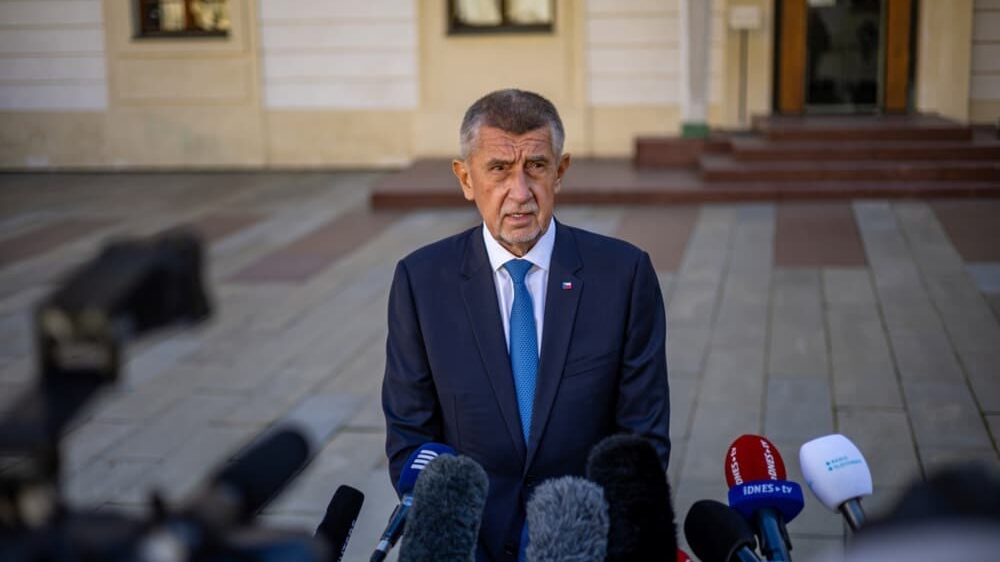
Ivars Ijabs framed the mission in familiar terms, telling reporters that it reflected a partnership "built on mutual respect and shared commitment to democratic principles." That language will be tested on Thursday, when voters go to the polls for the first time since the August 2024 collapse of Sheikh Hasina's government and the installation of an interim administration under Nobel laureate Muhammad Yunus. The Awami League, Hasina's party, has been barred from contesting the vote, having been accused of orchestrating the killing of hundreds of demonstrators during the protests that ended her rule.
A press that was already broken
The contested ground in Dhaka is not the ballot itself but the information environment around it. Bangladesh under Hasina was one of the more hostile places in Asia to work as a journalist. Vague criminal provisions on damaging the image of the state, or on spreading rumours, were deployed routinely against reporters, editors and cartoonists. The most prominent statutes were the Digital Security Act (DSA) of 2018 and its successor, the Cyber Security Act (CSA), under which the cartoonist Ahmed Kabir Kishore and the writer Mushtaq Ahmed were detained in 2020 for online commentary during the pandemic. Mushtaq Ahmed died in custody the following year, and his case became a rallying point for press freedom campaigners across the region.
Yunus's government came in promising a reset. It repealed the CSA, formed a media reform commission staffed by senior journalists, and spoke openly about ending the weaponisation of the courts against the press. Eighteen months on, none of that commission's recommendations have been put into law. In January, authorities quietly published draft ordinances creating new media regulatory bodies with broad supervisory powers, allowing only a handful of days for public consultation. Press freedom organisations warned that the draft texts, if enacted, would replace one set of repressive instruments with another.
Five journalists, and a commission that went nowhere
The arithmetic of repression is unchanged in its essentials. The Committee to Protect Journalists (CPJ) has documented at least five journalists currently held in Bangladeshi prisons for their work. Four of them, Farzana Rupa, Shakil Ahmed, Mozammel Babu and Shyamal Dutta, are awaiting trial on murder charges linked to political unrest; their appeals have been delayed repeatedly in a pattern that rights groups describe as pre-trial detention being used as punishment. In May 2025, UN special rapporteurs raised the alarm that more than 140 journalists had been charged with murder in connection with last year's protests.
Yunus publicly conceded early in his tenure that the murder cases against journalists had been filed hastily and without credible evidence, and announced a review committee to examine them. The committee's findings have never been published. In December, the CPJ wrote to the chief adviser urging him to use his authority to allow imprisoned journalists to return to their families. Yunus's press secretary replied that there was "no scope" for the chief adviser to intervene and that the law must "proceed at its own pace."
Beyond those in prison, at least 25 journalists are under investigation for genocide before Bangladesh's International Crimes Tribunal on the basis of their alleged links to the previous government. The charges have not been tested in court, but the proceedings themselves have made it materially riskier for any reporter with a history of work under the Awami League to continue practising.
A new legal tool: the anti-terror charge
The most worrying recent development is the use of national security legislation against critical commentary. In December 2025, veteran journalist and political analyst Anis Alamgir was arrested under Bangladesh's Anti-Terrorism Act and accused of spreading "propaganda" through television appearances and social media posts, as well as of conspiring to rehabilitate the Awami League. He faces life imprisonment if convicted. Press freedom groups believe this is the first known use of anti-terror provisions against a working journalist in Bangladesh, and a sharp expansion of the legal risks attached to political analysis on camera.
Impunity for physical attacks on journalists has also persisted. No one has been held to account for the murders of Hasan Mehedi and Abu Taher Md Turab, killed while covering quota reform protests in July 2024. After the killing of student leader Sharif Osman Hadi in December, newsrooms in Dhaka were vandalised and set alight in a second wave of violence that briefly shut down several outlets.
The PCA as the EU's only real lever
Ivars Ijabs has been explicit about what the PCA is supposed to deliver. "The PCA is not just about trade and investment," he said in his pre-deployment briefing. "It's also expected to include commitments on shared democratic values, such as rule of law and human rights." A European Commission readout confirms that human rights clauses are being woven into the draft text, though the final language has not been published.
Those clauses are the EU's most tangible instrument in Dhaka. Bangladesh is a significant trading partner for the bloc, with garment exports to the EU worth several billion euros a year, and the PCA is meant to consolidate that relationship while tying preferential access to governance benchmarks. If the text is signed and ratified with the press freedom provisions intact, Brussels gains a recurring forum in which to raise the cases of named prisoners; if the human rights language is diluted or shelved, the deal becomes a commercial instrument stripped of the conditionality that gives it meaning.
What the mission can and cannot do
Election observation has well-understood limits. Observers do not stop arrests, do not free prisoners, and do not reopen cases. Their value lies in the credibility of their presence and in the public reporting that follows. For that reporting to carry weight, the mission's preliminary statements will need to engage directly with the conditions under which the campaign has been conducted, not only with the technical conduct of voting day.
Brussels faces a narrower and more political choice. The PCA negotiations are a live opportunity to convert the EU's economic relationship with Bangladesh into leverage on press freedom, by tying specific commitments, such as the release of the five imprisoned journalists, the withdrawal of the genocide investigations against the 25, and the abandonment of the new media regulatory ordinances, to the pace of ratification. Doing so would require the European Commission and member states to treat the deal as a political instrument rather than a commercial formality.
Thursday, and after
Voters in Bangladesh will choose a parliament on 12 February without the party that has won every election since 2009 on the ballot, under a media law that the interim government has rewritten twice in eighteen months without producing a freer environment for those who report on it. The EU's 200 observers will write their report in the weeks that follow. The PCA will be initialled, or not, on a timetable that Brussels largely controls. What the two processes share is the same question, which Ijabs's mission will be pressed to answer in plain language: whether the democratic principles the EU says it is there to defend extend to the journalists whose work makes any of the rest of it possible.
People mentioned
-
Ivars Ijabs
-
Muhammad Yunus
-
Sheikh Hasina
-
Anis Alamgir
Organisations
European Union · Awami League · Committee to Protect Journalists · International Crimes Tribunal (Bangladesh) · European Parliament