The global market for cast resin power transformers is entering a period of sustained expansion, with research firm IndexBox forecasting a compound annual growth rate of 4-6% between 2026 and 2035. The market index is expected to reach 155 by 2035, using 2025 as a base of 100. Unlike oil-filled equivalents, cast resin units use epoxy insulation, giving them superior fire resistance, moisture tolerance and a smaller footprint, attributes that align with the safety and environmental requirements of modern indoor and urban installations.
Data centres emerge as primary growth engine
Data centres currently account for roughly 15% of global demand but are expanding at an estimated 8-10% annually, making them the fastest-growing segment. Procurement is concentrated in the 1-10 MVA range, driven by hyperscale construction in North America, Europe and Southeast Asia. The proliferation of cloud computing, artificial intelligence and edge computing is forcing operators to seek modular, plug-and-play transformer designs that can be deployed rapidly and scaled incrementally. European hubs such as Frankfurt, London, Amsterdam and Dublin are seeing particular intensity, with sustainability targets pushing operators toward renewable-powered facilities that favour dry-type transformers.
The shift toward prefabricated power modules is accelerating deployment but also creating bottlenecks. Skilled labour shortages and supply-chain constraints for high-purity epoxy resins and specialised fillers may extend lead times periodically, even as overall manufacturing capacity keeps pace with demand. IndexBox notes that the trend toward modular designs reduces installation time and facilitates capacity upgrades, a critical advantage for operators managing rapid load growth.
Renewable integration and grid modernisation underpin utility demand
Utilities remain the largest end-user segment at approximately 30% of global demand, with medium-voltage units dominating. The replacement of ageing oil-filled transformers, integration of variable renewable generation, and expansion of smart-grid capabilities are the principal drivers. Cast resin transformers are compatible with digital monitoring systems and suit compact urban substations where space and fire-safety regulations limit the use of oil-filled equipment. The utility segment is projected to grow at 4-5% CAGR through 2035, supported by ongoing electrification and decarbonisation programmes.
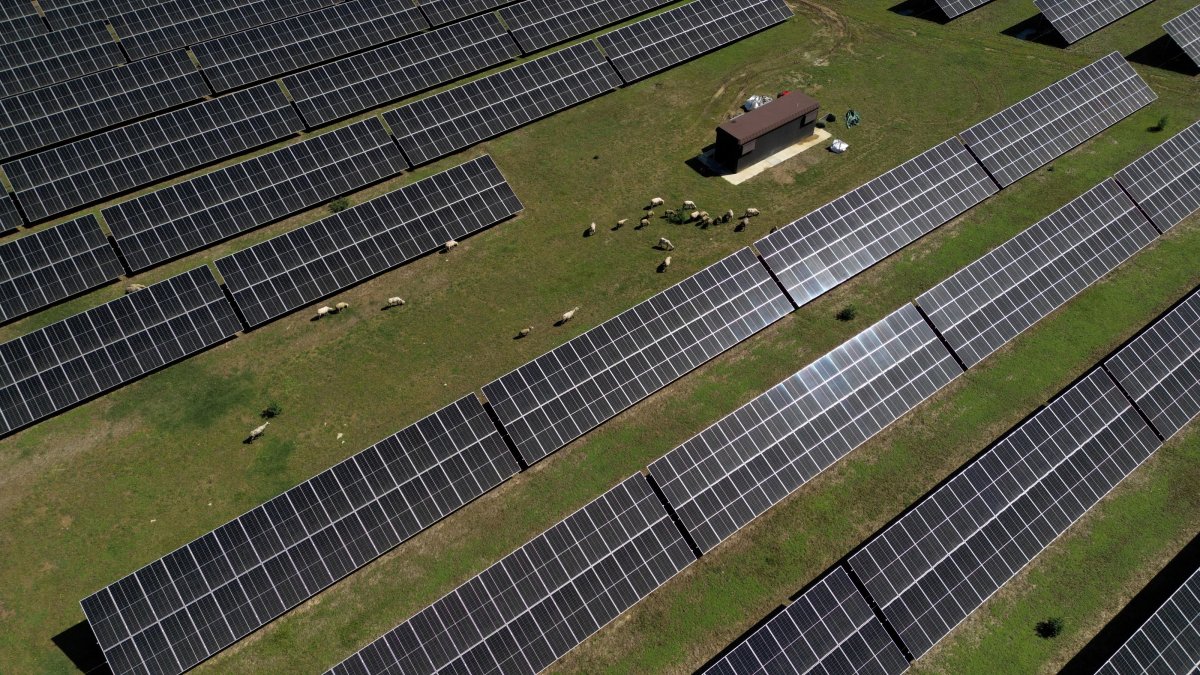
Renewable energy installations represent about 10% of demand today but are forecast to grow at 6-7% annually. Wind and solar farms require transformers that can withstand fluctuating loads, moisture, temperature swings and corrosive atmospheres, conditions where cast resin designs excel. The trend toward larger wind turbines and utility-scale solar parks is increasing demand for higher-voltage units in the 72.5-145 kV range, which IndexBox says are growing 1.5-2 percentage points faster than the medium-voltage baseline. Offshore wind, particularly in the North Sea, and the integration of battery storage systems are creating additional opportunities.
European market shaped by regulation and offshore wind
Europe shows steady growth, supported by binding renewable-energy targets, grid-upgrade programmes and strict environmental regulations. Germany, the United Kingdom and France are the key national markets, with demand reinforced by offshore wind expansion and data-centre investment. The European Union's fire-safety codes for high-occupancy buildings and its push for energy-efficient, eco-friendly equipment favour dry-type transformers over oil-filled alternatives. The European Commission's Energy Union strategy and associated grid-development plans provide a policy backdrop that aligns with the technology's strengths.
Commercial buildings account for roughly 20% of global demand, driven by urbanisation, green-building standards and stringent fire-safety codes that mandate dry-type transformers in hospitals, airports, shopping centres and high-rise offices. The segment is expected to grow at 4-5% CAGR through 2035. Industrial processing, at 25% of demand, grows more modestly at 3-4%, propelled by automation, capacity expansion and the need for clean power in sensitive electronic environments, though upfront cost premiums slow adoption in price-sensitive sectors.
Asia-Pacific dominates volume; new capacity coming online
Asia-Pacific commands 45% of global demand, fuelled by rapid urbanisation, industrial expansion and renewable-energy roll-outs in China, India and Southeast Asia. IndexBox reports that new production capacity in India and China will add 15-20% more output by 2028, which should reduce lead times and ease some of the supply-chain pressure on epoxy resins and specialised fillers. The region's cost structure and manufacturing scale make it the primary source for medium-voltage units, while higher-voltage technology remains more concentrated among the established global manufacturers.
Raw-material volatility and certification costs constrain pricing
Copper and epoxy-resin price swings remain the most critical variable for transformer economics. Certification diversity across jurisdictions adds compliance cost and complexity, particularly in price-sensitive markets in Latin America, the Middle East and Africa. These regions are experiencing gradual adoption, supported by infrastructure development and solar-energy projects, but budget constraints limit the pace of conversion from oil-filled to dry-type units. North America, by contrast, leads in the adoption of modular, plug-and-play designs, driven by stringent fire codes and corporate sustainability commitments.
Competitive landscape consolidates around global majors and regional specialists
The market features a handful of global manufacturers, ABB, Siemens Energy, Schneider Electric, Eaton and Hitachi Energy, alongside regional players such as TBEA in China and CG Power in India. These companies compete across all major end-use sectors, with product portfolios spanning the voltage range. The competitive dynamic is shaped by the ability to manage raw-material exposure, deliver modular designs at scale, and navigate the certification requirements of multiple jurisdictions. European manufacturers benefit from proximity to the region's grid-modernisation and offshore-wind programmes, while Asian producers leverage cost advantages in medium-volume standard units.
Organisations
ABB Ltd · Siemens Energy AG · Schneider Electric SE · Eaton Corporation plc · Hitachi Energy Ltd · TBEA Co Ltd