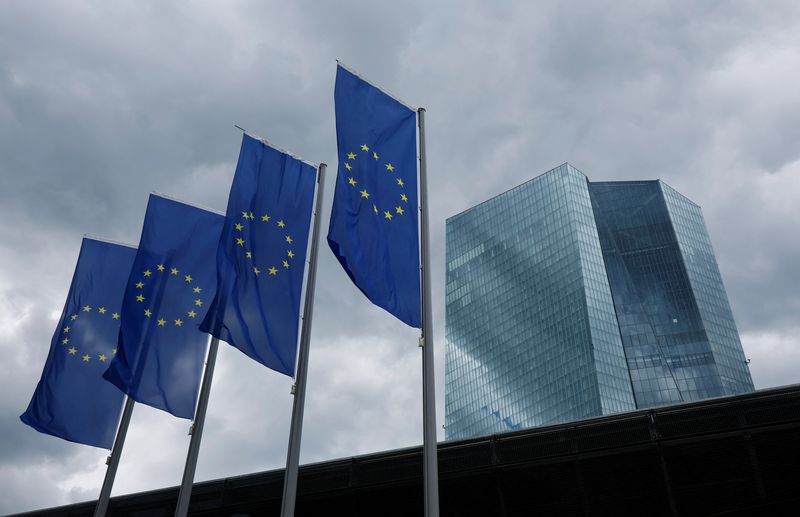
European Central Bank policymakers entered their summer break convinced that interest rates would need to rise again, according to the account of their July meeting released this week. The minutes reveal that while the Governing Council voted to hold rates steady at 2.25 per cent in July, most members viewed the decision as a temporary pause rather than a peak. The primary driver for this hawkish stance remains the ongoing conflict in Iran, which has kept energy prices elevated and pushed euro zone inflation close to 3 per cent. Officials worried that failing to act further could allow these war-led price increases to become embedded in wider wage and service costs.
The release of the ECB account comes just days before the next scheduled meeting in September, where a rate increase to 2.50 per cent is now widely expected by market analysts. This would mark the second rise in a renewed tightening cycle that began in June 2026, the first time borrowing costs had been raised in nearly three years. The central bank is walking a tightrope between curbing inflation and avoiding unnecessary damage to an economy that has shown unexpected resilience. By signalling their intent through the meeting account rather than a press conference, policymakers are testing the market reaction before committing fully to the September move.
The signal within the pause
In the July 22-23 session, governors agreed to keep rates on hold to assess the impact of the June increase. However, the language used in the subsequent account leaves little room for ambiguity regarding their future intentions. Members twice described the decision as a pause, explicitly noting it was important not to suggest the tightening cycle had ended. This distinction matters for financial markets, which price in probability based on central bank communication. Had the ECB described the hold as a peak, bond yields would likely have fallen and the euro weakened. Instead, the institution is maintaining pressure on borrowers while gathering more data on price stability.
The account states that another rate hike would likely be necessary unless the inflation outlook improved significantly. This conditional language provides a small escape route should energy prices collapse or economic activity deteriorate rapidly. However, sources indicate those doubts have since cleared. With the Iran conflict showing no signs of de-escalation and supply chains remaining constrained, the inflationary pressure is viewed as persistent rather than transitory. The ECB is effectively communicating that the burden of proof now lies on those arguing against a hike, rather than those proposing one. This shifts the default setting of monetary policy towards restriction.
Energy shocks and the inflation target
Inflation running at nearly 3 per cent remains well above the ECB's 2 per cent medium-term target. The primary culprit is energy, where the geopolitical instability in the Middle East has disrupted supply expectations. Unlike previous shocks, this increase is occurring against a backdrop of already elevated industrial costs. Policymakers are concerned that if households and businesses begin to expect higher prices indefinitely, they will adjust their behaviour accordingly. Workers may demand higher wages to compensate for living costs, and companies may raise prices preemptively. This second-round effect is what the central bank is desperate to prevent.
The challenge is compounded by the nature of the shock. Monetary policy cannot produce more oil or resolve geopolitical conflicts. It can only dampen demand to match the reduced supply capacity. This makes the tool blunt and potentially painful. Raising rates reduces investment and consumption, which lowers inflation but also slows growth. The ECB calculates that the euro zone economy can absorb this slowdown without tipping into recession. Recent output data supports this view, suggesting activity is holding up better than models predicted. However, the lag effect of interest rate changes means the full impact of the June hike has not yet been felt across the bloc.
Lending data complicates the picture
One of the most significant data points emerging alongside the minutes is the strength of corporate lending. Banks increased lending to companies at a rate of 4.4 per cent in July, the fastest pace in more than three years. This figure suggests that despite higher borrowing costs, businesses are still willing to invest and expand. It could indicate confidence in future demand or a need to stockpile cash against uncertainty. For the ECB, this is a double-edged sword. Strong lending supports economic growth, which is positive for employment and stability. Yet it also fuels money supply growth, which can be inflationary if it outpaces productivity gains.
This resilience challenges the traditional transmission mechanism of monetary policy. Usually, higher rates cool lending activity relatively quickly. The fact that credit growth remains robust implies that either demand is very strong or balance sheets are healthy enough to withstand higher servicing costs. ECB statistical data will be watched closely in the coming months to see if this trend persists into the autumn. If lending remains strong despite a September hike, it may convince governors that rates need to go higher than the current 2.50 per cent projection. Conversely, a sudden stall in credit growth would signal that the tightening is biting harder than anticipated.
Regional resilience and divergence
The euro zone is not a monolith, and the impact of rate hikes varies significantly between member states. Countries with high levels of variable-rate mortgages will feel the transmission of policy changes more acutely than those with fixed-rate traditions. Germany's economy has shown signs of contraction in recent quarters, making it more sensitive to borrowing cost increases. Southern European nations, having dealt with high debt servicing costs for longer, may have already priced in tighter conditions. The ECB must consider these divergences when setting a single policy rate for all twenty members.
National governors bring these local realities to the Governing Council table. A rate rise that is manageable for the bloc average might be destabilising for a specific economy. This tension often surfaces in the weeks following a decision, as national central bank officials speak to local media. The account released this week smooths over these disagreements to present a unified front. However, the emphasis on data dependence allows individual members to dissent later if their domestic conditions deteriorate. This flexibility is crucial for maintaining cohesion within the institution during volatile periods.
Communication strategy and market expectations
The ECB is careful not to commit fully to a September hike in its official communication. The account notes that communication should not yet commit to the increase in case the inflation outlook improves. This preserves optionality. If incoming data shows a sharp drop in energy prices or a sudden economic downturn, the bank can pivot without losing credibility. Markets, however, have already priced in the move. Bond traders and currency analysts are operating on the assumption that 2.50 per cent is the new baseline. This creates a risk where failing to hike could be interpreted as weakness, potentially destabilising the euro.
Isabel Schnabel, a board member, reinforced this data-dependent stance earlier in the week. She noted that incoming figures would determine how much further borrowing costs need to rise. This keeps the door open for more than one hike if necessary. The strategy relies on guiding expectations without binding the institution to a specific path. It allows the ECB to react to the Iran conflict's evolution without being trapped by its own forward guidance. Success depends on the clarity of the message and the accuracy of the economic forecasts underpinning it.
People mentioned
Organisations
European Central Bank