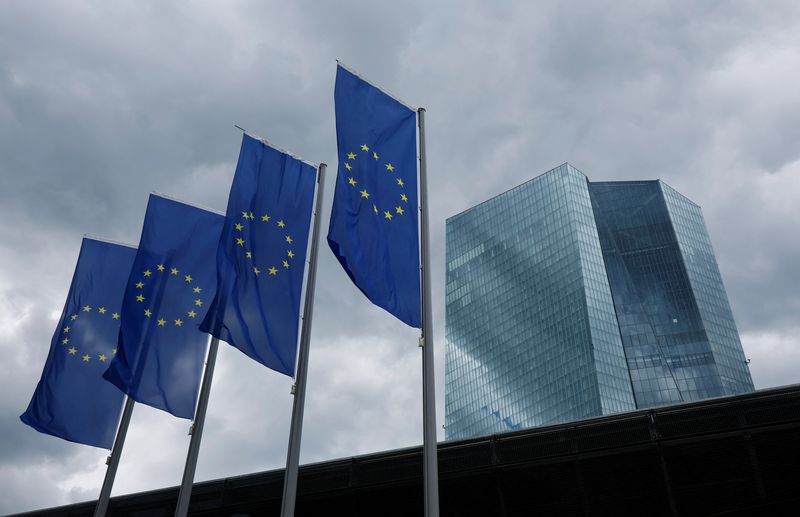
The European Central Bank raised its three key interest rates by 25 basis points on Thursday, a move President Christine Lagarde characterised as a "no-brainer" given the persistence of price pressures. The decision lifts the deposit facility rate to 4.0%, the main refinancing rate to 4.25% and the marginal lending rate to 4.5%, extending a tightening cycle that has added 4.5 percentage points since mid-2022.
Inflation projections push the goalposts
What caught analysts' attention was not the hike itself but the accompanying staff projections. The ECB's baseline scenario now shows headline inflation remaining above the 2% target until the final quarter of 2027, a year later than the March forecast implied. Core inflation, which strips out energy and food, is seen averaging 2.8% next year and 2.3% in 2026 before edging back to target. That timeline suggests the governing council cannot yet contemplate a pause, let alone a cut.
Barclays economists noted that the projection horizon extends only to 2027, meaning the ECB is effectively acknowledging that its 2% objective will not be met within its standard forecasting window. The bank's researchers argue this structural overshoot strengthens the case for one more increase before the year ends.
Energy shock returns via the Middle East
The inflation outlook has been complicated by a fresh supply-side shock. Since late August, military exchanges between the United States and Iran have targeted shipping lanes, energy infrastructure and military assets across the Persian Gulf. Brent crude has climbed back above $100 a barrel for the first time since early 2023, adding an estimated 0.4 percentage points to euro-area headline inflation through direct and indirect channels, according to preliminary ECB staff estimates.
The euro area imports roughly 90% of its oil, making it acutely sensitive to Gulf disruptions. Unlike the 2022 spike, which was amplified by gas shortages, this episode is primarily an oil story, but the pass-through to transport, petrochemicals and food processing is broad enough to delay disinflation in services, where wage growth remains elevated.
Markets and major banks align on December
Money markets have moved decisively. Overnight index swaps compiled by LSEG imply a 93.9% probability of a 25 basis point increase at the 18 December meeting, up from roughly 65% a week earlier. Goldman Sachs echoed Barclays' call, arguing that a December move would push the deposit rate into "mildly restrictive territory", a phrase that suggests the US bank sees the neutral rate somewhere near 3.5%.
Both houses see almost no chance of action at the 29 October meeting. The governing council traditionally avoids policy changes at non-forecast meetings unless data deviate sharply. With the next full set of staff projections due in December, the argument for waiting is strong, particularly given the lagged impact of the 4.5 percentage points already delivered.
Data dependence cuts both ways
Officials have repeatedly stressed that decisions will remain data-dependent, a formulation that preserves optionality. Yet the data flow since the September meeting has been uniformly hawkish: August headline inflation came in at 2.6% year-on-year, core at 3.1%, both above consensus. Negotiated wage growth accelerated to 4.7% in the second quarter. And now the oil price has added a fresh variable that the ECB's models treat as a supply shock, typically a reason to look through, but not when the shock is large enough to de-anchor expectations.
The risk, as several governors have acknowledged privately, is that a December hike could be the last of the cycle but still prove excessive if the Middle East conflict de-escalates and oil falls back. The ECB's own analysis suggests a $10 sustained increase in Brent adds 0.15 percentage points to inflation after one year. At current levels, the cumulative effect since August is already approaching that threshold.
Transmission to credit and growth
Bank lending surveys show credit standards for firms tightened for the seventh consecutive quarter in Q2 2026, with demand for loans falling at the fastest pace since the pandemic. The manufacturing PMI has sat below 50 for eleven straight months. Services, the engine of euro-area growth, expanded at its weakest rate in two years in August. A further 25 basis points would raise the marginal cost of borrowing for highly leveraged corporates by an estimated €12 billion annually, according to ECB calculations.
Yet the governing council's mandate is price stability, not growth. With unemployment at a record low 6.3% and vacancy rates still elevated, the labour market shows no sign of cracking. That gives the hawks, led by the Dutch, German and Baltic members, the political cover to deliver one more increase even as the doves warn of overtightening.
The governance tension
Thursday's decision was unanimous, but the press conference revealed fractures. Lagarde's "no-brainer" language was intended to project confidence, yet several governors reportedly argued in the pre-meeting discussion that the energy shock warranted a pause to assess second-round effects. The compromise was a hike paired with a dovish signal: the statement dropped the phrase "further increases" and reverted to "sufficiently restrictive for as long as necessary". Markets interpreted the wording as a promise of one more move, then a long hold.
People mentioned
Organisations
European Central Bank · Barclays · Goldman Sachs · LSEG