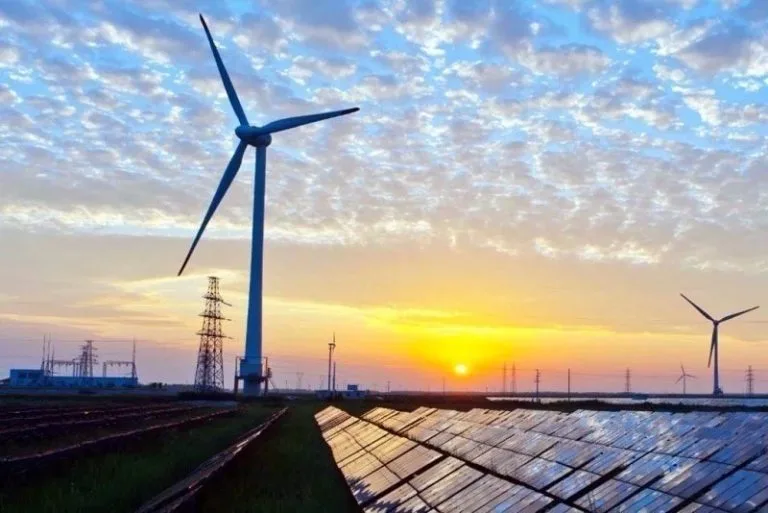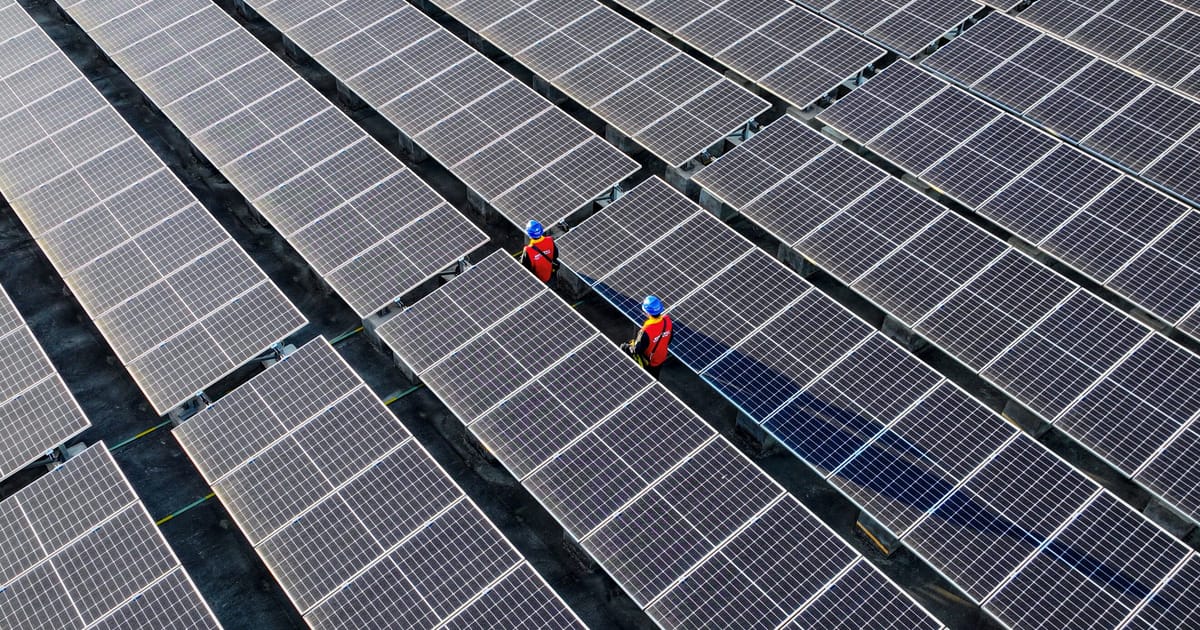
On an August afternoon in Marche-en-Famenne, the production line at Belga Solar winds down for the day. The factory is Belgium's last remaining solar panel manufacturer, a survivor in a sector that has watched two decades of Chinese price pressure drive European competitors out of business or into mothballs. While the machines still run, the company's managing partners say the industry's window is closing faster than Brussels can legislate.
A procurement lever that moves too slowly
The European Commission is preparing its most ambitious attempt yet to use public spending, roughly 14 percent of EU gross domestic product, as a tool to rebuild domestic clean-tech capacity. A draft Public Procurement Act, expected to be published on 9 September, would consolidate the current patchwork of three 2014 directives and hundreds of sectoral rules into a single framework. The goal: require contracting authorities to weigh sustainability, supply-chain resilience and European origin alongside price, rather than awarding contracts primarily on lowest cost.
Under the July draft obtained by journalists, tenders would generally be decided on the best price-to-quality ratio. Quality criteria would carry a mandatory minimum weighting of 30 percent, rising to 50 percent for labour-intensive contracts unless the buyer justifies relying on price alone. The legislation would also create common rules allowing public buyers to factor in environmental performance and a preference for European-made goods.
But the legislative calendar tells a different story. According to the Commission's own work programme, negotiations on the draft will not conclude until late 2027. Transposition and implementation would push the effective date years further. For an industry already running on fumes, that timeline is a mismatch of historic proportions.
The canary in the coal mine
Frédéric Conrads, a managing partner at Belga Solar, puts it bluntly: the help is arriving too late. "It's now, not in three years, we have too many companies in Europe that are on the verge of collapse," he said. His colleague Sébastien Mahieu points to a concrete example: publicly funded contracts to renovate social housing in Wallonia, the French-speaking region of Belgium, went to a Chinese supplier. "Not a single European manufacturer has received an order for those projects," Mahieu said. "This is disgraceful."
The current framework allows member states to include green and social criteria in tenders but does not require them to do so. Italy made such criteria mandatory; Belgium and others did not. The result is a fragmented market where European subsidies can flow to foreign producers while domestic factories sit idle.
Industrial Accelerator Act sets the definitions
Earlier this year the Commission adopted the Industrial Accelerator Act, which defines what counts as "Made in EU" or low-carbon for strategic sectors including solar, wind, batteries and heat pumps. Together with the procurement overhaul, the two acts would create a guaranteed domestic market for European output rather than merely subsidising factories and hoping buyers appear. But the IAA's definitions are only as useful as the procurement rules that reference them, and those rules remain years away.
Sectors queue up for broader protection
Solar is not the only industry pressing for faster and wider domestic-preference rules. Since the IAA's Made in EU criteria were published, European steelmakers have argued that an EU-origin condition should be attached to the low-carbon requirement. Chemical producers want the rules extended to key materials, while aluminium manufacturers are pushing for coverage of energy, rail and maritime projects. The common thread: each sector wants public money to flow to European factories before they disappear.
Commission spokesperson Siobhan McGarry acknowledged the pressure. "We are aware of the challenging situation the solar industry is facing, in particular due to the significant and persistent over-capacity among Chinese manufacturers, which is putting pressure on the business case for solar PV production in the EU," she said. She pointed to existing Made in EU requirements in the Industrial Accelerator Act and suggested that a reduction in Chinese overcapacity could improve conditions for European investment.
The numbers behind the delay
The current procurement rulebook spans roughly 900 pages across multiple directives and sectoral applications. Consolidating them into a single act is legally complex, and the Commission has already missed earlier internal deadlines. Even after political agreement, member states typically have 18 to 24 months to transpose a directive, and contracting authorities need further guidance to apply new award criteria. Industry estimates suggest the first tenders under the new rules may not appear before 2030.
A structural problem, not a cyclical one
The Commission's argument rests on the expectation that Chinese overcapacity will eventually correct itself. But European manufacturers have heard that before. The global solar supply chain, from polysilicon to wafers, cells and modules, is now more than 80 percent concentrated in China. Rebuilding even a fraction of that chain in Europe requires sustained demand signals, not just factory subsidies. Public procurement is the most direct signal available, and it is the one the EU has been slowest to deploy.
People mentioned
-
Frédéric Conrads
-
Sébastien Mahieu
-
Siobhan McGarry
Organisations
European Commission · Belga Solar