Morocco has moved from ambitious rhetoric to hard numbers in its bid to become a primary supplier of green hydrogen to Europe. A report published this week by Mordor Intelligence places the kingdom's utility-scale solar auction prices below three cents per kilowatt hour, a level reached only by Egypt on the continent in 2025. That cost advantage underpins a $32.5 billion investment pipeline designed to produce up to three million tonnes of hydrogen a year, with European offtakers explicitly in mind.
Solar economics drive the hydrogen case
The competitiveness of Moroccan solar is not a recent accident. Years of structured auctions under the Noor programme, combined with exceptional irradiance and available land, have pushed prices down a curve that many European producers still struggle to match. When the levelised cost of electricity sits below $0.03 per kWh, the economics of electrolysis shift decisively. Green hydrogen produced at that input cost can approach parity with grey hydrogen derived from natural gas, especially once carbon pricing in Europe is factored in.
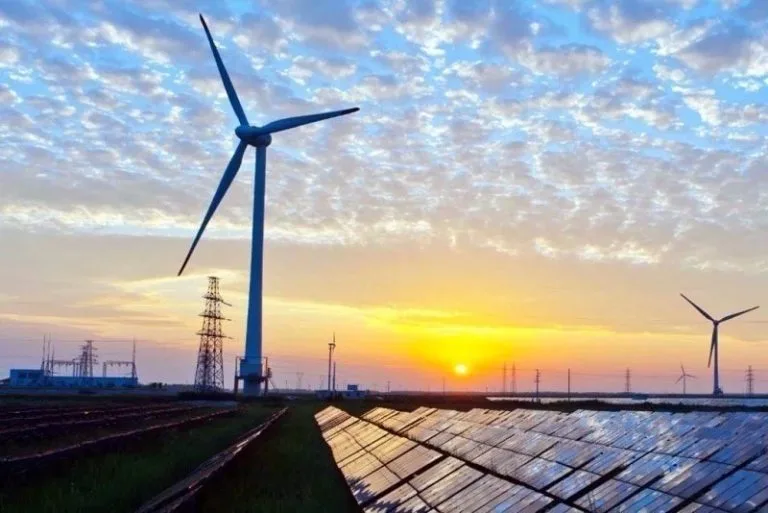
The report projects African solar photovoltaic capacity to grow at an annual rate of 27.84 percent between 2026 and 2031, the fastest of any renewable technology on the continent. Total installed renewable capacity is expected to more than double, from 86.95 gigawatts to 179.66 GW. Morocco's share of that expansion is anchored by two mega-complexes: Noor Midelt, which combines solar photovoltaic and concentrated solar power, and the Atlantic wind project, which will feed electrolysers directly with wind generation.
International developers already embedded
The presence of ACWA Power, Masdar, ENGIE and Enel Green Power across multiple Moroccan projects signals that the investment case has moved beyond sovereign risk assessments into bankable power purchase agreements. These developers bring not only capital but supply-chain relationships and operational experience from projects in the Gulf, Southern Europe and Latin America. Their involvement reduces the perception gap that often delays financing in emerging markets.
For European utilities and industrial buyers, the Moroccan offer is increasingly concrete. The Mediterranean corridor, subsea cables, pipeline repurposing and port infrastructure at Tangier Med, is being assessed by a consortium that includes European transmission operators. If the physical link materialises, Morocco could supply hydrogen at a landed cost competitive with domestic European production, particularly in southern member states where industrial demand clusters.
The export logic and its limits
Morocco's strategy rests on a straightforward comparative advantage: abundant sun, wind and space, combined with proximity to Europe. The kingdom's free-trade agreement with the EU and its alignment with the European Green Deal's external dimension provide a policy framework that other African hydrogen aspirants, Namibia, Mauritania, Egypt, are still negotiating. Yet the $32.5 billion figure, while large, covers only the renewable generation and electrolysis capacity. It does not include the midstream infrastructure, pipelines, compression, shipping, required to move three million tonnes annually to European ports.
Currency convertibility remains a structural concern. The dirham is not fully convertible, and foreign investors typically require hard-currency revenue streams guaranteed by sovereign or multilateral backstops. The report flags this as a cross-cutting risk for African renewable markets, alongside grid constraints and curtailment. In Morocco's case, the national grid operator ONEE has begun reinforcing the high-voltage backbone, but the pace of reinforcement must match the combined output of Noor Midelt and the Atlantic wind complex if curtailment is to be avoided.
Competition within Africa is intensifying
Egypt's Benban solar park already demonstrates that sub-three-cent tariffs are replicable. Namibia's Tsau //Khaeb project, backed by German development finance, targets hydrogen exports via the port of Lüderitz. Mauritania's AMAN project, led by CWP Global, aims for ten gigawatts of combined wind and solar. South Africa's renewable programme, though hampered by Eskom's grid limitations, continues to attract private capital. Each country is courting the same European demand pool, and the first to deliver certified green molecules at scale will set the pricing benchmark.
The Mordor Intelligence analysis notes that mini-grid expansion across sub-Saharan Africa is another growth vector, but it serves a different market, rural electrification and industrial self-supply, rather than export. Morocco's focus remains firmly on the export corridor, a strategic choice that concentrates risk but also concentrates policy attention and diplomatic support.
From strategy to steel in the ground
The next eighteen months will test whether the auction prices translate into final investment decisions. Financial close on the first phase of Noor Midelt's hydrogen-dedicated capacity is expected before the end of 2026. The Atlantic wind complex, larger and more complex due to its offshore component, has a later timeline. European buyers have signed memoranda of understanding, but binding offtake agreements with price floors and volume commitments are still being negotiated.
For European policymakers, the Moroccan case illustrates both the opportunity and the friction of externalising part of the continent's energy transition. The solar resource is real, the developers are credible, and the geography is favourable. What remains unproven is whether the regulatory, financial and physical infrastructure can be built at a pace that matches Europe's 2030 targets. The next round of European hydrogen auctions, scheduled under the Hydrogen Bank mechanism, will reveal whether Moroccan projects can clear the price threshold without sustained subsidy.
Organisations
Mordor Intelligence · ACWA Power · Masdar · ENGIE · Enel Green Power