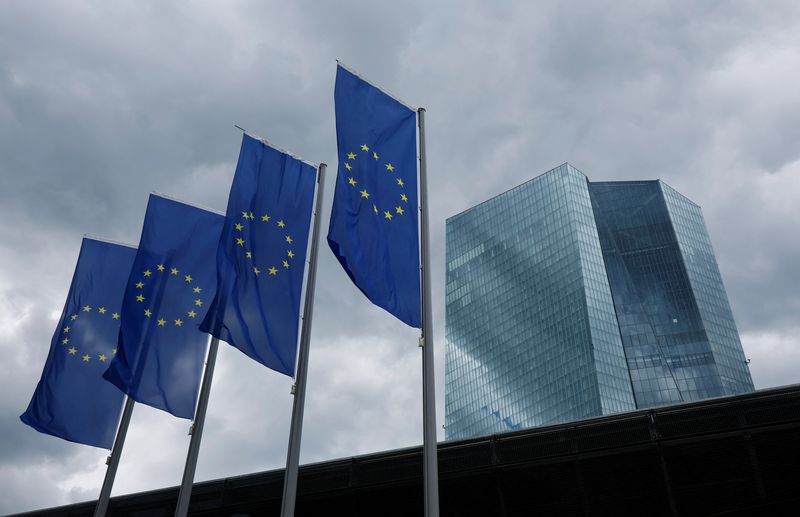
The euro ticked up against the dollar on 4 September 2026, moving from 1.1615 to 1.1622. Seven basis points is barely a rounding error in most contexts, but the direction matters. The gain came on a day when American employers added 162,000 jobs and the US unemployment rate held at 4.1 per cent, data that would normally strengthen the dollar. Instead, the dollar softened because a Federal Reserve governor publicly leaned against further rate increases.
The dynamic is straightforward: the European Central Bank looks almost certain to raise its deposit rate by 25 basis points to 2.50 per cent on 10 September, while the Federal Reserve appears increasingly inclined to pause. Divergent monetary policy tends to push the currency of the tightening jurisdiction higher, and that is what markets are pricing.
Waller signals a Fed pause
Federal Reserve Governor Christopher Waller said on 4 September that he would prefer to hold interest rates steady at the Fed's September meeting if inflation continues its downward trend. The remark cut across what would otherwise have been a dollar-positive day. Nonfarm payrolls grew by 162,000 in August, beating many forecasts. The unemployment rate held at 4.1 per cent. By old rules, solid labour market data would bolster the case for tightening.
Waller's comments shifted market expectations. The implied probability of a September Fed rate hike fell from roughly 63 per cent to 50 per cent. The two-year Treasury yield did rise to 4.41 per cent after the jobs release, reflecting some residual hawkishness, but the dollar could not hold its gains against the euro. Traders took Waller's remarks as a signal that the Fed's tightening cycle is nearer its end than the jobs data alone would suggest.
ECB set to raise rates again
Across the Atlantic, the calculus is different. Eurozone inflation reached 3.3 per cent in August, well above the ECB's 2.0 per cent target. Energy prices, pushed higher by geopolitical tensions in the Middle East, continue to feed through into consumer prices. The ECB has consistently signalled further tightening, and markets are treating a 25 basis point increase at the 10 September meeting as near-certain.
The rate would take the ECB's deposit facility to 2.50 per cent, still well below the Fed's current range but moving in the opposite direction. That divergence, the widening gap between what one central bank is doing and what the other is pausing from, is the mechanical driver behind the euro's recent strength.
A eurozone economy sending mixed signals
The ECB's hawkish stance sits uneasily with the underlying data. Eurostat figures released on 4 September showed retail sales contracting by 0.6 per cent month on month in July. Annual growth fell to just 0.6 per cent. Consumer demand across the currency area is weak, and raising rates into a slowdown carries obvious risks: higher borrowing costs can suppress spending further, deepen the contraction, and eventually require a sharper policy reversal.
The inflation problem, though, is real. At 3.3 per cent, price growth is 1.3 percentage points above target, and energy costs remain unpredictable. The ECB's governing council has judged, so far, that the inflation risk outweighs the growth risk. Whether that judgment holds beyond September depends partly on whether energy prices ease and partly on whether the slowdown deepens into something more serious.
French confidence vote adds uncertainty
France faces a confidence vote in the National Assembly on 8 September, two days before the ECB meeting. A failed vote could destabilise the government of one of the eurozone's largest economies, injecting political risk into a currency market already navigating divergent central bank paths. Even if the government survives, the episode will remind investors that fiscal politics in the eurozone remains fragile.
The timing is awkward for the euro. A government crisis in Paris would give traders reason to doubt the ECB's ability to keep tightening if the eurozone's second-largest economy enters political paralysis. The single currency's recent gains could evaporate quickly if the vote goes against the French government.
What the move means in practice
For travellers, a rate of 1.16 means Americans heading to Europe pay slightly more than a week ago, and Europeans visiting the United States get a marginal discount. The shift is small enough that most tourists will not notice it, but it is not trivial for businesses with larger exposures.
European importers buying dollar-priced goods face a modest cost increase. American importers sourcing from the eurozone may find some relief if the euro continues to advance, though the current move is too small to reshape pricing meaningfully. For companies hedging currency risk, the question is whether the euro's upward drift has further to run or whether the ECB will pause after September, narrowing the divergence that supports it.
People mentioned
-
Christopher Waller
Organisations
European Central Bank · Federal Reserve