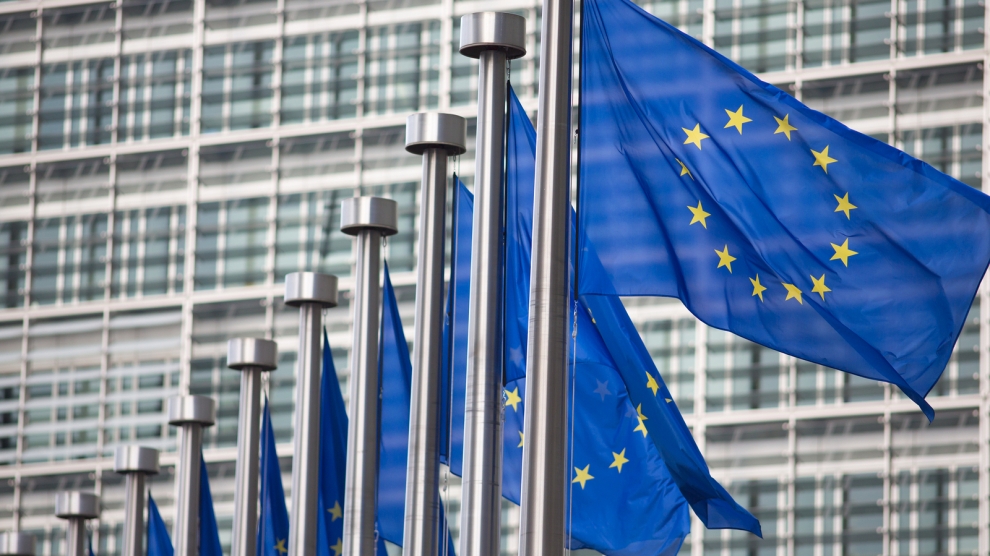
Ten coffins will circle the European Commission's Berlaymont headquarters on Monday, each labelled with a casualty of what Eurometal calls the colonisation of European industry: EU competitiveness, industrial jobs, European factories. The metal traders' federation is not staging theatre for its own sake. It says 300,000 manufacturing jobs will disappear in the remaining months of 2026 unless Brussels confronts what its president, Alexander Julius, describes as a virus eating through the continent's production base.
The component-level threat
Julius argues the danger is not finished Chinese goods flooding European markets but the steady capture of component supply chains, metals, chemicals, intermediate parts that feed 90 per cent of manufacturing. "China has made no secret of what it is doing. It is in their five-year plan," he said. "China doesn't want to be a raw material supplier, it wants to be a finished product supply. They want to be in key product supply chains because they know that once they control the supply chain, they own the complete value chain." The result, Eurometal says, is a hollowing out that goes beyond assembly lines: when manufacturing leaves, investment, know-how and long-term economic resilience go with it.
A trade deficit measured in billions per day
The numbers are stark. China now enjoys a record €1bn-a-day trade surplus with the bloc, amounting to roughly €360bn a year. Maroš Šefčovič, the EU's trade commissioner, has called the imbalance "not sustainable" and secured a three-month negotiating window, due to expire in October, to head off a broader tariff conflict. The Commission has already moved on electric vehicles, imposing duties on Chinese imports in 2024, and in June raised tariffs on foreign steel. But Julius says those steps miss the point: the real erosion is happening at the component level, where Chinese producers face none of the carbon costs or import levies that European metal makers absorb.
Asymmetric costs and an undervalued currency
European metal manufacturers pay carbon emissions taxes under the EU Emissions Trading System and face tariffs on steel imports meant to protect the bloc's own producers. Components manufactured in China carry neither burden. Combined with what Julius describes as the undervaluation of the yuan, the cost gap makes it rational for European companies, answerable to shareholders, to keep buying Chinese regardless of political rhetoric from Brussels. "Companies have to satisfy shareholders and will continue to buy from China, whatever the political rhetoric coming out of Brussels," he said.
Commission's own analysis sees deeper trouble
The Commission's own June analysis projected potential job losses exceeding 1 million from the combination of high energy costs and global competition. That figure encompasses the 100,000 cuts Volkswagen confirmed last week, a signal that even the continent's industrial champions are retrenching. Germany, the EU's manufacturing core, has seen its economy contract in recent quarters, and the job losses stacking up in its industrial heartlands are visible to politicians and media alike. Julius's complaint is that they treat the symptoms, not the virus.
China pushes back, talks buy time
Beijing has repeatedly accused Europe of protectionism. State-owned Xinhua warned earlier this year of "resolute countermeasures should the EU further target Chinese companies or products." For now, both sides have agreed a truce. The three-month dialogue launched in July gives the Commission until October to produce something more substantive than the sector-by-sector tariffs deployed so far. Whether that yields a structural rebalancing or merely a managed escalation will define the next phase of the EU's most consequential trade relationship.
Why the component argument matters
The EU's trade defence instruments, anti-dumping duties, anti-subsidy investigations, the new foreign subsidies regulation, are designed for finished or semi-finished products. They are blunt tools against a strategy that embeds Chinese suppliers deep inside European production processes, one component at a time. If Julius is right, the Commission's current toolkit cannot see the problem, let alone fix it. That would mean the 300,000 figure is a floor, not a ceiling.
How the imbalance built up
Europe's trade deficit with China has widened steadily since the pandemic, driven by European demand for electronics, machinery and green-tech inputs, solar panels, battery materials, rare earth processing, where Chinese dominance is now near-total. The EU's carbon border adjustment mechanism, phased in from 2023, adds cost to imports of steel, aluminium, cement and fertilisers, but its scope excludes most intermediate components. Meanwhile, the yuan has traded well below purchasing-power parity against the euro for years, a point European industry associations have raised repeatedly in Commission trade consultations without triggering a formal currency investigation.
What happens in October
The three-month negotiating window closes in October. If no agreement emerges, the Commission faces pressure to widen tariffs beyond EVs and steel, possibly targeting the component categories Eurometal highlights. China has signalled retaliation against European agricultural and luxury exports. The German government, already managing a recession and the Volkswagen restructuring, will be the loudest voice in the Council for restraint. But the coffin procession on Monday is a reminder that the industry most exposed to Chinese component competition is also the one least represented in the negotiating room.
People mentioned
-
Alexander Julius
Organisations
Eurometal · European Commission · Volkswagen