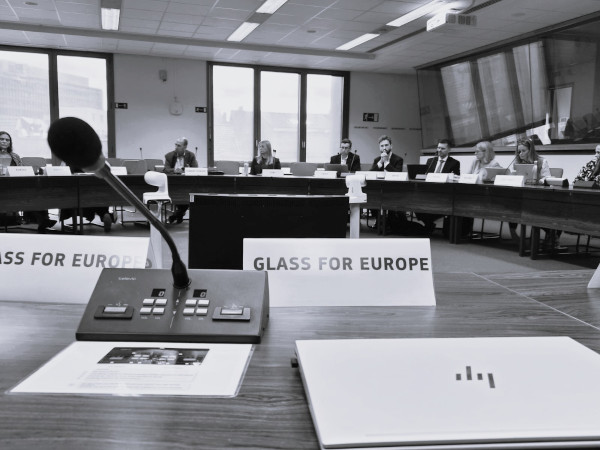
Europe's flat glass manufacturers have used a roundtable with the European Commission's energy directorate to deliver an uncomfortable message: the industry's decarbonisation pathways are not economically viable without sustained public support, and some processes will continue to require natural gas for the foreseeable future.
A new director-general opens the door
The meeting was convened by Céline Gauer, who recently took over as Director-General of the Commission's Directorate-General for Energy (DG ENER). Her decision to invite energy-intensive industries to set out their priorities signals a willingness to listen to sectors that have often felt sidelined in Brussels climate discussions. Glass for Europe, the trade association representing flat glass manufacturers, was among those at the table.
Iva Ganev, the association's Environment and Climate Policy Manager, began by acknowledging a positive step: DG ENER's Electrification Action Plan, published on 17 July 2026, had taken some account of sector-specific conditions. That recognition matters, because flat glass production operates under constraints that make full electrification impractical with current technology.
The competitiveness gap
Ganev confirmed that flat glass companies are actively investigating partial electrification, one of the sectoral pathways for decarbonisation. But she was blunt about the economics: such projects are not competitive. The industry can handle the technological and engineering challenges, she said, but public support is necessary to make the business case work.
This is a familiar tension in European industrial policy. The Commission wants companies to invest in clean technology; companies say they will, provided the financial framework makes it possible. The gap between what is technically feasible and what is commercially viable has been a persistent obstacle across energy-intensive sectors, from steel to ceramics.
Ganev also pointed out that electrification is not the only route. Flat glass manufacturing can also decarbonise through biomethane or hydrogen, and Glass for Europe is in ongoing dialogue with DG ENER on those options. But here too, the same two problems arise: availability of the energy carriers and their cost. Europe may have hydrogen ambitions, but the infrastructure and supply are not yet in place at the scale industry needs.
Why natural gas will not disappear quickly
The most pointed part of Ganev's intervention concerned natural gas. Flat glass manufacturing requires very high production temperatures, operates with large furnace volumes, must meet strict quality standards and runs as a continuous process. Shutting down and restarting a furnace is not a trivial operational matter; it is a major disruption that can damage equipment and output.
Because of these constraints, Ganev said, a certain share of natural gas will still be needed at least in the medium term. That claim carries a direct policy implication. DG ENER is currently considering higher taxation for fossil fuels, a tool intended to accelerate the shift away from gas and oil. If applied without regard to industrial realities, Ganev warned, such taxes would penalise companies for reasons beyond their control.
The argument is not new, but it is gaining force. Several energy-intensive sectors have made similar points about the risk that carbon pricing and fossil fuel taxes, while sound in principle, can push production out of Europe rather than pushing it towards cleaner technology. The Commission's own energy strategy documents acknowledge that transition periods are necessary, though the definition of what constitutes a reasonable transition remains contested.
Glass as part of the solution
Adrien Carton, Glass for Europe's Sustainable Construction and Industrial Policy Manager, shifted the focus from production to product. Flat glass, he argued, is not merely an industry that consumes energy; it is a material that reduces energy consumption when installed in buildings.
As temperatures rise across Europe, a growing share of building energy demand comes from cooling, not heating. High-performance and solar-control glazing can reduce that demand passively, without the energy input that air conditioning requires. Carton called for an ambitious Heating and Cooling Strategy from the Commission, and for discussions on energy efficiency to be embedded in the wider debate about energy systems, recognising the role of the building envelope in managing peak loads and improving overall efficiency.
It is a framing that serves the industry's interests, but it is not without merit. The Eurostat data on energy consumption in buildings consistently shows that heating and cooling account for a large share of final energy demand in the residential and services sectors. Reducing that demand through better insulation and glazing is widely regarded as one of the cheaper decarbonisation levers available.
The Commission's stance
DG ENER's representatives acknowledged the concerns raised. They said the Commission is looking for a business case suitable to all market actors. But they also reiterated a firm position: state aid is only a transitional measure. The long-term objective of EU energy policy is independence from energy imports, which requires pushing electrification as far as possible and combining it with other solutions.
That response leaves a gap. If state aid is transitional, and if electrification projects are not yet competitive, then something has to bridge the period between the present and the point at which clean technology stands on its own feet. The Commission's answer appears to be that the market, supported by carbon pricing, will eventually provide that bridge. Industry's answer is that the bridge is not yet built.
People mentioned
-
Céline Gauer
-
Iva Ganev
-
Adrien Carton
Organisations
Glass for Europe · European Commission