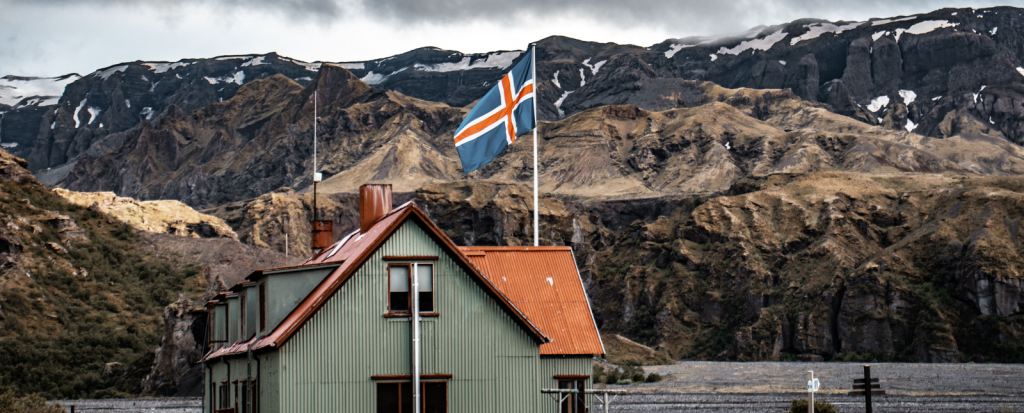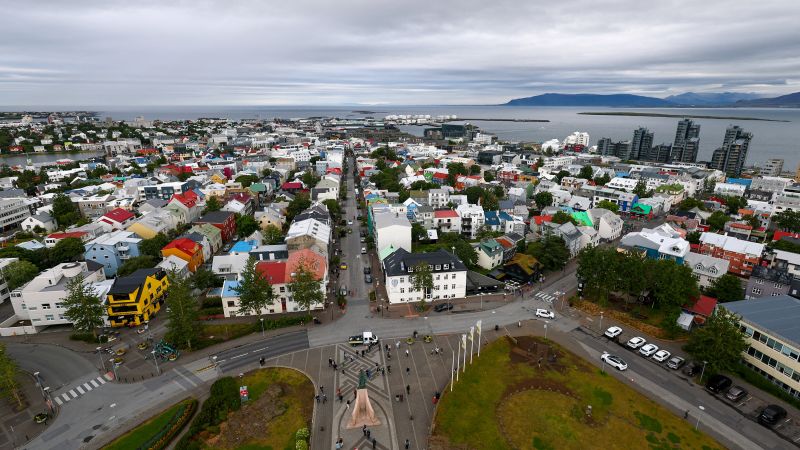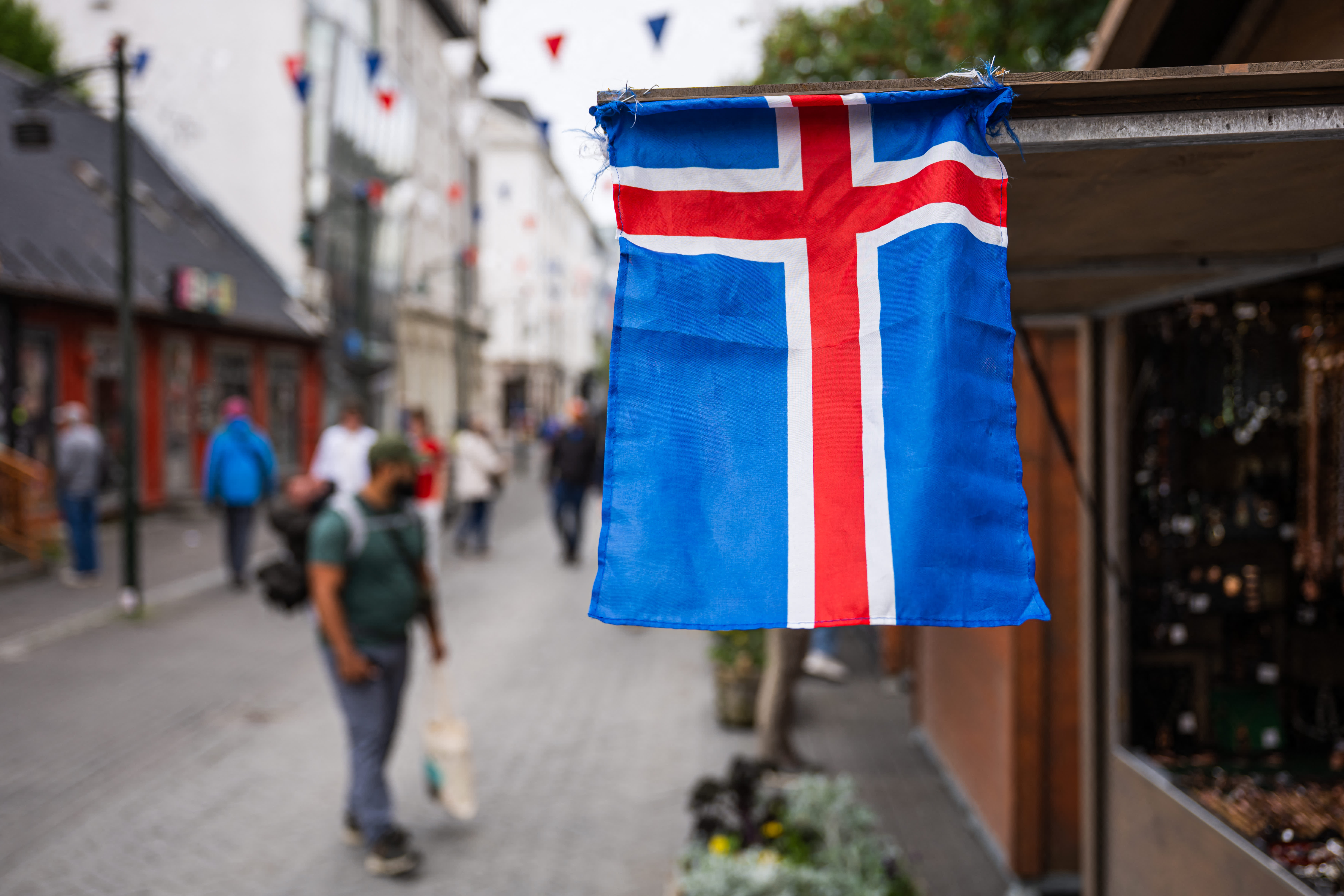
Iceland votes this Saturday on whether to reopen European Union membership negotiations, a question that has divided the country almost exactly in half but gained fresh urgency since Donald Trump began pressing his case to acquire Greenland.
The advisory referendum asks voters a single question: should Iceland resume accession negotiations with the EU? A yes majority would not deliver membership. It would restart a process suspended in 2013, after which any negotiated agreement would face a second referendum before taking effect.
Opinion polls suggest the result could go either way. The country of roughly 390,000 people finds itself weighing familiar domestic arguments about fishing grounds, currency instability and national sovereignty against a geopolitical calculation that would have seemed fanciful a decade ago: what happens to a small Arctic nation when the United States starts treating the neighbourhood as strategically contestable territory.
The Greenland shadow
Trump's repeated statements about wanting to bring Greenland under American control, initially dismissed as eccentric, have hardened into a sustained rhetorical position framed around national security. The Arctic is changing fast. Sea ice is retreating, opening seasonal shipping routes and drawing attention to critical mineral deposits beneath the permafrost. What was once a frozen afterthought in global strategy has become a contested corridor.
For Iceland, this is not abstract. Iceland sits astride the GIUK Gap, the naval choke point between Greenland, Iceland and the United Kingdom that connects the Arctic Ocean to the Atlantic. Control of that passage has mattered to naval planners since the Cold War. It matters again now, as Russia expands its Arctic presence and China pursues what it calls a Polar Silk Road.
Eiríkur Bergmann, professor of politics at Bifröst University, pointed out that the logic Trump applies to Greenland maps directly onto Iceland. Greenland and Iceland sit on the same strategic axis, and the arguments for acquiring one apply with equal force to the other. The difference, Bergmann noted, is that Iceland is a sovereign state, not a self-governing territory within the kingdom of Denmark.
Trump appeared to confuse the two during a special address at the World Economic Forum in Davos earlier this year, referring to Greenland when he seemed to mean Iceland, or vice versa. For Icelandic voters already uncertain about American reliability, the slip was not reassuring.
A defence arrangement under review
Iceland is a founding member of NATO and the only ally in the alliance that maintains no military forces of its own. Its security has rested on two pillars: collective defence through NATO membership and a bilateral defence agreement with the United States signed in 1951. That agreement, which has governed American military responsibilities toward Iceland for three quarters of a century, is now being questioned.
Bergmann said many Icelanders are reconsidering the validity of that bilateral arrangement. If the United States is willing to pressure a Danish territory for strategic reasons, the thinking goes, what prevents similar pressure on an independent but militarily defenceless Iceland? EU membership would not replace NATO or the American bilateral agreement, but it would embed Iceland within a larger political entity capable of diplomatic weight the country cannot project alone.
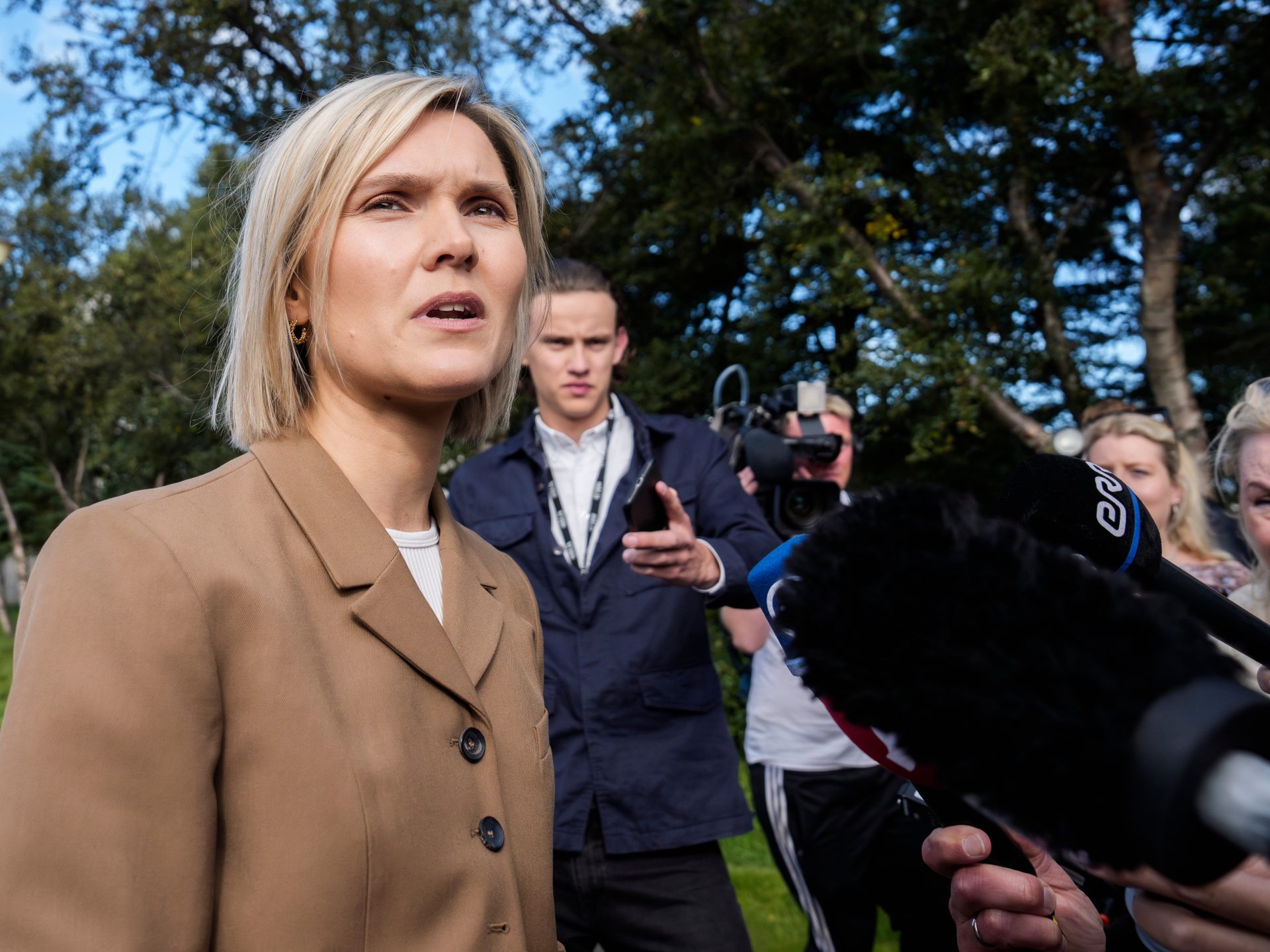
Foreign Minister Thorgerdur Gunnarsdottir made the case explicitly in an article for the Icelandic newspaper Visir earlier this year. She wrote that the international system Iceland has lived within since the end of the Second World War is in turmoil, and that deeper dialogue and collaboration with the EU would help protect the country's interests.
A history of hesitation
Iceland first applied to join the European Union in 2009, in the aftermath of a financial crisis that brought down the country's banking system and devastated its currency. The krona's collapse was severe enough that adopting the euro looked, for a time, like an economic necessity rather than an ideological choice. The application was a product of that crisis.
By 2013, the political landscape had shifted. A euroskeptic coalition took power and suspended membership talks, calculating that Iceland could recover outside the bloc. The economy did recover, aided by a tourism boom and the fishing industry's resilience. The application was never formally withdrawn, but it lay dormant for more than a decade.
The current Social Democrat-led government, which includes figures who backed the original 2009 application, has now revived the question. Steven Blockmans, deputy director at the International Centre for Defence and Security, described the move as the government reheating its original bid to close unfinished business.
What membership would and would not change
Iceland is already deeply entwined with the European Union through structures that fall short of full membership. The country belongs to the European Economic Area, which grants it access to the single market, and to the Schengen Area, which allows passport-free travel. Icelandic businesses trade freely with the EU. Icelandic citizens live and work across the bloc. What Iceland does not have is a seat at the table when EU rules are written, and it does not use the euro.
That combination of partial integration is central to the referendum debate. Opponents argue that Iceland already receives the economic benefits of membership without accepting the regulatory obligations. Former Prime Minister Katrín Jakobsdóttir has said she does not see the argument for joining, pointing to the country's close economic collaboration with the bloc and its high living standards.
Proponents counter that the current arrangement leaves Iceland as a rule-taker. The EEA requires Iceland to adopt single-market legislation without influencing its design. As geopolitical pressure mounts in the Arctic, the argument runs, political representation within the EU matters more than market access alone.
Fish and currency: the domestic fault lines
Geopolitics may have reshaped the context of the vote, but the domestic arguments that have always defined Iceland's EU debate have not disappeared. They centre on two issues: fishing and the currency.
Iceland has fought bruising disputes with EU member states over control of its fishing grounds, most notably the Cod Wars with Britain in the 1950s, 1970s and beyond. The fishing sector remains economically central and culturally totemic. Jon Danielsson, director of the Systemic Risk Centre at the London School of Economics, described fishing as the hardest condition to negotiate. Even if a majority votes to resume talks, he said, most Icelanders would judge the outcome by what the EU offered on fisheries, and he considered it doubtful that satisfactory conditions would emerge.
The currency question pulls in the opposite direction. Iceland's krona is volatile. Interest rates are high. Danielsson said that for many Icelanders, the real point of joining the EU is adopting the euro and escaping that instability. The tension is genuine: the thing that makes EU membership economically attractive, the euro, is the same thing that makes it politically difficult, because the fishing industry fears European regulation of its waters.
What the EU stands to gain
For the European Union, an Icelandic accession would be welcome on several levels. The bloc has not expanded since Croatia joined in 2013, and Britain's departure in 2020 was a psychological blow. A successful accession process would demonstrate that European integration still holds appeal.
Blockmans noted that welcoming a country ranked among the world's wealthiest and most democratic nations would give extra shine to the European project. Iceland's GDP per capita is among the highest globally. Its democratic institutions are robust. Adding a stable, prosperous democracy to the bloc would be a straightforward political win.
There is also a strategic dimension. An Iceland inside the EU would extend the union's territorial reach into the Arctic, giving Brussels a direct stake in a region where it currently has limited leverage. That matters as the EU develops its Arctic policy and as climate change redraws the map of accessible resources and shipping lanes.
The mechanics of what comes next
If the yes campaign prevails, Iceland will resume accession negotiations from the point where they were suspended. Bergmann suggested a negotiated agreement could be reached relatively quickly, partly because the current government has an incentive to move before the next general election, which must be held by August 2028.
Speed is not guaranteed. The fishing question alone could stall talks for years, as it has for other Atlantic applicants. Norway, which shares many of Iceland's concerns about fisheries, twice voted against EU membership and remains outside. The Faroe Islands, also part of the Kingdom of Denmark, have never sought to join.
If negotiations succeed, the resulting accession treaty would be put to a second referendum. Icelandic voters would then face a more concrete decision: not whether to talk to the EU, but whether to accept a specific set of terms. That is where the fishing provisions, the transition periods and the currency arrangements would be tested against public opinion.
If the no campaign wins on Saturday, the application returns to dormancy. Iceland remains in the EEA and Schengen, a rule-taker in the single market with no voice in Brussels. The bilateral defence agreement with Washington stays in place. The status quo endures, but under a security environment that looks less stable than it did when the agreement was signed 75 years ago.
People mentioned
Organisations
European Union · North Atlantic Treaty Organization · European Economic Area · Schengen Area