Iceland has voted against reopening European Union accession negotiations, with 52.5 per cent rejecting the proposal and 47.5 per cent supporting it, according to near-complete results reported by national broadcaster RUV on 30 August. The margin, roughly five percentage points, was decisive enough that remaining ballots from one constituency are not expected to alter the outcome.
The result does not settle the question of EU membership itself. The referendum asked only whether Iceland should resume negotiations that were suspended in 2013. A yes vote would have authorised the government to restart talks with Brussels; any eventual membership deal would then have been put to a second referendum. Instead, the question of EU accession is effectively closed for the remainder of this parliamentary term, which runs until 2028.
A five-point gap that felt narrower than it looks
A 52.5 to 47.5 split is not a landslide, but in a country of 390,000 people where the fishing industry occupies an outsized place in both the economy and the national imagination, the no campaign always had a structural advantage. The yes side needed to persuade voters that the economic and geopolitical benefits of EU membership outweighed the perceived threat to Iceland's control over its territorial waters. It failed to do so.
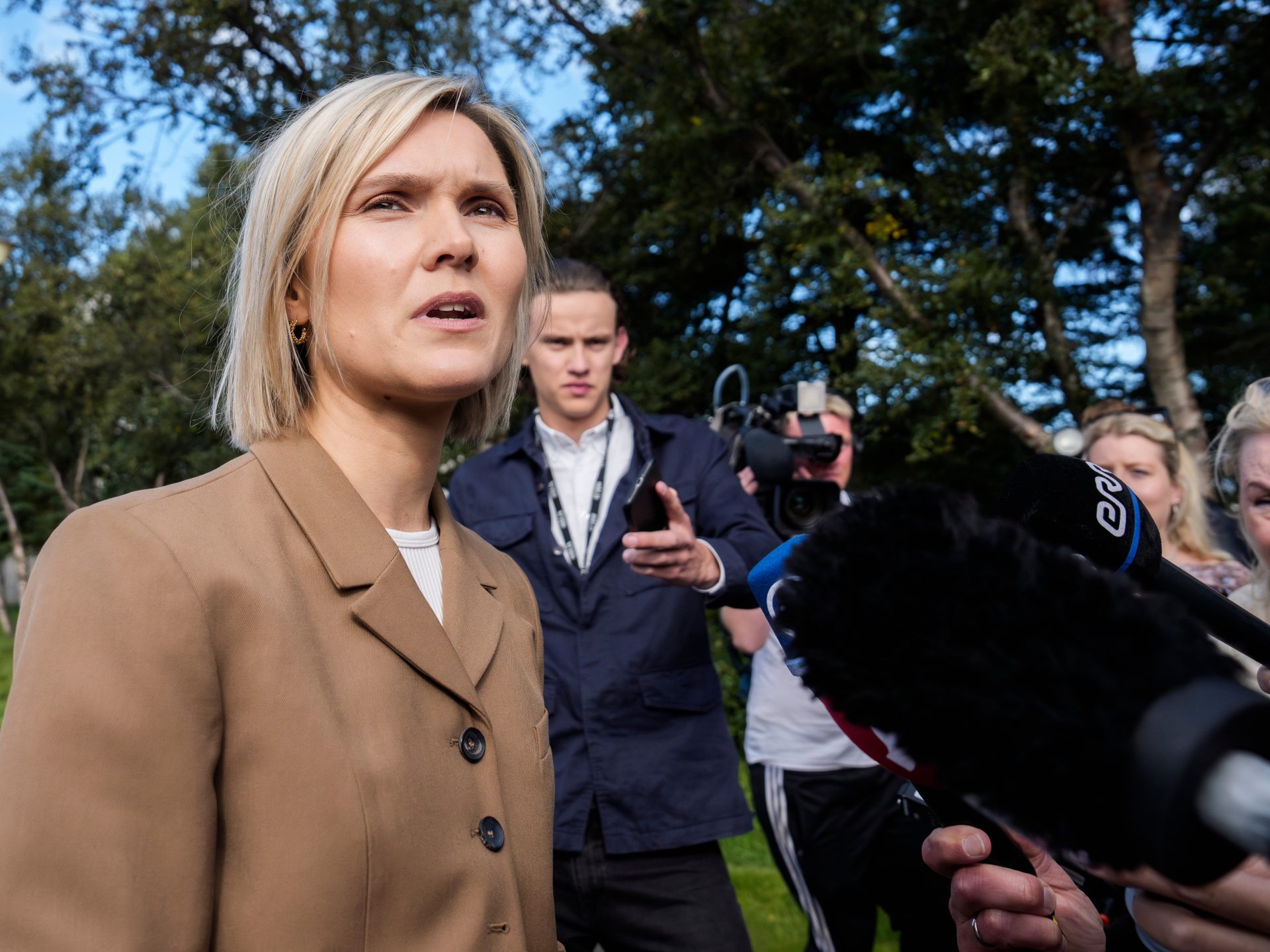
Prime Minister Kristrun Frostadottir, who leads a left-leaning Social Democratic coalition elected in 2024, had framed the referendum as a "now or never" decision. She said after the result that the campaign had at least raised discussion about Iceland's place in the world, adding: "We've been waiting for this for years to be able to have a vote." Her government will continue in office, but its EU ambitions are finished for this term.
The referendum was technically nonbinding. Frostadottir's government, however, had pledged in advance to respect the outcome. Reneging on that commitment after a clear result would have been politically unsustainable.
Fishing rights and the sovereignty reflex
The dominant theme of the no campaign was the protection of Iceland's fishing waters, which have been managed under a national quota system since the 1970s and are widely regarded within the country as both an economic resource and a symbol of independence. EU membership would require Iceland to accept the Common Fisheries Policy, which allocates catch quotas among member states. For a country where fish and fish products account for a substantial share of exports, handing regulatory authority over those waters to Brussels was always going to be a hard sell.
Opposition leader Gudrun Hafsteinsdottir, who led the no campaign, made the sovereignty argument central. "These are not problems that Brussels will solve for us," she said. "These are problems that Icelandic politicians must solve." The line captured a sentiment that ran deeper than any single policy dispute: a reluctance to cede decision-making to institutions that Icelanders did not elect and cannot directly remove.
The sovereignty argument also touched on broader concerns about regulatory alignment. Under EU law, member states must accept the acquis communautaire, the full body of EU legislation, without cherry-picking. For a small nation accustomed to setting its own rules on fisheries, energy and environmental policy, that degree of constraint was always going to meet resistance.
The economic case that did not persuade
The yes campaign leaned heavily on Iceland's economic vulnerabilities. Inflation has been persistently high, and the Central Bank of Iceland's key interest rate stands at 8 per cent, compared with 2.25 per cent at the European Central Bank. Proponents argued that adopting the euro would bring lower borrowing costs and greater price stability, and that EU membership would deepen Iceland's trade relationships at a time when global economic uncertainty is running high.
These arguments had force on paper. Iceland's economy is small, open and vulnerable to external shocks, as the 2008 financial crisis demonstrated when the country's banking system collapsed spectacularly. The memory of that crisis was part of what prompted the original EU application in 2009. But the economic case this time around competed against a counter-narrative: that Iceland had recovered from 2008 on its own terms, outside the EU, and that its current difficulties did not require surrendering control of fisheries to resolve.
There was also an awkward structural problem for the yes side. Iceland already enjoys considerable access to the EU single market through its membership of the European Economic Area. It is part of the Schengen free-travel zone. It trades freely with the EU on most goods and services. For many voters, the incremental economic benefits of full membership were not obvious, while the costs, particularly in fisheries, were tangible and immediate.
How Trump's Greenland comments accelerated the vote
Geopolitics gave the referendum an urgency it might otherwise have lacked. Iceland occupies a strategic position in the North Atlantic, controlling airspace and sea lanes between North America and Europe. It is a founding member of NATO but maintains no standing military of its own, relying instead on its allies for defence under a bilateral agreement with the United States dating back to 1951.
The government originally planned to hold this referendum in 2027. It brought the vote forward after an incident in early 2026 when US President Donald Trump mistakenly referred to Iceland four times while outlining his administration's policy on Greenland, the semi-autonomous Danish territory. The error was widely ridiculed, but it crystallised anxieties in Reykjavik about Iceland's visibility and leverage in an era of great-power competition over the Arctic.
Frostadottir's government argued that closer ties with Europe would strengthen Iceland's negotiating position and provide an additional layer of geopolitical anchoring beyond NATO. Opponents countered that NATO membership already guaranteed Iceland's security and that EU accession would not meaningfully alter the strategic calculus, given that the EU itself is divided on defence policy and lacks the military capability that NATO provides.
The EEA arrangement that makes EU membership a marginal gain
Iceland's existing relationship with the EU through the European Economic Area is the quiet reason why the accession debate never generates overwhelming momentum in either direction. The EEA gives Iceland access to the single market for goods, services, capital and labour. Icelandic citizens can live and work in any EU member state. EU citizens can do the same in Iceland. The country participates in EU research programmes, consumer protection standards and many regulatory frameworks.
What Iceland does not have is a seat at the table when EU rules are written. EEA members must adopt most EU single-market legislation without a formal vote. This democratic deficit has long irritated Icelandic politicians across the spectrum, but it has never been irritating enough to push the country towards full membership, because the alternative, leaving the EEA, would be economically damaging.
The referendum result therefore leaves Iceland in a familiar position: closely integrated with the EU in practice, formally separate in law, and content enough with that arrangement to reject the next step.
What happens to Iceland's dormant EU application
Iceland first applied for EU membership in 2009, under a centre-left government that took office in the aftermath of the financial crisis. Negotiations proceeded slowly, opening chapters on education, science and other relatively uncontroversial areas. In 2013, a centre-right coalition came to power and suspended the talks, arguing that the country's interests were better served outside the bloc. The application was never formally withdrawn, leaving it in a state of suspended animation.
That ambiguity is now likely to end. The government is expected to refer to the Althingi, Iceland's parliament, the question of whether to formally withdraw the 2009 application. Doing so would close the matter entirely, rather than leaving it as a dormant file that could theoretically be reactivated at a later date. It would also represent a political commitment that any future government would find harder to reverse.
For Brussels, the result is a minor disappointment rather than a strategic blow. The EU has been pursuing enlargement in the Western Balkans and eastern Europe, and Icelandic accession would have been a symbolic victory for the bloc's open-door credentials. But Iceland's small population and EEA membership meant that its accession would have had limited practical impact on EU governance or trade.
People mentioned
Organisations
European Union · European Economic Area · North Atlantic Treaty Organization · European Central Bank