The International Monetary Fund has drawn a line between Moldova and Ukraine that European diplomats have been reluctant to draw themselves. In a report published on 8 September, the IMF grouped Moldova with the Western Balkan candidate countries, leaving Ukraine in a separate category, an arrangement that reflects growing divergence between two states that began their EU accession bids together.
Moldova and Ukraine applied for EU membership within days of each other in early 2022 and were granted candidate status simultaneously. They have moved through the early stages of the process in lockstep, each opening two of the six enlargement clusters: rule of law and external relations. But the IMF's decision to place Moldova alongside Albania, Serbia and Montenegro, rather than with Ukraine, signals that their paths are beginning to separate.
Why Moldova is pulling ahead
Moldova's reform momentum has been building for months. In July, the EU's enlargement commissioner, Marta Kos, singled out Chisinau as the "best performer" in accession talks. Ukraine, by contrast, has struggled. Its parliament has been slow to advance the legislative changes required by both the EU and the IMF.
On 7 September, the EU's economy commissioner, Valdis Dombrovskis, told Ukraine's prime minister, Serhii Koretskyi, that Kyiv must stick to its agreed reform timetable. Dombrovskis was scheduled to discuss the issue further with the IMF's Kristalina Georgieva on 8 September. The timing of that call, the day before the IMF report's release, was not coincidental.
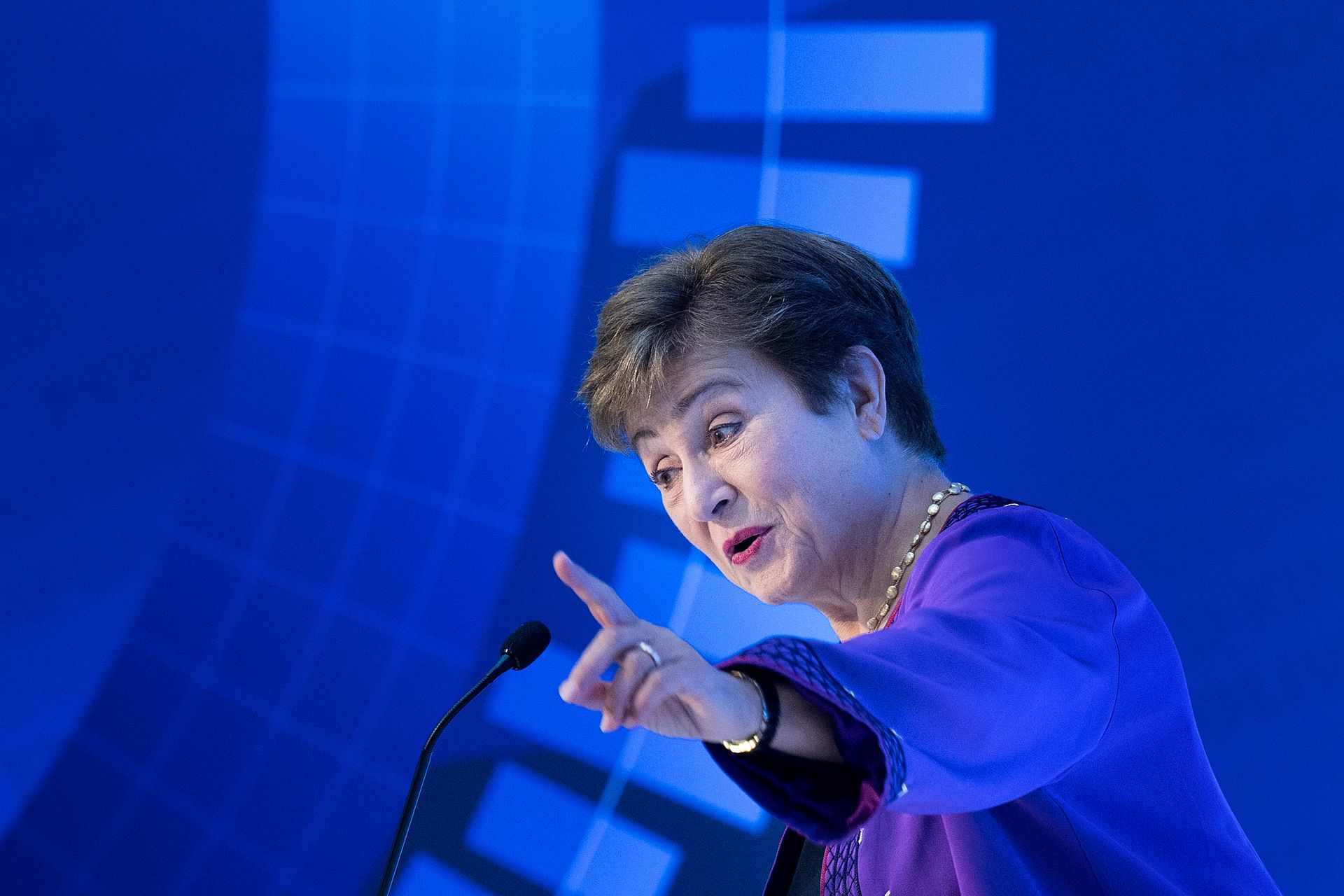
Georgieva, the IMF managing director, said the grouping reflected shared characteristics between Moldova and the Western Balkans. "We recognise the importance of continuing engagement with other countries seeking to join, especially with Ukraine," she said at a launch event organised by the Centre for European Policy Studies, a Brussels think tank. But the report itself cites Ukraine's "much larger size and ongoing military conflict" as reasons for treating it separately.
The Western Balkans comparison
The comparison is not straightforward. Several Western Balkan countries are well ahead of both Moldova and Ukraine. Montenegro is already drafting its accession treaty to become the EU's 28th member state. Albania is closing negotiation chapters rather than opening them. Serbia, despite the political complications of its ties to Moscow and Beijing, has opened more negotiating chapters than either Kyiv or Chisinau.
But the region is not uniformly advanced. North Macedonia, Bosnia and Herzegovina, and Kosovo all trail behind. The IMF's decision to group Moldova with the Western Balkans as a whole, rather than with any single country, reflects an economic and institutional logic, not a claim that Chisinau's accession is imminent.
What membership actually delivers
The report's central finding is that EU membership delivers substantial economic gains. Georgieva presented data showing that countries in the study saw their GDP per capita rise by roughly 35 per cent in the decade after joining, driven by productivity gains of about 20 per cent and capital investment of about 12 per cent. Three factors contributed roughly equally: participation in the EU single market, the inflow of EU structural and cohesion funds, and domestic reforms required to align with EU rules.
Kos was emphatic about what Ukraine could gain, provided it delivers on reforms. She described Ukraine's potential to become "one of the most dynamic investment markets in the world" upon accession, calling it "another Wirtschaftswunder in Europe." The phrase, meaning economic miracle, is a deliberate echo of post-war West Germany's recovery, a comparison that is ambitious even by the standards of enlargement rhetoric.
Adversaries in the enlargement process
Kos framed enlargement in explicitly geopolitical terms, arguing that the EU faces active opposition from foreign powers. "For the first time in history, we have adversaries in the enlargement process," she said. "Clearly, Russia is one of them." She accused Moscow of working to prevent candidates from moving closer to the bloc.
She also identified China as a challenge, arguing that Chinese companies are embedding themselves in candidate economies so that, once those countries join the EU, Beijing will have gained a foothold in the single market. If candidates are left outside for years or decades, she warned, adversaries will "jump in and turn them against us." Kos also referred to pressure from what she called "MAGA ideologists" in the West who argue that European civilisation and the European economy are in decline.
The sovereignty problem
Both Ukraine and Moldova have territory that is not under the control of their internationally recognised governments. Russia occupies parts of eastern and southern Ukraine, and Moldova's Transnistria region has operated under de facto Russian-backed control since the early 1990s. EU membership generally requires sovereign control over all territory, though Cyprus provides a precedent: its government does not exercise authority over the northern part of the island, which is governed by a Turkey-aligned, unrecognised administration.
The Cyprus example shows the EU can bend its own rules when the politics demand it, but it also demonstrates that unresolved territorial disputes do not simply disappear upon accession. Cyprus has been a member since 2004 and the island remains divided.
Incremental integration
Kos argued that the EU must move faster to integrate candidates, suggesting they should be able to "get some fruits of the membership before they become members." That language points toward incremental integration, allowing candidate countries partial access to EU programmes and markets before full accession, a model that some in Brussels have discussed but none have formally proposed for Ukraine or Moldova.
The IMF report is primarily an exercise in economic analysis, but its decision to separate Moldova from Ukraine carries political weight. By treating Chisinau as closer to the Western Balkans, the fund has acknowledged what officials in Brussels have been saying privately for months: that Moldova's smaller size, reform momentum and comparatively manageable security situation put it on a different trajectory from its larger neighbour.
People mentioned
-
Serhii Koretskyi
Organisations
International Monetary Fund · European Commission · Centre for European Policy Studies