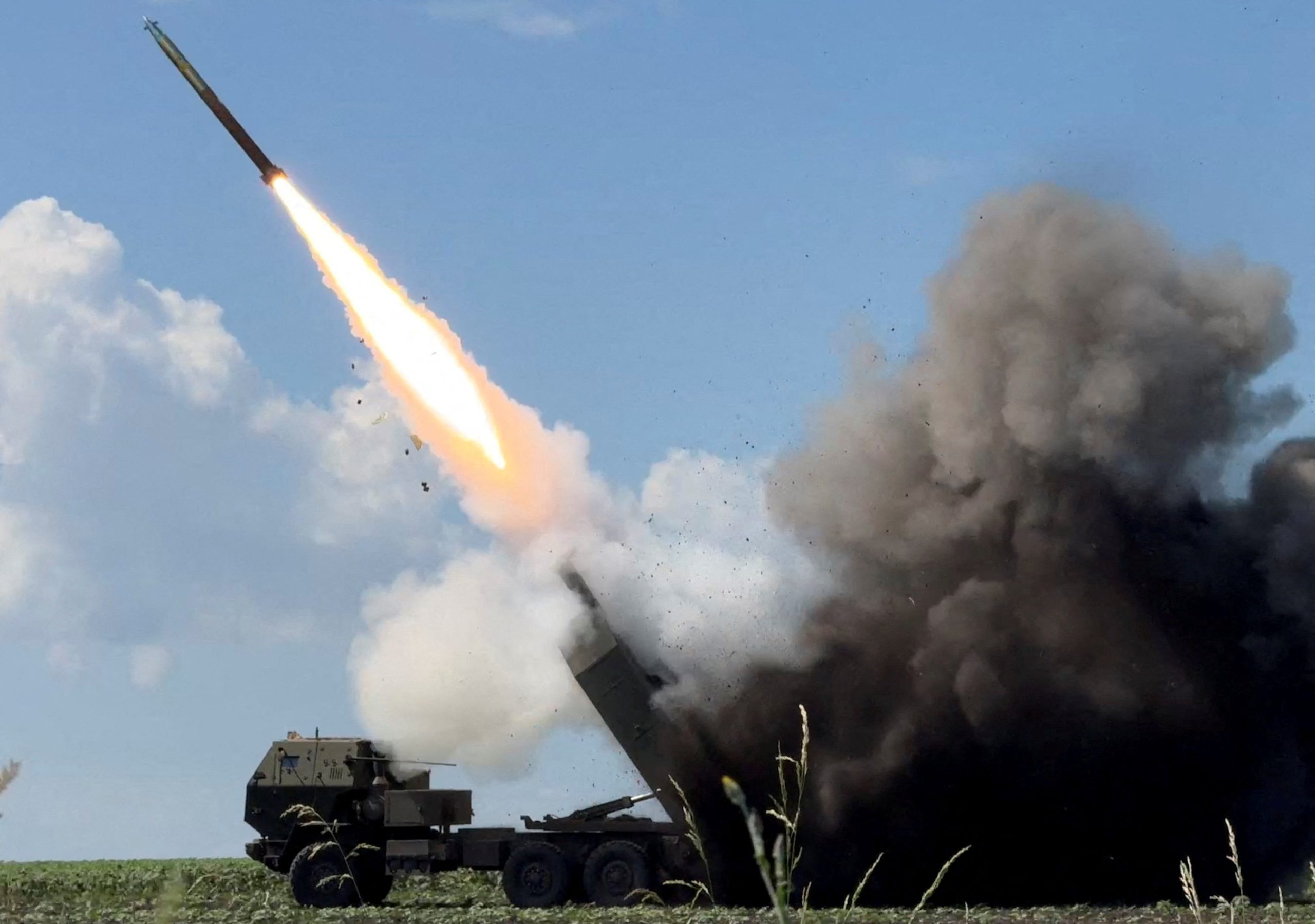
Twelve NATO allies, led by the United Kingdom, used this summer's alliance summit in Ankara to commit $50 billion to developing deep strike precision capabilities. A month later, in August, the new British prime minister Andy Burnham announced that Ukraine would receive blueprints for Storm Shadow cruise missiles. Both moves were necessary. Neither was sufficient.
The uncomfortable arithmetic is that most of the new European capabilities funded in Ankara will not reach operational readiness until the next decade. Russia, by contrast, has spent the years since 2018 building an arsenal of long-range systems that European NATO cannot currently match.
Russia's long-range build-up since 2018
Since 2018 the Kremlin has poured resources into a range of long-range weapons: the Avangard hypersonic glide vehicle, the Iskander tactical ballistic missile, and the still-experimental Burevestnik nuclear-powered cruise missile. Some of these systems are hypersonic. All carry heavier payloads than shorter-range alternatives.
The much-discussed Oreshnik hypersonic missile, which Russia has touted as a strategic asset, has reportedly been fired only three times. Its practical impact has been limited so far. Short- and medium-range missiles have done far more damage on the ground in Ukraine, destroying infrastructure and killing civilians. But the long-range systems pose a threat well beyond Ukraine's borders. If Russia were to widen its confrontation with NATO, these weapons could reach targets across the alliance's European territory.
The production and cost problem
European NATO members face two linked problems. They lack sufficient integrated air and missile defence systems to counter Russia's long-range weapons, and they lack comparable offensive missiles of their own. Deterrence requires having dominant or at least comparable capabilities. Europe currently has neither.
Air defence systems are expensive and slow to produce. Missile deliveries have fallen short of targets. The alliance's military planners have traditionally relied on the United States to fill this role, but that assumption is looking less secure as Washington scales back its European military presence.
Missiles and drones in combination
Russia has not relied on long-range missiles alone. Its tactics have evolved alongside low-cost, mass-produced uncrewed systems. One approach, borrowed from Iran, involves firing missiles simply to force Ukraine to expend defensive munitions, leaving Kyiv more vulnerable to subsequent long-range strikes. The combination of cheap drones and expensive missiles compounds the problem for defenders: intercepting a Shahed drone with a Patriot missile is a losing financial equation, and depleting interceptor stocks creates openings for more valuable weapons.
Ukraine as a striking force
One of the more pragmatic recommendations from analysts at the Center for European Policy Analysis is for NATO allies to help Ukraine degrade Russia's own missile production. Ukraine has already demonstrated its ability to strike targets hundreds of miles inside Russian territory, hitting production facilities and component supply chains. Providing better intelligence, surveillance and reconnaissance support would make those strikes more effective.
The United States has supplied smaller ISR platforms to Ukraine through security assistance programmes established since 2014 and expanded after the full-scale invasion. Larger platforms are harder to share because of concerns about sensitive technology falling into Russian hands. But recent intelligence-sharing successes and Ukrainian long-range strikes into Russian territory suggest there is room to do more.
There is also an argument for European allies to buy Ukrainian weapons systems. Kyiv has recently held discussions with European governments about arms exports, and Ukrainian systems, tested under actual combat conditions, could fill specific niches in European arsenals faster than domestic programmes that are still on the drawing board.
The American question
Any European calculation about long-range deterrence has to account for the possibility that the United States will continue reducing its military footprint on the continent. If that happens, it needs to happen in a way that respects NATO's regional defence plans. Gaps in capability can quickly become gaps in operations and deterrence, and the Kremlin is positioned to exploit them.
European allies need to increase domestic missile production and procurement regardless of what Washington does. A stronger European pillar within NATO gives military planners more options and reduces the alliance's dependence on a single member state. The $50 billion committed in Ankara is a start, but money committed and missiles fielded are different things. Europe's long-range fire gap with Russia will persist for years unless production scales up dramatically and procurement timelines shorten.
People mentioned
-
Peter Victor Roberto
Organisations
North Atlantic Treaty Organization · Center for European Policy Analysis