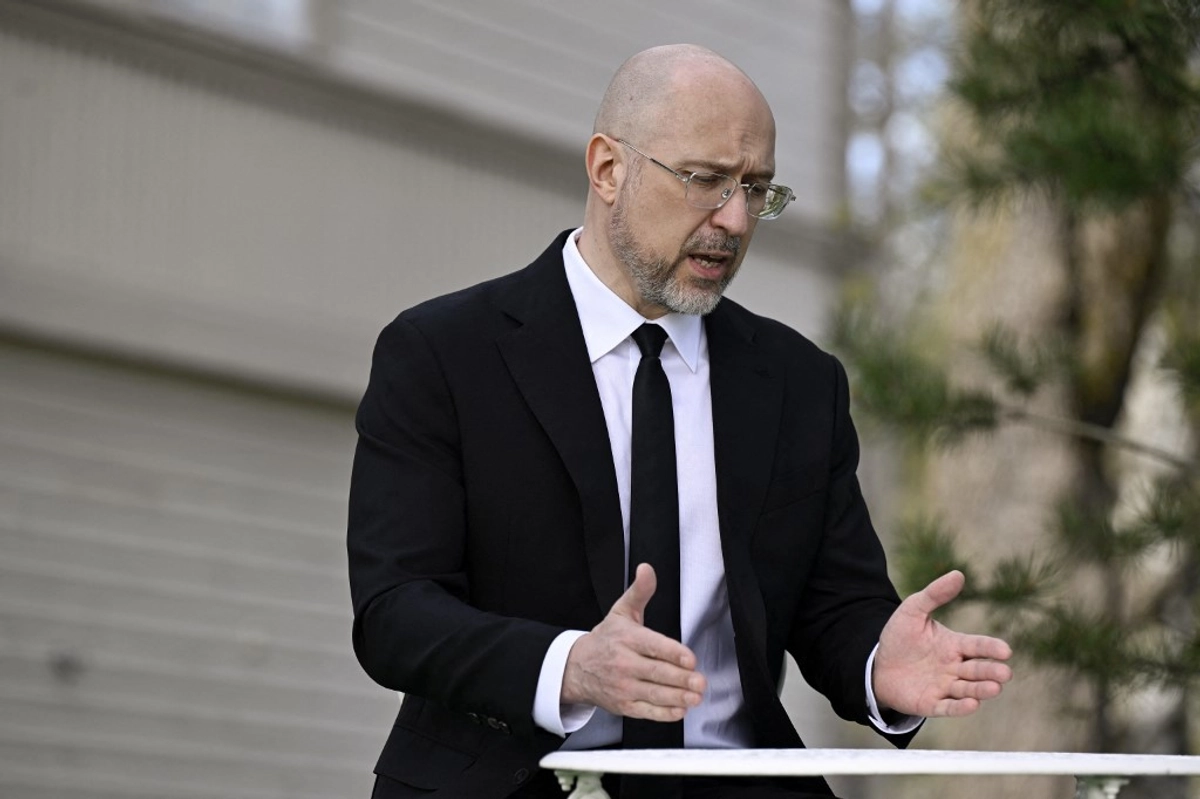
The Nordic-Baltic Eight group of nations has committed at least €918 million in 2026 to protect and rebuild Ukraine's energy infrastructure ahead of what is expected to be another punishing winter of Russian attacks on the power grid. The pledge, announced by Ukrainian First Deputy Prime Minister and Energy Minister Denys Shmyhal on 4 September, represents the most concrete tranche of energy-specific assistance Kyiv has secured from a regional bloc since the full-scale invasion began.
The NB8 format, comprising Denmark, Estonia, Finland, Iceland, Latvia, Lithuania, Norway and Sweden, has positioned itself as the most operationally consistent supporter of Ukraine's energy survival. Unlike the broader European Union, where decisions require unanimity among 27 members, the eight countries share a geographic proximity to Russia and a historical memory of Soviet occupation that has translated into faster, less conditional decision-making. The €918 million figure, equivalent to roughly $1 billion at current exchange rates, covers both immediate equipment deliveries and longer-term grid resilience projects.
What the NB8 package actually covers
Shmyhal was careful to frame the assistance as addressing two distinct timelines. The immediate priority is getting transformers, generators, air defence components and mobile repair crews into position before temperatures drop. The longer-term objective, he said, is reinforcing the grid's resilience, facilitating its decentralisation so that a single missile strike cannot blackout an entire region, and advancing integration with the European electricity market via the synchronous connection completed in March 2022. That synchronisation with the Continental Europe Synchronous Area (CESA) remains the single most important structural shield Ukraine possesses: it allows automatic frequency support from Western Europe when Russian strikes knock large generating units offline.
The NB8 contribution is not a single fund but a coordination framework. Each nation allocates its share through bilateral channels, Finland and Sweden have focused on transformer stations and high-voltage equipment; the Baltic states have prioritised cyber defence tools and drone detection systems; Norway has contributed gas turbine capacity and offshore wind expertise. Denmark has channelled support through its Energy Agency's emergency stockpile programme. The €918 million aggregate is a floor, not a ceiling; Shmyhal indicated further pledges are expected before the end of the year.
Ukraine offers its battle-tested playbook
Perhaps the most unusual element of Shmyhal's announcement was the explicit offer to export Ukrainian operational knowledge. Over two and a half years of sustained Russian missile, drone and cyber campaigns against the energy sector, Ukrainian engineers have developed what amounts to a real-time survival manual: how to reroute load within minutes of a substation hit, how to prioritise critical consumers (hospitals, water pumping, district heating) when generation drops 30 per cent in an hour, how to harden SCADA systems against the specific malware variants Russian military intelligence deploys. This expertise is not theoretical. It has been stress-tested under fire.
The offer carries diplomatic weight. It reframes Ukraine not merely as a recipient of aid but as a security provider to the very nations helping it. For the Baltic states and Poland, which face the same threat vectors across shorter borders, Ukrainian lessons on distributed generation, mobile transformer deployment and grid segmentation are directly applicable to their own civil defence planning. Finland and Sweden, both new NATO members, are studying Ukrainian air defence integration with energy infrastructure protection as they restructure their own total defence concepts.
The €200 billion question frozen in Brussels
While the NB8 moves pragmatically, the larger European financial architecture remains paralysed. Approximately €200 billion in Russian central bank reserves have been immobilised in the EU since February 2022, the vast majority held at Euroclear, the Brussels-based central securities depository. The interest accruing on those assets, estimated at €3-5 billion annually, has been earmarked for a G7-backed loan mechanism, but the principal remains untouched. Sweden, Poland, the Netherlands and Spain have renewed calls for the European Commission to find legal mechanisms to harness the full €200 billion to cover Ukraine's wartime deficits. Belgium, where Euroclear is headquartered, has blocked every such proposal.
The Belgian position is not merely obstructionist. Euroclear's business model depends on its reputation as a neutral, legally inviolable settlement infrastructure. Belgian officials argue that seizing sovereign assets, even those of an aggressor state, would trigger litigation that could dismantle Euroclear's legal standing, expose the Belgian state to counter-claims in international courts, and potentially provoke Russian retaliation against Belgian financial interests. At a December 2025 summit, Belgium vetoed a proposed €210 billion reparations loan backed by the frozen assets. Theo Francken, now Defence Minister, reiterated that stance on 4 September, declaring the issue "non-negotiable" and warning the Baltic states to be careful about "backing Belgium into a corner."
Belgium's veto and the Baltic frustration
Francken's language was unusually blunt for an EU minister addressing allies. The Baltic states, Estonia, Latvia, Lithuania, are among the most vocal proponents of asset seizure, arguing that the legal risks are manageable and the moral imperative overwhelming. Their frustration is compounded by the fact that they contribute disproportionately to Ukrainian aid relative to GDP while watching a €200 billion pot sit idle in Brussels. The tension exposes a structural flaw in EU foreign policy: the member state hosting a critical financial infrastructure holds an effective veto over its political use, regardless of the majority's will.
Legal scholars are divided. Some argue that countermeasures doctrine under international law permits asset seizure as a proportionate response to Russia's ongoing aggression. Others contend that sovereign immunity remains intact absent a UN Security Council resolution, which Russia would veto. The European Commission has explored a windfall tax on Euroclear's profits from the frozen assets as a compromise, but that captures only the interest stream, not the principal. The €23.5 billion gap Zelensky cited for the coming winter dwarfs the annual interest income.
Next week's test in Ireland
EU foreign ministers are scheduled to meet in Ireland during the week of 7 September for an informal Gymnich meeting where the frozen assets issue will feature prominently. The Irish presidency has circulated a non-paper exploring whether a qualified majority vote could authorise the use of windfall profits for military procurement, a narrower step than touching the principal. That would still require Belgium's acquiescence, since Euroclear's profit distribution is governed by Belgian corporate law. Diplomatic sources suggest the meeting is unlikely to produce a breakthrough but may clarify whether a coalition of the willing can proceed without unanimity.
Winter arithmetic and the migration multiplier
The numbers are stark. Ukraine's pre-war installed generation capacity was roughly 55 gigawatts. Russian strikes have destroyed or damaged an estimated 60 per cent of thermal and hydro capacity. Nuclear provides baseload but cannot follow load swings caused by intermittent attacks. The NB8 equipment, transformers, autotransformers, mobile gas turbines, helps, but it cannot replace gigawatts of lost generation. What it can do is prevent cascading blackouts when the grid is stressed. The difference between a managed rolling blackout and an uncontrolled collapse is the difference between a difficult winter and a humanitarian emergency that pushes hundreds of thousands more Ukrainians toward the Polish, Romanian and Slovak borders.
European governments know this. The NB8 commitment is, in part, a down payment on border security. Finland, which shares a 1,340 km border with Russia, has calculated that every euro spent on Ukrainian grid resilience saves multiples in asylum processing and reception costs. The same logic applies to the Baltics. This is not altruism; it is enlightened self-interest dressed in the language of solidarity.
What happens when the NB8 money runs out
The €918 million is a 2026 figure. Budget cycles in Helsinki, Stockholm, Oslo and Copenhagen are already being drafted for 2027. The NB8 ministers have signalled willingness to continue, but their fiscal space is constrained by defence spending increases, all eight are raising military expenditure toward or above 3 per cent of GDP. The US election cycle adds another variable: a shift in American support would force European capitals to choose between filling the gap themselves or accepting a Ukrainian defeat. The NB8 has effectively become the bridge between current EU paralysis and whatever strategic reality emerges after November 2026.
People mentioned
-
Theo Francken
Organisations
Nordic-Baltic Eight (NB8) · European Commission · Euroclear · European Council