Romania has shot down drones that crossed into its airspace from the war in Ukraine, the first time the NATO member has actively intercepted unmanned aircraft rather than simply collecting debris after crashes. The decision marks a departure from Bucharest's previous posture of documenting incursions after the fact and issuing statements of concern.
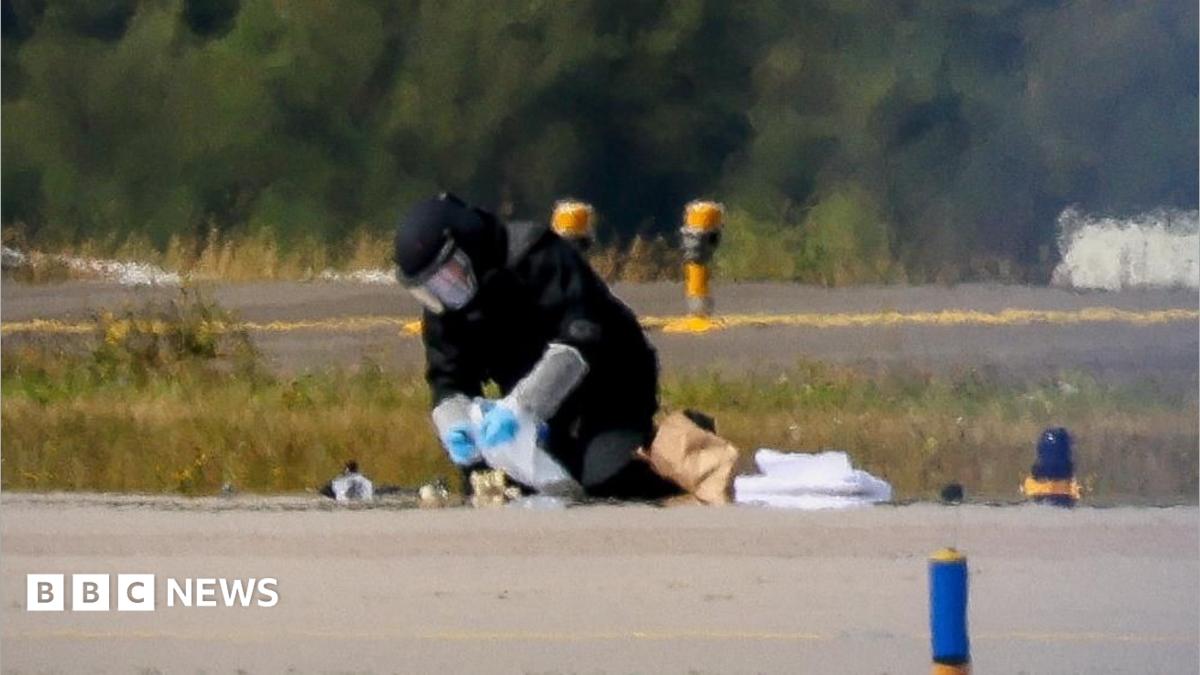
The shift matters because it establishes a precedent. For more than three years, Russian and Ukrainian drones have occasionally strayed across Romania's border, particularly along the Danube Delta in Tulcea county. Until now, Romanian authorities responded by investigating crash sites and issuing protests. Engaging drones in flight is a qualitatively different response, one that carries both operational and political weight for a country bound by NATO's collective defence commitments.
A pattern of incursions, now met with force
Since Russia launched its full-scale invasion of Ukraine in February 2022, Romanian territory has been repeatedly affected by the conflict next door. Drone fragments have been discovered on Romanian soil on multiple occasions, most notably in September 2023 when debris was found near the village of Plauru, close to the Ukrainian port of Izmail on the Danube. Each discovery prompted concern in Bucharest and Brussels, but no drone had been shot down by Romanian forces until now.
The distinction between finding wreckage and actively intercepting an aircraft is not semantic. Shooting down a drone requires detection, identification, a chain-of-command decision and the deployment of weaponry. It is an act of force, however proportionate, against an object that may or may not pose a direct threat. It also creates a risk of escalation: if a drone is shot down near the border, debris could fall on either side, and the originating party might respond.
Romanian officials have not publicly detailed the circumstances of the interception, including what type of drone was involved, what weapon system was used, or whether the drone was Russian or Ukrainian. Both sides in the conflict operate unmanned aerial vehicles that have occasionally lost navigation or been blown off course.
The Danube Delta: Europe's frontline
The geography of the incursions is no accident. Romania's border with Ukraine runs for roughly 649 kilometres, but the most vulnerable stretch lies along the Danube, where Romanian and Ukrainian settlements sit within sight of each other. Russia has repeatedly targeted Ukrainian port infrastructure along the Danube, including Izmail and Reni, using Shahed-type loitering munitions and other drones. Some of those drones have crashed or been shot down close enough to Romanian territory that debris has landed across the border.
The Danube Delta is also economically sensitive. It is a major route for Ukrainian grain exports, and Romanian river ports on the same waterway handle significant commercial traffic. Military activity in the air above the Danube directly affects civilian shipping and trade routes that are critical for both Ukraine's wartime economy and European food supplies.
Residents in Tulcea county have reported hearing explosions and seeing drones in the sky on multiple occasions since 2022. The psychological effect on border communities has been cumulative. Local authorities have at times issued shelter warnings, and the Romanian government has established an alert system for incidents near the border.
NATO's Article 5 calculus
Romania has been a member of NATO since 2004 and hosts alliance troops and infrastructure as part of the enhanced forward presence on the alliance's eastern flank. Any armed incursion into Romanian airspace raises questions about Article 5 of the North Atlantic Treaty, which commits members to consider an armed attack on one as an attack on all.
NATO has not activated Article 5 in response to the drone incursions, and alliance officials have previously described the debris found on Romanian territory as the result of stray incidents rather than deliberate attacks. That framing has allowed the alliance to avoid direct confrontation with Russia while still acknowledging the violation of allied airspace. Romania shooting down a drone does not automatically change that calculus, but it does raise the stakes. If a drone is intercepted in flight, the question of intent becomes sharper: was it lost, or was it conducting reconnaissance over NATO territory?
The alliance's position has been to support Romania's sovereignty while calibrating the response to avoid escalation. NATO's page on Romania emphasises the country's strategic role on the eastern flank, and alliance secretaries-general have repeatedly affirmed solidarity with Bucharest after drone incidents. But affirmations of solidarity and an Article 5 declaration are categorically different instruments.
Bucharest's air defence build-up
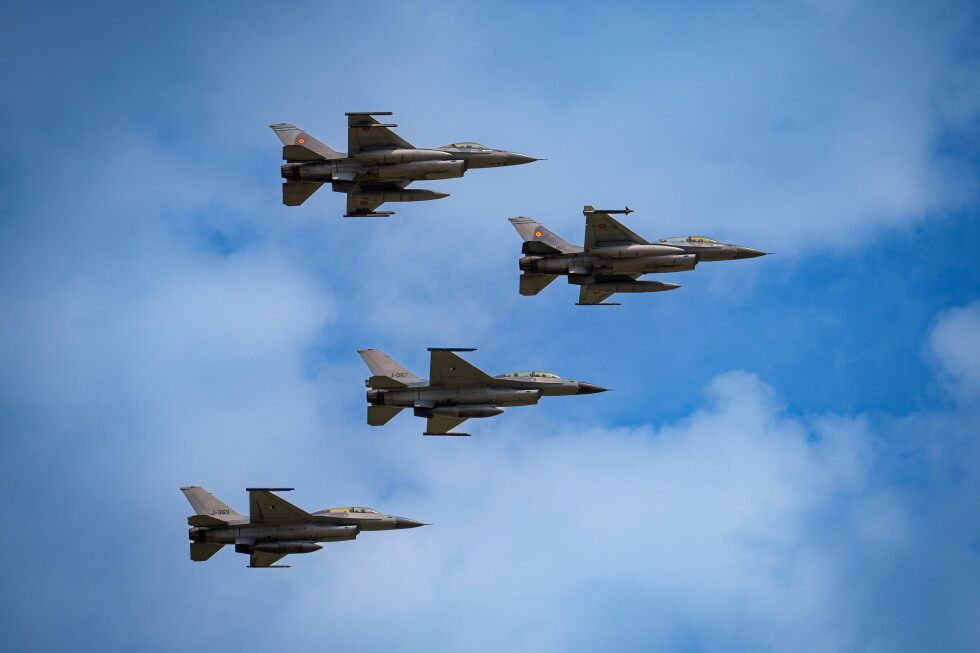
Romania has not been passive. The country has invested significantly in air defence modernisation, acquiring Patriot missile systems from the United States and F-16 fighter aircraft to replace its ageing MiG-21 LanceR fleet. The Patriots, which became operational in recent years, provide a layered air defence capability that includes the ability to track and intercept drones.
The Romanian Air Force has also increased patrols along the eastern border and established a more robust radar and surveillance network in the region. Defence Minister Angel Tîlvăr has overseen the deployment of additional monitoring equipment and personnel to Tulcea and Constanța counties. The ministry has also coordinated closely with NATO's Combined Air Operations Centre at Torrejón in Spain, which oversees allied air policing in the region.
These investments were underway before the current incident, driven by a recognition that the existing air defence posture was inadequate for a country on NATO's eastern edge facing a live conflict next door. The decision to shoot down a drone suggests that the upgraded systems are now being used as intended, not merely as a deterrent.
Domestic pressure and political context
President Klaus Iohannis and the Romanian government have faced sustained domestic pressure to respond more forcefully to drone incursions. Opposition politicians and local leaders in the affected regions have argued that Bucharest was too slow to acknowledge the severity of the problem and too reluctant to act. Each discovery of drone debris prompted questions about whether Romania was adequately protecting its citizens and its airspace.
Romania's political landscape has been turbulent in its own right. The country held presidential elections in 2025 after a period of constitutional controversy, and defence policy has been a live issue in public debate. The decision to shoot down a drone addresses a domestic audience as much as it does a foreign one: it signals that the state will act, not merely protest, when its airspace is violated.
There is also a regional dimension. Other frontline states, including Poland and the Baltic republics, have faced similar airspace violations. Poland deployed additional air defence units to its border with Belarus and Russia's Kaliningrad exclave after repeated incursions. How Romania handles its drone problem is being watched in Warsaw, Vilnius and Tallinn as a test case for how NATO members respond when the conflict next door spills over.
What the interception changes
The immediate practical effect of shooting down a drone is limited: one unmanned aircraft has been destroyed. The precedent, however, is significant. Romania has demonstrated both the capability and the political will to use force against objects entering its airspace from the conflict zone. Future incursions may now be met with the same response, and the rules of engagement for Romanian air defence forces have effectively shifted from observe-and-report to engage.
This also puts the burden on whoever is operating the drones, whether Russian or Ukrainian, to ensure their aircraft do not stray into Romanian airspace. If drones continue to cross the border, Romania will face a choice between repeated interceptions, which carry their own risks of escalation, and reverting to the earlier posture of passive documentation.
People mentioned
-
Klaus Iohannis
-
Angel Tîlvăr
Organisations
North Atlantic Treaty Organization · Ministry of National Defence of Romania · Romanian Air Force