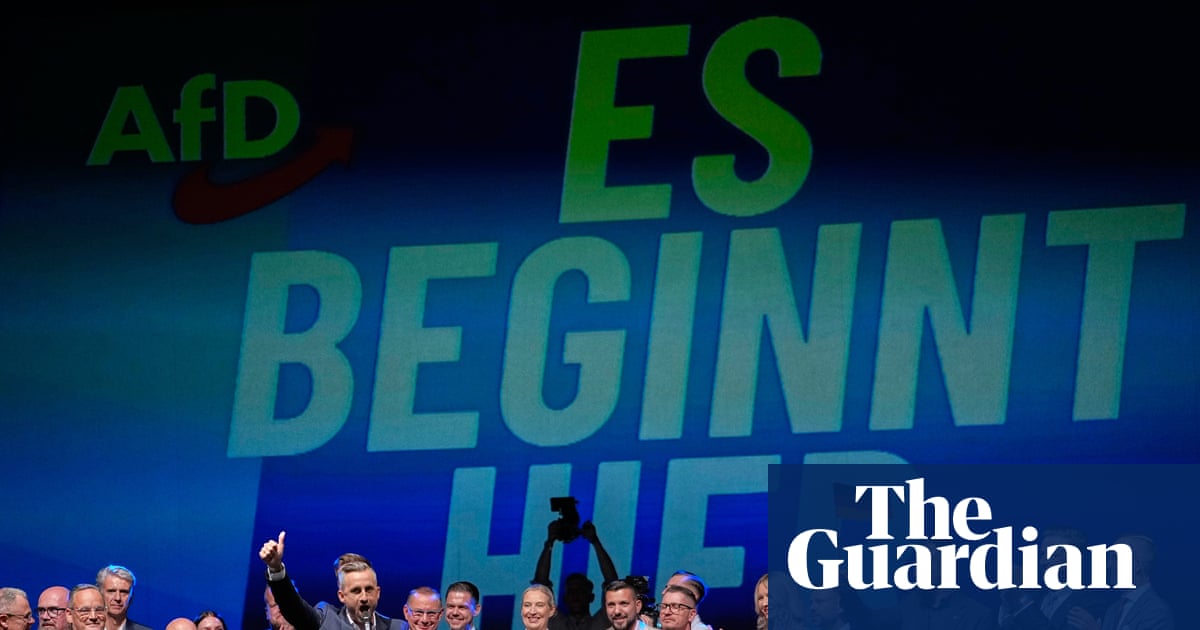
The Alternative for Germany (AfD) took 43.8 per cent of the vote in Saxony-Anhalt's state election, its strongest result at any state level to date. The party fell short of an absolute majority in the 83-seat Landtag, meaning coalition negotiations are required. But the vote has already drawn attention to an unusual strand of the AfD's platform: its push to add Bitcoin to Germany's national reserves.
The AfD brands itself as Germany's most crypto-friendly major party. Its federal manifesto calls for "extensive deregulation" of Bitcoin, cryptocurrency wallets and digital asset trading. Party representatives argue that regulators have been excessively cautious, treating Bitcoin as a speculative curiosity rather than a legitimate financial instrument.
Bitcoin as a strategic reserve asset
In October 2025, AfD MPs tabled a motion in the Bundestag calling on the government to recognise Bitcoin as a strategic asset that could be held within Germany's foreign exchange reserves as a hedge against monetary instability. The motion went nowhere. The Saxony-Anhalt result ensures the idea will not be quietly shelved.
The argument rests on the premise that central banks and finance ministries should treat Bitcoin alongside gold, foreign currencies and special drawing rights as an instrument that preserves value when fiat currencies falter. El Salvador adopted Bitcoin as legal tender. Switzerland's central bank has faced domestic pressure to hold digital assets. But no major European economy has taken the step the AfD proposes.
Germany's reserves are managed by the Bundesbank and consist primarily of gold, foreign exchange and claims on the International Monetary Fund. Adding Bitcoin would represent a sharp departure from the principles governing reserve management at the Bundesbank, which prioritises liquidity and capital preservation over speculative returns.
Opposing the digital euro, defending cash
The AfD's crypto advocacy runs alongside its hostility to the European Central Bank's digital euro project. The ECB has been developing a central bank digital currency as a complement to physical cash. The AfD wants none of it. The party has called for citizens' right to use cash to be enshrined directly in Germany's constitution, positioning itself as a defender of financial privacy against state surveillance.
This stance taps into a deep current in German public opinion. Germans conduct a higher proportion of transactions in cash than citizens of most other eurozone countries, and suspicion of digital payments and government monitoring of financial flows is widespread. The AfD is not alone in voicing these concerns, but it is the most prominent party to link cash preservation with crypto deregulation.
MiCA and the decentralisation question
Beyond reserves and the digital euro, the AfD has pushed for more lenient treatment of Bitcoin under the EU's Markets in Crypto-Assets regulation, known as MiCA. The party argues that MiCA was designed primarily for centrally issued tokens, such as stablecoins, and is ill-suited to genuinely decentralised assets like Bitcoin. The Bitcoin Bundesverband, a German association that monitors crypto legislation, has echoed this view.
The debate is not purely German. Poland has made three unsuccessful attempts to adopt a domestic regulatory framework that meets MiCA's standards, suggesting that the regulation's one-size-fits-all approach is creating friction across the bloc. MiCA, which took full effect across the EU in late 2024, establishes a pan-European licensing regime for cryptocurrency companies, but its application to decentralised assets remains contested.
On taxation, the AfD has found occasional common ground with other parties. Germany's Finance Committee previously rejected a proposal by the Greens to abolish the tax exemption on Bitcoin held for more than one year. The AfD wants to keep that exemption in place.
The coalition firewall
For all its electoral momentum, the AfD's crypto agenda faces the same barrier as every other part of its programme. Germany's mainstream parties remain categorically opposed to forming a coalition with the AfD at federal level. The cordon sanitaire means AfD proposals on cryptocurrency, however detailed, remain discussion documents rather than draft legislation.
In Saxony-Anhalt, the situation is more fluid but no less constrained. The AfD's 43.8 per cent leaves it well short of a governing majority, and its lead candidate, Ulrich Sigmund, has said he would prefer fresh elections to leading a minority administration. "This is a signal to the whole of Germany, a signal of self-confidence," Sigmund said of the result. Whether other parties in the state can form a workable coalition without the AfD remains unresolved.
An unwelcome association for the ECB
The Saxony-Anhalt vote does not change German or European cryptocurrency regulation. The AfD cannot implement its agenda from opposition, and no party is willing to help it govern. What the result does change is the volume of the debate. A party that commands 43.8 per cent in a state election cannot be dismissed as a fringe voice, even if its policy proposals remain outside the mainstream.
For the ECB, the AfD's twin positions create an awkward association. The central bank has worked to present the digital euro as a neutral piece of financial infrastructure, not an instrument of surveillance. Having the country's most prominent far-right party as the loudest parliamentary voice against the project complicates that narrative, particularly in a country where cash use is already a sensitive political topic.
People mentioned
-
Ulrich Sigmund
Organisations
Alternative for Germany · European Central Bank · Bitcoin Bundesverband