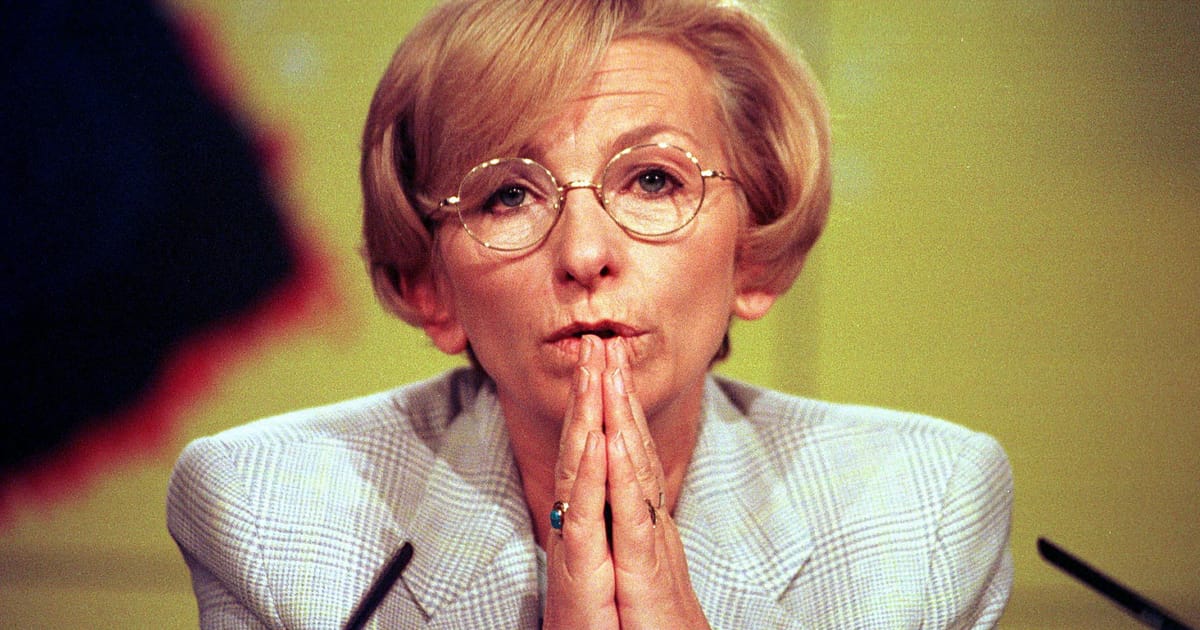
Emma Bonino, the Italian politician who helped rewrite her country's social laws in the 1970s and later directed European Union humanitarian aid through some of the decade's bloodiest conflicts, died on Friday at the age of 78. Her death closes a chapter of Italian public life that stretched from radical activism to the corridors of Brussels, crossing ideological lines that few others managed to bridge.
The battles that changed Italy
Bonino's political formation came in the ferment of 1970s Italy, where she emerged as a leading voice in the campaigns that forced referendums on divorce and abortion. The divorce law passed in 1970 survived a repeal attempt in 1974; abortion was legalised in 1978. Both victories were won against fierce opposition from the Catholic Church and the Christian Democrat establishment that had governed Italy since the war. Bonino, then a member of the Radical Party, organised the signature collections, the public meetings and the media strategy that turned marginal demands into national law.
Those campaigns established a template: single-issue mobilisation, transnational networking, and a willingness to use the body as political theatre. Bonino herself underwent an illegal abortion in 1975, an act she later spoke about publicly to demonstrate the stakes. The Radical Party's methods, hunger strikes, sit-ins, deliberate arrests, were imported from Gandhian non-violence but adapted for the television age. By the time the referendums were won, Bonino had become one of the most recognisable faces in Italian politics.
From Rome to Brussels
Her move to the European Commission in 1995, under Jacques Santer, placed her in charge of humanitarian aid and consumer policy. The portfolio was not among the Commission's most prestigious, but Bonino used it to direct resources toward crises that larger member states preferred to ignore. The wars in the former Yugoslavia, the genocide in Rwanda, the Taliban's consolidation in Afghanistan, each saw EU funding increase under her stewardship. She travelled to siege lines and refugee camps, not merely to witness but to argue for access corridors and protection mandates that the Union's foreign policy apparatus was too fragmented to deliver.
Colleagues from that period recall a commissioner who treated the humanitarian budget as a political instrument rather than an administrative line. She clashed with member state capitals over conditionality, arguing that aid should not be hostage to diplomatic niceties. The tension between the Commission's supranational mandate and national foreign ministries' prerogatives was already sharp; Bonino sharpened it further. Her term ended in 1999 with the collective resignation of the Santer Commission over fraud allegations that did not touch her portfolio, but the precedent of a commissioner using a 'soft' portfolio for hard political leverage remained.
An uneasy return to domestic politics
Back in Italy, Bonino served as minister for European affairs and trade in the second Prodi government (2006-2008) and briefly as foreign minister in the Letta cabinet (2013). Neither role allowed her the autonomy she had exercised in Brussels. The centre-left coalitions she joined were fragile, their majorities dependent on parties that shared few of her liberal convictions. She resigned from the foreign ministry after three months, citing disagreement over Italy's engagement in Afghanistan, a country she knew from her commissioner years, and the government's reluctance to push for a European defence identity.
The pattern repeated: Bonino was more effective as an outsider pressing in than as an insider managing compromise. Her 2018 Senate campaign for the More Europe list she had co-founded fell short of the 3% threshold, a symbolic defeat for a politician who had spent five decades clearing thresholds. Yet the party survived, and Bonino remained its moral anchor, appearing at congresses and protests well into her seventies.
Respect across the divide
The breadth of Friday's tributes reflected a rare consensus. Giorgia Meloni, whose Brothers of Italy party represents a nationalist right that Bonino opposed on every major issue, migration, LGBT rights, European integration, issued a statement acknowledging 'a strong and recognizable voice of Italian politics' whose 'weight and role in the public life of our nation' could not be denied. The phrasing was careful: no shared values claimed, no personal warmth feigned, but a recognition that Bonino's battles had shaped the terrain on which Meloni now governs.
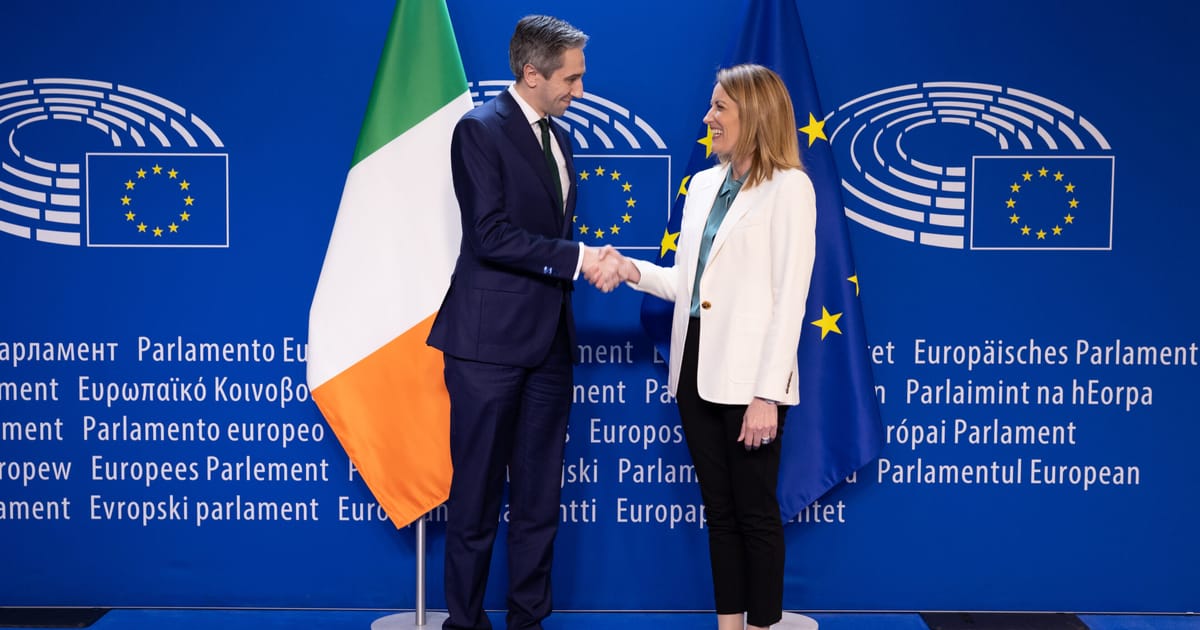
From the liberal centre, Carlo Calenda called her 'the last great protagonist of the civil battles that led to the modernization of this country.' Riccardo Magi, her successor at More Europe, described a life 'always radically free.' Roberta Metsola, a Maltese Christian Democrat who leads the European Parliament, went further: European Parliament President Roberta Metsola wrote that Bonino 'has never waited for the world to be ready. She has always chosen to move forward, showing the way to others. The Europe she fought for will miss her.'
The European she wanted
Metsola's phrase, 'the Europe she fought for', points to a project that remains unfinished. Bonino's Europe was federal, secular, interventionist on human rights, and unapologetically liberal on markets and migration. It was a Europe that could act militarily in its neighbourhood without waiting for unanimity, that treated the Mediterranean as a shared space rather than a frontier, that saw enlargement as a geopolitical imperative rather than a bureaucratic queue. Few of those ambitions have been realised. The Union she served in the 1990s has grown larger but not notably more coherent; the humanitarian portfolio she expanded has been folded into a broader neighbourhood instrument that struggles to match the speed of crisis.
Yet the mechanisms she helped build, the European Community Humanitarian Office (ECHO), the rapid response capacity, the principle that the Union funds relief independently of member state foreign policies, endure. When the EU airlifts supplies to Gaza or funds shelters in Moldova, it operates on architecture Bonino helped design. That legacy is less visible than the Italian referendums but arguably more durable.
A liberalism that refused to settle
Bonino's liberalism was not the managerial variety that dominates Brussels today. It was rooted in the Radical Party's conviction that rights are won by confrontation, not negotiation. She supported NATO intervention in Kosovo in 1999 when much of the European left opposed it; she backed the US-led invasion of Afghanistan in 2001 while demanding a European reconstruction role; she campaigned for Turkish EU membership long after the consensus had hardened against it. Each position cost her allies. She accepted the cost as the price of consistency.
That consistency made her an uncomfortable figure for Italian governments of every stripe. The centre-right resented her social liberalism; the centre-left distrusted her Atlanticism and her refusal to treat the EU as a vehicle for national interest. She was never offered the presidency of the Republic, the one office that might have crowned her career, because no coalition could agree on her, and because she would likely have refused the ceremonial constraints.
People mentioned
-
Carlo Calenda
-
Riccardo Magi
Organisations
European Commission · European Parliament · More Europe · Action · Brothers of Italy