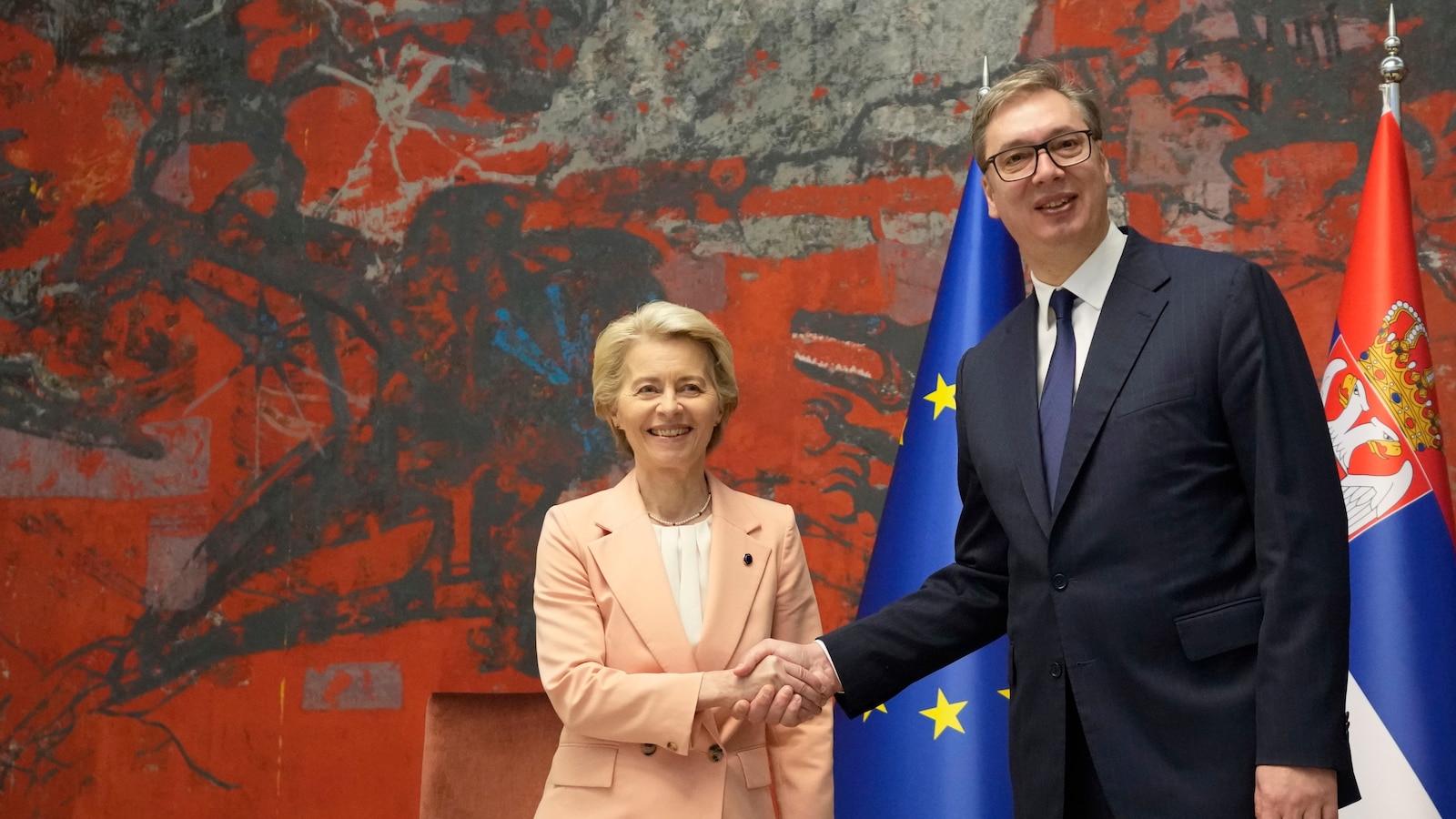
The European Commission on Thursday presented a comprehensive strategy to deepen the integration of the EU's nine outermost regions, offering targeted exemptions on tax, agriculture and migration policy designed to address their structural disadvantages. The announcement came barely a week after the Spanish government made clear it intends to press for Ceuta and Melilla, the two Spanish enclaves on the North African coast, to be granted the same legal status.
What the Commission is proposing
The blueprint, unveiled by Executive Vice-President Raffaele Fitto, covers French Guiana, Guadeloupe, Martinique, Mayotte, La Réunion and Saint-Martin (France), the Azores and Madeira (Portugal), and the Canary Islands (Spain). These territories, home to roughly five million people, are recognised under Article 349 of the Treaty on the Functioning of the EU as facing constraints, remoteness, insularity, small size, difficult topography and climate, that justify special treatment. The new strategy goes further than previous communications by explicitly linking their development to the EU's geostrategic interests.
Concrete measures include extending state-aid flexibility for regional investment, adjusting common agricultural policy rules to reflect local production conditions, and, perhaps most significantly, modifying immigration and asylum procedures for the French territories in the Caribbean and Indian Ocean that sit outside the Schengen area but have seen a sharp rise in irregular arrivals. The Commission argues that the current legal framework leaves these territories exposed to migratory pressures they lack the capacity to manage alone.
Spain's parallel push for Ceuta and Melilla
Madrid's manoeuvre adds a layer of political complexity. Ceuta and Melilla are not islands, nor are they ultra-peripheral in the geographic sense the treaty envisages; they are continental African territories bordering Morocco. Their current status is that of Spanish cities with the same rights and obligations as any other part of the national territory, albeit with a specific customs regime. Granting them outermost region status would require a treaty amendment or at minimum a unanimous Council decision interpreting Article 349 expansively, something several member states have historically resisted.
The Spanish argument rests on functional equivalence: both enclaves face acute migration pressure, high youth unemployment, and economic dependence on cross-border flows that have been disrupted by diplomatic tensions with Morocco. In 2024, more than 15,000 irregular entries were recorded across the two enclaves' land borders, according to Frontex data. Spanish officials contend that the policy toolkit available to the Canary Islands, including specific EU funding envelopes and flexibility on state aid, should logically extend to Ceuta and Melilla.
Migration and the Schengen gap
The migration dimension is where the Commission's proposal and Spain's ambition intersect most directly. The six French outermost regions are outside Schengen, meaning they operate national visa policies but are bound by EU asylum law. This creates a paradox: they receive asylum seekers who cannot be transferred to mainland France under the Dublin regulation because the regulation does not apply to them, yet they lack the reception infrastructure of continental member states. Mayotte, in particular, has seen its population double in two decades, driven largely by irregular migration from the neighbouring Comoros.
The Commission's answer is a tailored legal instrument that would allow faster returns, enhanced EU agency support, and burden-sharing mechanisms with mainland member states. If extended to Ceuta and Melilla, such an instrument would effectively create a new category of EU external border, land borders on the African continent with bespoke asylum rules. That prospect has already drawn scepticism from northern member states wary of precedent.
Geostrategic framing and the Atlantic dimension
Fitto's language, "European gateways" contributing to "trade, security, defence and external policies", signals a shift from cohesion policy to foreign policy. The Canary Islands and the Azores sit astride critical Atlantic sea lanes; French Guiana hosts the EU's spaceport; La Réunion and Mayotte anchor the EU's presence in the Indian Ocean. The Commission is increasingly explicit that these territories are assets in the competition for influence with China, Russia and Turkey in Africa and the Indo-Pacific.
This framing is not new, the 2017 communication on outermost regions already mentioned their strategic value, but the current geopolitical moment gives it urgency. The EU's Global Gateway investment strategy, its partnership with the African Union, and the need to secure critical raw material supply chains all map onto territories that, until recently, were treated primarily as domestic cohesion challenges.
Legal and political hurdles
Any formal extension of outermost region status to Ceuta and Melilla faces three obstacles. First, the treaty text refers to "regions" that are "geographically remote from Europe", a description that fits islands in the Atlantic and Indian Ocean less awkwardly than territories on the African mainland. Second, Morocco claims sovereignty over both enclaves and would almost certainly treat an EU-level upgrade as a provocation. Third, the European Parliament would need to consent, and MEPs from several groups have previously opposed any move that could be read as consolidating Spain's presence in North Africa.
A more likely outcome is a bespoke regulatory package that mirrors the practical benefits of outermost region status, access to the POSEI agricultural programme, specific ERDF allocations, state-aid derogations, without the formal designation. The Commission has used this approach before, notably for the Aegean islands facing migration pressure, though those measures were temporary and crisis-driven.
Money and the next budget cycle
The financial envelope will be negotiated as part of the next multiannual financial framework (2028, 2034). The current allocation for outermost regions under cohesion policy stands at roughly €13 billion for 2021, 2027, including the specific additional allocation. The Commission has not yet put a figure on the enhanced strategy, but Fitto indicated that the upcoming budget review would "reflect the renewed ambition." Spanish negotiators are expected to push for a parallel envelope for Ceuta and Melilla, arguing that the cost of inaction, in migration management, social cohesion and border security, exceeds the cost of targeted investment.
People mentioned
-
Raffaele Fitto
Organisations
European Commission · European Parliament · Council of the European Union