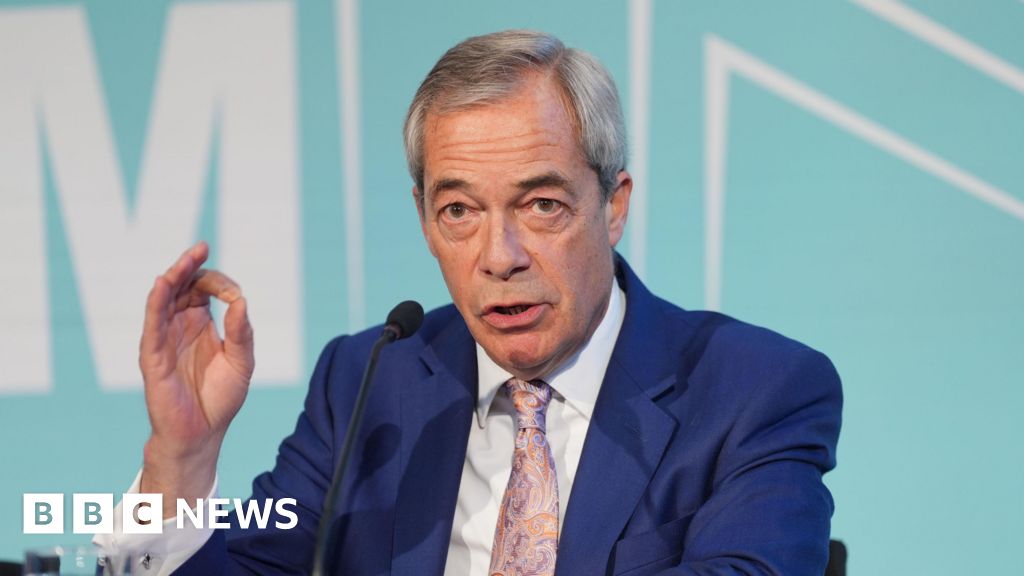
Nigel Farage spent decades demanding Britain leave the European Union. Now he is promising to tear up the deals that governed the departure. Reform UK, the party Farage leads, meets for its annual conference in Birmingham this week level with Labour at the top of British opinion polls. A general election is not due until late 2029. Yet the platform Farage is assembling would, if implemented, force a renegotiation of virtually every agreement Britain has signed with Brussels since leaving the bloc.
The scope is striking. Reform's policy pledges touch fishing rights, data protection, Channel migration, welfare entitlements, student finance and human rights law. Each one collides with an existing treaty: the Trade and Cooperation Agreement (TCA) Boris Johnson signed in 2020, the Withdrawal Agreement that set the terms of departure, or the European Convention on Human Rights (ECHR). The question is not whether Farage wants a fight with Brussels. He plainly does. The question is whether the fight he is picking is winnable, or whether it would leave Britain with worse terms than it has now.
Fishing quotas and the 2038 extension
Reform's anger at the post-Brexit fishing settlement has not diminished. At last year's EU-UK reset summit, Keir Starmer's government agreed to extend EU fleet access to British waters by another 12 years, to 2038. Farage called the deal a "surrender." A Reform policy document published in May promised to "recover our quotas" and stop the "selling out of our fishing communities in trade negotiations for cynical horse trading."
The fishing industry accounts for a fraction of British economic output, but its political weight exceeds its size. Coastal communities that voted heavily for Brexit felt betrayed when the original TCA gave EU boats continued access. Extending that access to 2038 compounded the grievance. Reform's promise to renegotiate sounds straightforward. In practice, the TCA is a single negotiated package. Reopening the fishing chapter means reopening the entire agreement, which also covers energy, transport and law enforcement cooperation. Brussels would demand concessions elsewhere in return.
Data protection divergence
Robert Jenrick, Reform's Treasury spokesperson, announced last month that the party would scrap the General Data Protection Regulation rules that became domestic law after Brexit. He called the data sharing rules "overburdensome" on businesses, particularly in the technology sector, and said Reform would introduce a lighter-touch regime modelled on New Zealand's privacy framework.
The EU recognises New Zealand's data protection as adequate, which allows data to flow freely between the two. But adequacy is a conditional decision, not a permanent right. If Britain unilaterally weakened its data protection laws, the European Commission would need to reassess whether UK standards remained equivalent. A negative finding would halt data flows, disrupting every British company that transfers personal information from the EU. The EU's data protection framework is not a technicality. It underpins commercial relationships worth hundreds of billions of euros annually.
Jenrick's argument is that lighter regulation would unleash economic growth. The counter-argument is that Britain would be trading a theoretical domestic burden for a real, immediate barrier to its largest export market. British tech firms already navigate the complexity of operating between two regulatory systems. Losing adequacy would make that complexity far worse.
Small boats and the French deal
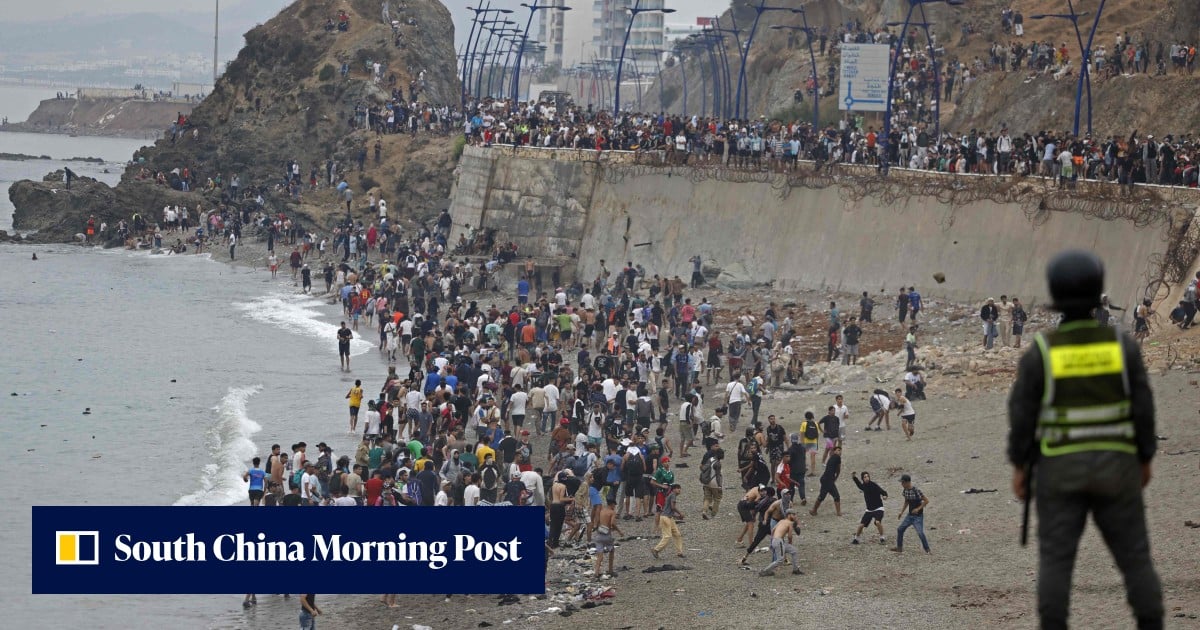
Labour's "one in, one out" arrangement with France allows the return of migrants who cross the English Channel in small boats, exchanged for an equal number of migrants in France who have not yet made the crossing. Reform says it would scrap the deal entirely. Its alternative is naval interception: the Royal Navy or Royal Marines would intercept boats and return them to France and Belgium.
This requires either French and Belgian consent to disembarkations at their ports, or a willingness to force the issue without consent. Reform's own small boats policy paper acknowledges the problem. It says the party would try to strike agreements with Paris and Brussels, and notes that France's far-right National Rally has indicated a willingness to cooperate. Farage claims he has "already been engaging with future EU leaders" such as Jordan Bardella, the National Rally president.
But Bardella is not in power in France. Emmanuel Macron's government has no incentive to accept unilateral British naval operations in French territorial waters. Without an agreement, Reform's policy paper says it will "anticipate and plan for returns without the receiving state's consent" and asserts that the "likelihood of tactical confrontation is incredibly low under any scenario." That is a large assertion. Pushing naval vessels into foreign harbours carrying unwilling passengers against that government's wishes would be a diplomatic crisis from day one.
Welfare and settled status
Reform announced last month that it would ban foreign nationals from claiming almost all forms of welfare, including Universal Credit, free childcare hours and disability benefits. EU nationals with settled status in the UK would lose eligibility. The party also plans to stop EU nationals with settled status from accessing student loans, which are repaid when graduates earn above a salary threshold, with unpaid balances written off by the Treasury after a set period.
Both proposals would breach the Withdrawal Agreement, which guarantees EU citizens who obtained settled status before the deadline the same rights to social assistance and education as British citizens. Jenrick acknowledged the legal difficulty but said he was "confident that we can do that and we can restore fairness in the process." The EU would almost certainly launch dispute proceedings, and the case would be heard by an independent arbitration panel. Britain could lose, and face retaliatory measures if it refused to comply.
Leaving the European Convention on Human Rights
Reform has made quitting the ECHR a flagship promise. The party argues that withdrawal is essential to implement its domestic agenda, particularly the deportation of all migrants who enter the UK irregularly. The ECHR is a Council of Europe treaty, not an EU instrument. Britain signed it in 1951. But the TCA Johnson negotiated in 2020 explicitly references the convention. It commits both sides to the "protection of fundamental rights and freedoms of individuals" in the ECHR and notes the "importance of giving effect to the rights and freedoms in that convention domestically."
Leaving the ECHR would therefore put Britain in breach of the TCA. It would also, according to a report last year by the UK in a Changing Europe think tank, require renegotiation of the 1998 Good Friday Agreement, which is underpinned by ECHR membership. And it would suspend extradition between Britain and EU member states, because one article of the convention protects the right to a fair trial. Farage presents ECHR withdrawal as a clean break. The consequences are tangled enough to make that break anything but clean.
The legal problem underneath the politics
Farage's core argument is democratic: a general election victory would give him a mandate to override treaties signed by previous governments. "We'd tell the EU that any agreements are no longer legally binding on the U.K., because a general election has said so," he said of the Starmer reset deal. Richard Tice put it differently: "There's no such thing as a sort of static trade deal. We've got to have the courage to recognize that and work out what's best for the U.K."
Both statements contain a partial truth. Treaties can be renegotiated, and the TCA has a review clause built in. But a mandate to renegotiate is not a mandate to dictate. Britain cannot unilaterally rewrite the terms of its relationship with a bloc of 27 states and expect them to accept the result. The EU has its own interests, its own domestic politics and its own legal obligations. If Britain repudiates treaties, the EU's response will be proportionate: suspension of cooperation, tariffs on goods, or restrictions on market access. The Council of the EU's framework for relations with the United Kingdom was built on the assumption that both sides would honour what they signed.
A Reform government would also face the problem of timing. The next general election is due by late 2029. The TCA's five-year review falls before then. Starmer's government is already conducting reset talks with Brussels, with another summit expected later this year. By the time Farage could implement his programme, the current deals may have been amended in ways that make his starting position different from what he assumes.
People mentioned
Organisations
Reform UK · European Union · European Convention on Human Rights · National Rally