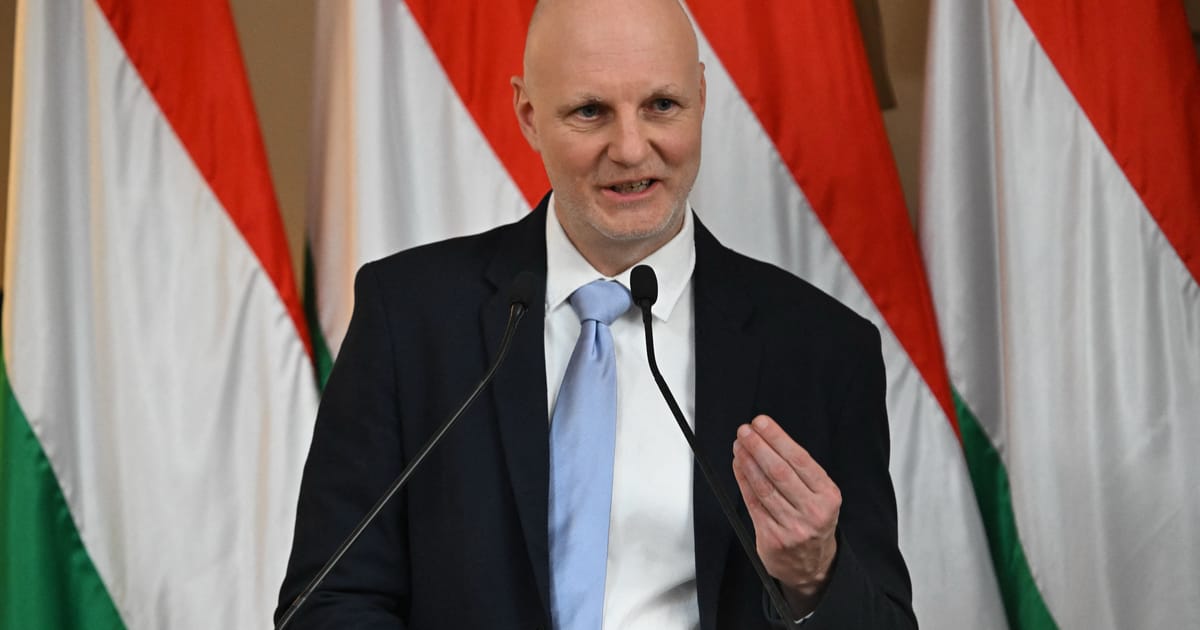
Hungary has dismantled the university governance structures that led to its exclusion from the EU's flagship research programme, potentially ending a three-year freeze that has cost Hungarian scientists access to billions in competitive funding. Zoltán Tanács, the minister for science and technology in the government of Prime Minister Péter Magyar, told reporters in Prague on Thursday that all legal barriers to rejoining Horizon Europe have been cleared.
The announcement marks the most concrete step yet in Magyar's push to repair relations with Brussels since his April election victory. His predecessor, Viktor Orbán, spent nearly two decades in open conflict with EU institutions over rule-of-law concerns, a standoff that culminated in the 2022 decision to suspend Hungary from large parts of Horizon Europe and the Erasmus+ student exchange programme.
The trusts that triggered the freeze
At the centre of the dispute were the so-called public-interest trusts, a network of asset-management foundations established by the Orbán administration to oversee swathes of the higher-education sector. The trusts controlled billions of euros in state-transferred assets, including real estate and endowments, and appointed university leaders without transparent competition. The European Commission judged that the arrangement created irreducible conflicts of interest and violated the principle of sound financial management required for participation in EU programmes.
In late May, during her first meeting with Magyar, Commission President Ursula von der Leyen said Hungary would be "gradually phasing out" the trusts. Tanács now says that process is complete. "We have eliminated all those strange structures that have been set up by the former government," he said, speaking at the Central and Eastern Europe Artificial Intelligence Summit in Prague.
Commission verification still pending
Brussels is cautious. A Commission spokesperson said on Thursday that the executive has "not been formally notified yet" of the legislative changes. Formal notification triggers a compliance assessment by the Directorate-General for Research and Innovation and the Directorate-General for Education, Youth, Sport and Culture. Only after that assessment can the Council adopt the implementing decision that restores Hungary's full participation rights.
The procedure is technical but not automatic. In 2023, the Commission withheld cohesion funds from Hungary over similar governance concerns, releasing them only after a detailed review of judicial reforms. Research insiders expect a comparable scrutiny of the new university governance laws, particularly the rules governing the appointment of rectors and the management of university assets.
Financial stakes and the AI ambition
Horizon Europe, the EU's seven-year research framework running from 2021 to 2027, carries a budget of €95 billion. Hungarian institutions were successful applicants in earlier framework programmes, winning roughly 1.5% of competitive grants despite accounting for about 1% of EU GDP. The 2022 suspension cut off new grant agreements and halted payments on existing projects where Hungarian partners were involved.
"Hungary being locked out created huge damage," Tanács said. He estimated that the country could regain access to both Horizon Europe and Erasmus+ by the end of the year, once the administrative steps are completed. The ministry has already drafted plans to establish hundreds of new professorships in artificial intelligence, a sector Magyar has identified as a strategic priority for the Hungarian economy.
A shift in political tone
The contrast with the Orbán era is deliberate. Where the former prime minister framed EU funding disputes as sovereignty battles, Magyar presents them as economic necessities. His government has also moved to unblock €10.4 billion in cohesion funds frozen under the conditionality regulation, and has signalled willingness to implement the remaining judicial reforms demanded by the Commission.
That shift has been welcomed in European capitals, though some diplomats note that the trusts were only one of several rule-of-law issues. The European Parliament's 2022 report triggering Article 7 proceedings cited media freedom, academic freedom, and the independence of the prosecution service alongside higher-education governance. Those files remain open.
What the reforms actually change
According to the ministry, the new legislation transfers the assets previously held by the trusts back to the universities themselves, placing them under the supervision of newly constituted boards of trustees. Rector appointments will follow open competitions evaluated by international panels. A new agency, the Hungarian Higher Education Financing Agency, will allocate state funding on a formula basis rather than through discretionary trust decisions.
Critics inside Hungary's academic community say the legislation was rushed through parliament in June with limited consultation. They point out that several university rectors appointed under the old system remain in post, and that the new boards include government nominees. The Commission's assessment will test whether the reforms are structural or cosmetic.
Erasmus+ and the student dimension
The suspension of Erasmus+ participation has been politically sensitive. Hungarian students lost access to outgoing mobility grants, and European students could no longer use Erasmus funding for placements in Budapest, Debrecen or Szeged. University rectors estimate that roughly 12,000 Hungarian students per year were affected. Restoring Erasmus+ is technically simpler than Horizon Europe, it requires only a Commission decision once the governance criteria are met, and may move faster.
People mentioned
Organisations
European Commission · Government of Hungary · Horizon Europe