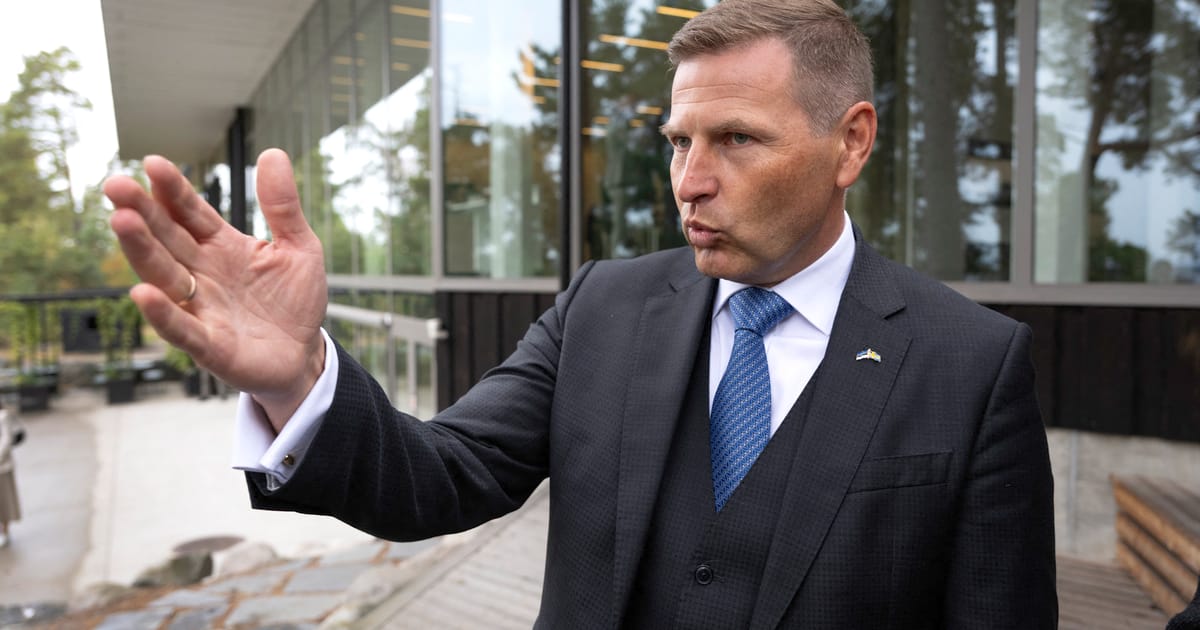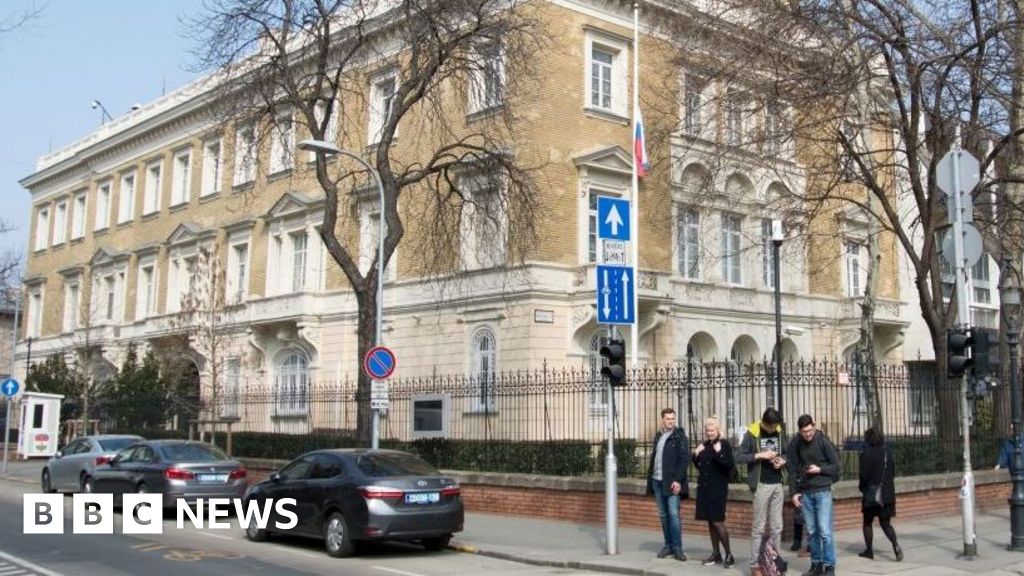
Hungary has expelled ten Russian diplomats, a move that draws a definitive line under the country's years as the Kremlin's most reliable partner inside the European Union. The decision, announced by Foreign Minister Anita Orbán on Monday, was framed as a defence of national security and sovereignty. It comes five months after Péter Magyar's Tisza party swept to power in April, ending Viktor Orbán's 14-year grip on the premiership.
The expulsion and Moscow's reaction
Anita Orbán gave no details of the specific activities that triggered the expulsions, writing only that the step protects Hungary's security. The Russian foreign ministry spokeswoman in Moscow responded within hours, denouncing what she called the "Russophobic lobby" and promising a "harsh and painful" reply. Ambassador Evgeny Stanislavov went further, telling Hungarian media that Budapest's pledge of pragmatic cooperation was "worth absolutely nothing" and that the expulsions constituted an "unprecedented and ungrounded escalation".
The language from Moscow mirrors the rhetoric used after previous waves of expulsions across Europe. Since 2022, hundreds of Russian diplomats have been ordered out of EU capitals, typically following revelations of intelligence work incompatible with diplomatic status. Russia has almost always responded in kind, creating a cycle of tit-for-tat reductions that has thinned diplomatic networks on both sides.
Intelligence findings behind the decision
The backdrop to Monday's move is an investigation published in April by Agentsvo, an independent Russian outlet, which reported that 15 of the 47 Russian embassy staff in Budapest were linked to Russian intelligence agencies, with six more potentially connected. András Telkes, a former deputy head of Hungary's foreign intelligence service, confirmed to the BBC that Russian spying activity had been investigated before the election but that the Fidesz government had blocked any action.
Telkes warned that the immediate danger is a symmetric Russian response. "If 10 Hungarian diplomats were to be expelled from Moscow, in a tit-for-tat move, that would effectively close the Hungarian embassy there," he said. Such an outcome would leave Hungary without a functioning diplomatic channel in Moscow at a moment when the war in Ukraine shows no sign of ending.
From Orbán to Magyar: a foreign policy pivot
The contrast with the previous administration could hardly be starker. Viktor Orbán built his relationship with Vladimir Putin on cheap Russian oil imports and a shared scepticism toward Western liberalism. His government repeatedly delayed EU sanctions packages, vetoed aid to Ukraine, and refused to expel Russian diplomats even after the Bucha massacres and the missile strike on a Kyiv shopping centre. In 2023, Budapest was the only EU capital not to join a coordinated expulsion of Russian intelligence officers operating under diplomatic cover.
Magyar campaigned on a promise of "pragmatic" relations with Moscow, a formulation that left room for interpretation. Since taking office, he and Anita Orbán have both called publicly for Russia to end the war in Ukraine. In May, the foreign minister summoned Stanislavov to protest a large-scale drone attack on Ukraine's Transcarpathia region, home to a substantial Hungarian minority. Her predecessor had not summoned the Russian ambassador once since February 2022.
Transcarpathia and the minority factor
The Hungarian community in Transcarpathia, numbering roughly 150,000 people, has become a focal point for Budapest's recalibration. In July, the new government issued formal guidelines stating that Russia's conduct in Ukraine "poses a threat to Hungary, Europe and the global order, and also puts the Hungarian minority living in Transcarpathia in serious danger". The language is notable: it frames the war not as a distant conflict but as a direct security challenge to Hungarian citizens across the border.
This marks a departure from the Orbán era, when the minority argument was used to justify staying close to Moscow, ostensibly to protect ethnic Hungarians from Ukrainian nationalist policies. The new logic inverts that reasoning: Russian aggression endangers the minority, therefore Hungary must align with Ukraine's defenders.
EU context and the sanctions record
Hungary's shift also affects the EU's internal dynamics. For years, Budapest's veto power gave the Kremlin an effective brake on collective European action. The Council's restrictive measures against Russia were routinely watered down or delayed by Hungarian objections. Since April, that obstruction has lifted. The Tisza government has approved the latest sanctions packages without the protracted negotiations that characterised the previous administration's approach.
Diplomats in Brussels describe the change as a relief but remain cautious. Hungary still imports Russian oil via the Druzhba pipeline, a contract that runs until 2027, and Russian nuclear fuel for the Paks power plant. Energy dependence cannot be unwound overnight, and Magyar has not suggested cutting those ties. The expulsions are a political signal, not an economic rupture.
What happens next
The immediate question is Moscow's response. If Russia expels ten Hungarian diplomats, as Telkes predicts, Budapest will face a choice: accept the reduction and maintain a skeleton mission, or escalate further. Either way, the diplomatic channel that Orbán cultivated as a backdoor to Putin will be severely degraded. For the EU, the test is whether Hungary's new alignment holds when the next sanctions package requires unanimity, or when the next European Council debates Ukraine's accession timeline.
People mentioned
-
Evgeny Stanislavov
-
András Telkes
Organisations
Hungarian government · Russian embassy in Budapest · Tisza party · Fidesz · European Union