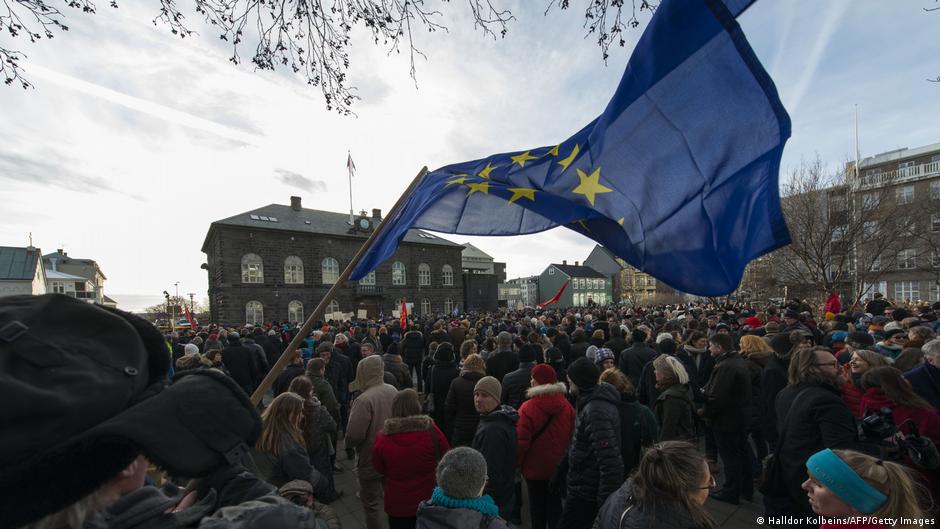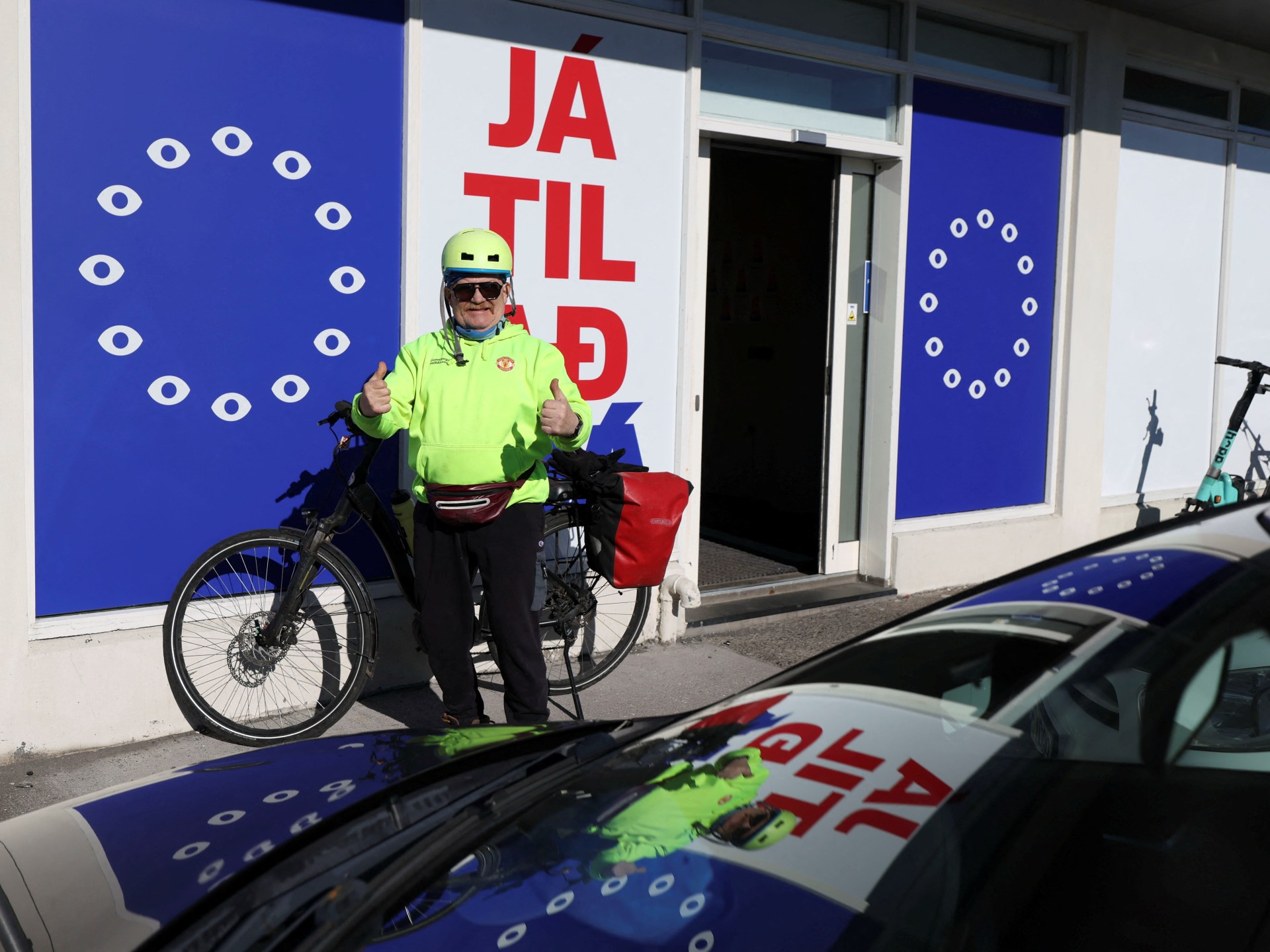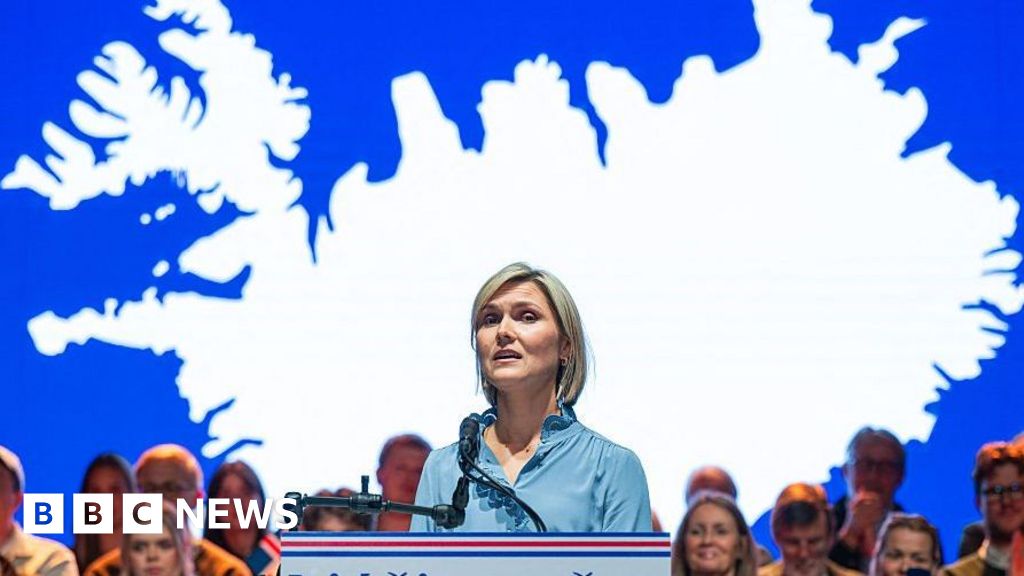
On Saturday, 30 August, Iceland's 380,000 citizens will decide whether their government should reopen accession negotiations with the European Union, thirteen years after a previous attempt collapsed over fisheries. The referendum is advisory but politically binding: Prime Minister Kristrún Frostadóttir has pledged to respect the outcome. Polls suggest a result within the margin of error. A survey published this week by the University of Iceland's Social Science Research Institute gave the Yes side 51.3% against 48.7% for No; an earlier Maskína poll had the two camps exactly level. "It's impossibly hard to predict," says Eirikur Bergmann, professor of politics at Bifröst University. "Both camps are throwing everything they have at it."
The fishing question that never went away
Fish and marine products account for almost 40% of Iceland's export revenue, a share that has barely shifted in three decades. The industry employs roughly 9,000 people directly and supports coastal communities where alternative livelihoods are scarce. When Iceland first applied in 2009, after the banking crash destroyed the króna, the EU's Common Fisheries Policy (CFP) proved the insurmountable obstacle. Reykjavik walked away in 2013 rather than accept Brussels oversight of quotas and access. Pétur Pálsson, who runs the fishing firm Visir, puts the opposition bluntly: "If we are in the EU, they will be the ones who make the policy." He argues that quota allocations would shift to larger EU fleets, processing plants would relocate to the continent, and Iceland would lose the resource rent that has underpinned its post-crisis recovery.
The government insists a "special arrangement" can be negotiated. Daði Már Kristófersson, the finance minister, points to Norway's 1994 negotiation, Oslo secured fisheries protections before ultimately rejecting membership in a referendum, and to the agricultural derogations granted to Finland and Sweden on accession in 1995. But Margrét Ágústa Sigurðardóttir, head of the Icelandic Farmers' Association, is unconvinced. "No member state has been granted a permanent opt-out," she says. "EU policies will focus on the interests of 450 million consumers, rather than the specific needs of a country of 400,000 people." The European Commission has never formally commented on a hypothetical Icelandic fisheries carve-out, but internal legal opinions circulated during the 2009, 2013 talks suggested Article 38 of the CFP regulation, which allows temporary restrictions for regions heavily dependent on fishing, might provide a basis. Whether that satisfies a sovereign nation accustomed to total control is another matter.
Currency volatility and the euro argument
For the Yes campaign, the economic case rests on the króna. Since breaking from Denmark in 1944, Iceland has suffered repeated boom-bust cycles driven by capital flows, tourism spikes and commodity shocks. Interest rates sit at 8%, the highest in the European Economic Area. Analysis by the academic union Viska found consumer prices in Iceland 84% above the EU average in 2025. "We get higher salaries, and it goes straight to the cost of everything," says Snærós Sindradóttir of the European Movement in Iceland. "It's like a dog chasing its own tail constantly." Adopting the euro would eliminate exchange-rate risk for importers and exporters, lower risk premia on Icelandic debt, and anchor inflation expectations. The Central Bank of Iceland has modelled euro adoption scenarios repeatedly; its 2023 assessment concluded that membership would reduce long-term interest rates by 150, 200 basis points but would strip the bank of lender-of-last-resort functions in a systemic crisis.
Opponents counter that Iceland's 2008 recovery, faster than any euro-area periphery state, proved the value of an independent currency and capital controls. They note that euro adoption requires meeting convergence criteria (inflation, debt, deficit, exchange-rate stability) that Iceland currently fails on debt-to-GDP grounds. The government argues these are negotiable during accession; the Commission's 2024 enlargement package stressed that "candidate countries must demonstrate sustainable compliance" before entering ERM II. No candidate has joined the euro without first spending at least two years in the mechanism.
Security, the Arctic and the Trump factor
Geopolitics has accelerated the timetable. Russia's full-scale invasion of Ukraine in 2022 sharpened Western focus on the GIUK gap, the Greenland, Iceland, UK maritime corridor through which Russian submarines must pass to reach the North Atlantic. In June 2024, Icelandic coastguard vessels tracked a Russian intelligence ship transiting the island's exclusive economic zone. Iceland is a founding NATO member but maintains no standing military; its defence rests on a 1951 bilateral agreement with the United States and rotating allied deployments at Keflavik airbase. When the BBC visited this month, Belgian F-16s were operating alongside US assets under NATO's airborne surveillance mission.
Donald Trump's return to the White House has added a second vector. His repeated suggestions that the US should acquire Greenland, an autonomous Danish territory 300 km west of Iceland, and his threat of universal tariffs have unsettled Reykjavik. At Davos in January 2026, Trump mistakenly referred to Iceland four times when he meant Greenland; the new US ambassador later joked that Iceland could become the "52nd state." Daði Már Kristófersson insists the "special relationship" is unchanged, but acknowledges "an additional pillar is important." In March, Iceland signed a strategic defence partnership with the EU, covering maritime domain awareness, cyber defence and hybrid threats. The agreement stops short of mutual defence commitments under Article 42.7 TEU, which apply only to EU members.
Curiously, security has barely featured in public debate. Snærós Sindradóttir finds this frustrating: "The referendum is happening now 100% because of security matters." Eirikur Bergmann suggests the silence is tactical. "The No campaign knows that if the argument becomes about Russian submarines and American unreliability, they lose. So they keep the focus on fish and sovereignty." The Yes campaign, meanwhile, fears that emphasising security makes Iceland look like a supplicant rather than a partner.
The 2009, 2013 precedent and what changed
Iceland's first accession bid was born of desperation. The 2008 crash wiped out the three largest banks, whose combined assets exceeded ten times GDP. The króna lost half its value; the IMF led a $5.1 billion rescue. The centre-left government of Jóhanna Sigurðardóttir applied in July 2009, arguing that EU membership and the euro were the only credible anchors. Negotiations opened in 2010 and progressed rapidly: 27 of 35 chapters were opened, 11 provisionally closed. Then the 2013 election brought a centre-right coalition opposed to membership. They suspended talks, then formally withdrew the application in 2015 without a referendum. The decision left a democratic deficit that Frostadóttir's coalition, the Social Democratic Alliance, the Left-Green Movement and the Pirate Party, campaigned to rectify.
What is different this time? First, the EU has evolved. The 2024 enlargement reform introduced a "graduated" approach, allowing candidates to integrate policy-by-policy before full membership. Second, Iceland's economy has diversified: tourism now contributes 8% of GDP, data centres and green hydrogen projects are expanding, and the tech sector employs 12,000 people. Third, the geopolitical environment is harsher. The Arctic Council, long a forum for cooperation, has been paralysed since Russia's invasion; NATO's new Nordic flank, Finland and Sweden joined in 2023 and 2024, has shifted the alliance's centre of gravity north. Iceland is the only Arctic NATO member outside the EU.
What the referendum actually decides
The ballot question asks: "Do you want the Icelandic government to resume negotiations on Iceland's accession to the European Union?" A Yes vote does not mean membership. It triggers a negotiating mandate. The government estimates talks would take "months, not years" because 11 chapters, including science, education, statistics and consumer protection, were already closed in 2013. The remaining 24 cover the hardest areas: fisheries, agriculture, free movement of capital, justice and home affairs, and budget contributions. Any resulting treaty would require ratification by all 27 EU member states, the European Parliament, and a second Icelandic referendum. The No campaign argues this two-step process is a trap: once negotiations start, political momentum makes reversal impossible. The Yes campaign says the second referendum is the ultimate safeguard.
"We have to know what's in the package from the EU," says Anna Ragnarsdottir, a Reykjavik resident interviewed by the BBC. "If we say no, we won't ever know." That logic, vote Yes to see the terms, then decide, is the government's core pitch to undecided voters. It mirrors the approach taken by Norway in 1994 and Switzerland in 1992 (on EEA membership), both of which ended in rejection after the terms were published. Icelandic officials privately acknowledge the risk: a negotiated deal that falls at the second referendum would damage Reykjavik's credibility in Brussels for a generation.
Regional ripple effects
The result will be read closely in Oslo. Norway, Iceland's EEA partner and fellow fisheries-dependent nation, has seen support for EU membership rise from 18% in 2020 to 34% in the latest Respons Analyse poll, still a minority, but the highest since the 1994 referendum. The Norwegian Labour Party's youth wing voted in 2025 to campaign for a new referendum; the party leadership has resisted. A Yes in Reykjavik would embolden Norwegian pro-Europeans; a No would reinforce the narrative that even a small, wealthy, Europeanised nation prefers the EEA's "fax democracy", adopting EU rules without a vote, to full membership.
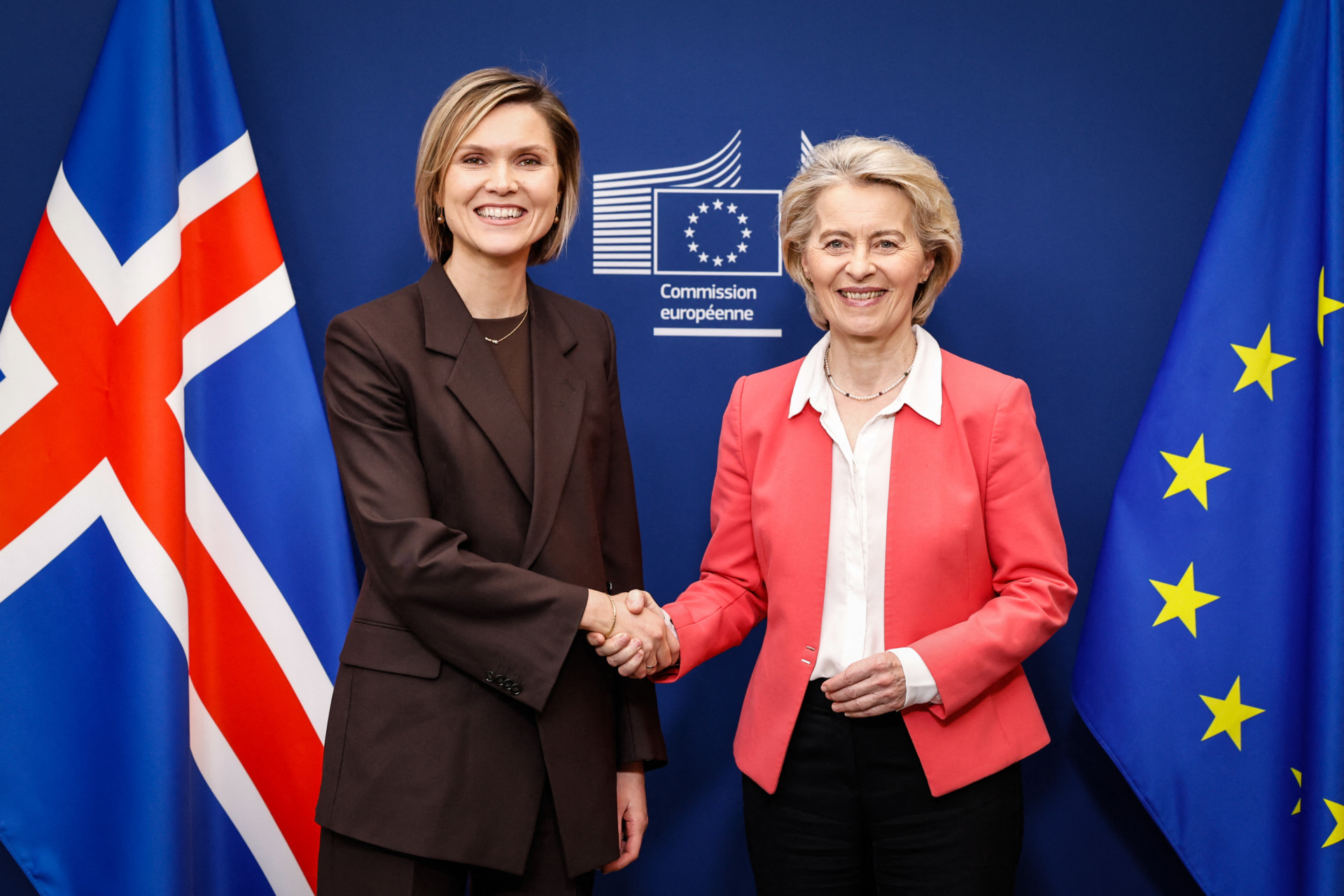
For the EU, Iceland is an atypical candidate: wealthy (GDP per capita €78,000 in 2025, fourth in Europe), institutionally aligned, and strategically located. Enlargement commissioner Marta Kos told the European Parliament's foreign affairs committee in June that "Iceland's accession would be a net positive for the union's Arctic policy and energy security." But the Commission is wary of setting precedents on fisheries. If Iceland secures a permanent derogation, coastal states from Galicia to Brittany will demand equal treatment. Hallgrímur Oddsson, head of the EU-Iceland think-tank European Currents, sums up the stakes: "Gaining a rich and stable new member in Iceland would be a welcome win for EU enlargement. But a No vote could also be perceived as a loss."
The domestic fault lines
In downtown Reykjavik, the campaign feels personal. Adolf Fridriksson, 62, a retired engineer, worries about his grandchildren: "The biggest problem right now is for the generation who are trying to buy their own housing. The mortgage rates are terrifying." Helga, 22, a student, sees it differently: "The fishing industry, and everything else, should be in our control." Age, geography and education map onto the divide. Younger, urban, university-educated voters lean Yes; older, rural, working-class voters lean No. The gender gap is modest, women slightly more pro-EU, but the turnout gap could be decisive. In 2013, turnout was 82%; the government hopes for 85% this time. Postal voting opened on 18 August; 12% of the electorate had cast ballots by 25 August.
People mentioned
-
Pétur Pálsson
-
Daði Már Kristófersson
-
Margrét Ágústa Sigurðardóttir
-
Snærós Sindradóttir
Organisations
Government of Iceland · European Union · NATO · European Economic Area · Visir · Bifröst University