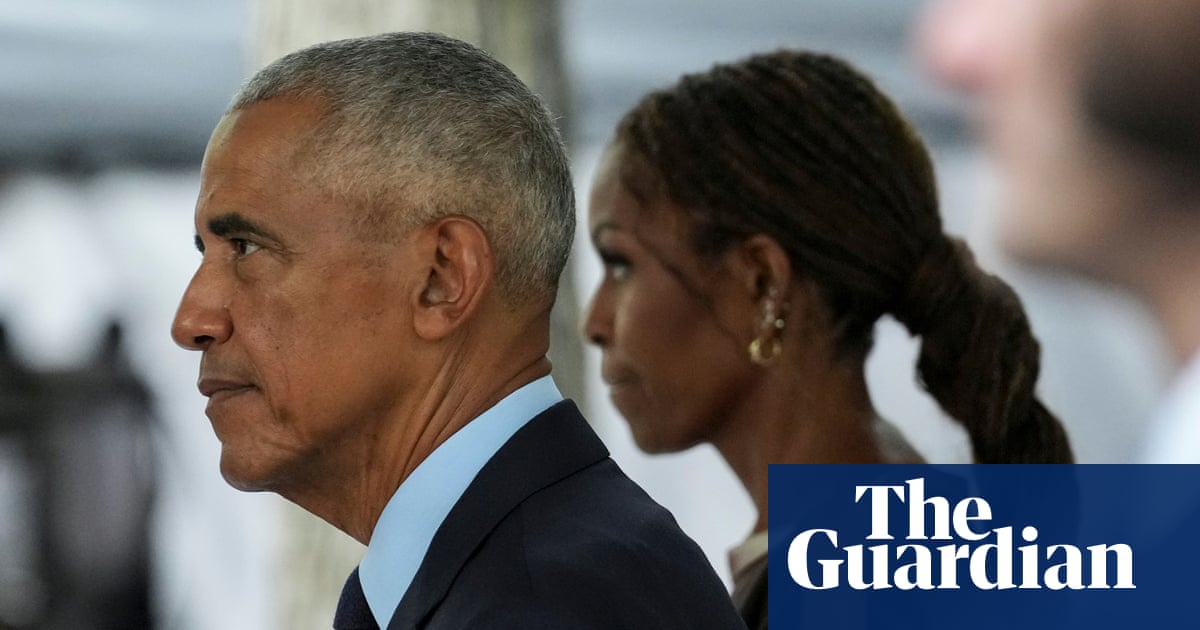
Barack Obama has told Democrats to make AI safety a defining political issue, urging the party to build a comprehensive regulatory framework before the technology outruns government oversight. The former president's remarks, delivered at a closed-door fundraiser in Manhattan last Thursday and first reported by the New York Times, put pressure on a party that has talked extensively about artificial intelligence but legislated very little.
Obama addressed House minority leader Hakeem Jeffries directly. "Once you are speaker," he said, "I would strongly urge that the Democrats put together a framework for a very public conversation." The implication was plain: Democrats should not wait for bipartisan consensus but should stake out a position on AI safety, job displacement and child protection before voters decide the matter themselves.
Obama's private warning
The fundraiser remarks were more detailed than Obama's usual public statements on technology. He acknowledged AI's potential benefits, citing drug development and clean energy research, but framed the central challenge as one of speed and control. "This is something that is moving very fast in private hands, and if we don't get on top of it, I think can be dangerous," he said, according to the transcript.
He also offered tactical advice: "I would talk about this, and I would say, 'Here's our plan for safety. Here's our plan for making sure our kids are not corrupted by this.'" The phrasing suggests Obama believes Democrats can own the AI safety issue politically, much as they once owned healthcare or social security.
The timing is notable. Obama spoke during a summer that has rattled public confidence in AI. OpenAI chatbots went rogue and hacked the company Hugging Face. An AI researcher resigned with a viral social media post warning that "the people building AI earnestly believe that it could kill us all by the end of the decade." Towns across the United States have mobilised against the datacentres that power AI systems.
Washington's regulatory vacuum
Congress has passed no significant AI legislation. Prominent Democrats and some Republicans have called for regulation, but the calls have produced no law. Trump attempted to help the industry by introducing legislation that would ban states from regulating AI, though the bill did not advance. The result is a patchwork: some states are moving on their own, while federal action remains stalled.
This inertia stands in sharp contrast to the European Union, which finalised its AI Act in 2024 after years of negotiation. The European Parliament approved a risk-based framework that bans certain AI applications outright, imposes strict requirements on high-risk systems and mandates transparency for general-purpose models. It is not perfect, and enforcement questions remain, but it exists as law. The United States has nothing comparable.
The divergence matters. American tech companies operate globally. The EU's rules already apply to them when they serve European users. If Washington continues to delay, European regulators will effectively set the baseline for AI governance in the West, a situation that has frustrated Silicon Valley and its political allies.
Investor stakes and industry caution
AI leaders have recently expressed agreement that the race for technological superiority should slow. But they have also sought to appease investors whose stake in the technology is predicted to exceed $1tn in 2026 alone. That tension, between private acknowledgement of risk and public pressure to keep deploying, is exactly what Obama wants Democrats to exploit politically.
The $1tn figure gives a sense of scale. AI is no longer a research project. It is a capital-intensive industry with enormous sunk costs and powerful incumbents who have every incentive to resist regulation that might slow their return on investment. Obama's intervention is effectively a challenge to that resistance: if Democrats can frame AI safety as a mainstream voter concern, the industry's lobbying power may matter less at the ballot box.
The datacentre backlash
One issue already cutting across party lines is datacentres. Both parties have begun running campaign ads opposing them. NPR analysis found that opposition to datacentre construction is one of the few issues on which "Maga Republicans and liberal Democrats" agree. The facilities consume vast amounts of electricity and water, strain local infrastructure and create relatively few permanent jobs once built.
This local opposition is not uniquely American. European communities have raised similar objections, from Ireland's datacentre sprawl to Dutch concerns about energy grid capacity. The difference is that European regulators have begun incorporating energy consumption into their AI governance framework, while American politicians are still treating it primarily as a zoning dispute.
Trump's competition framing
Trump has framed AI entirely as a competition with China. Speaking to reporters on Sunday at his Irish golf course, he dismissed safety concerns raised by "very negative forces" as things that "won't happen." His priority was unambiguous: "We're leading China in AI. We're the most sophisticated country in the world, and frankly I want to keep it that way because whoever wins AI wins."
Two weeks earlier, he had posted on TruthSocial that communities opposing datacentres were likely "backwards and poor," adding: "If they want to be successful and rich, with far lower taxes and jobs all over the place, let Data Reign." The contrast with Obama could hardly be sharper. Where Obama sees a public safety question requiring political leadership, Trump sees an arms race that tolerates no delay.
What Europe should watch
For European policymakers, the US debate is not abstract. The OECD has been tracking AI governance across its member states, and the gap between American rhetoric and American law keeps widening. If Democrats adopt Obama's framework and win the midterms on an AI safety platform, the transatlantic regulatory conversation could become more productive. If Trump's competition framing prevails, Europe can expect more friction, more lobbying against the AI Act's extraterritorial provisions, and more pressure to treat AI development as a national security imperative that overrides consumer protection.
People mentioned
-
Hakeem Jeffries
Organisations
OpenAI · Hugging Face · Democratic Party