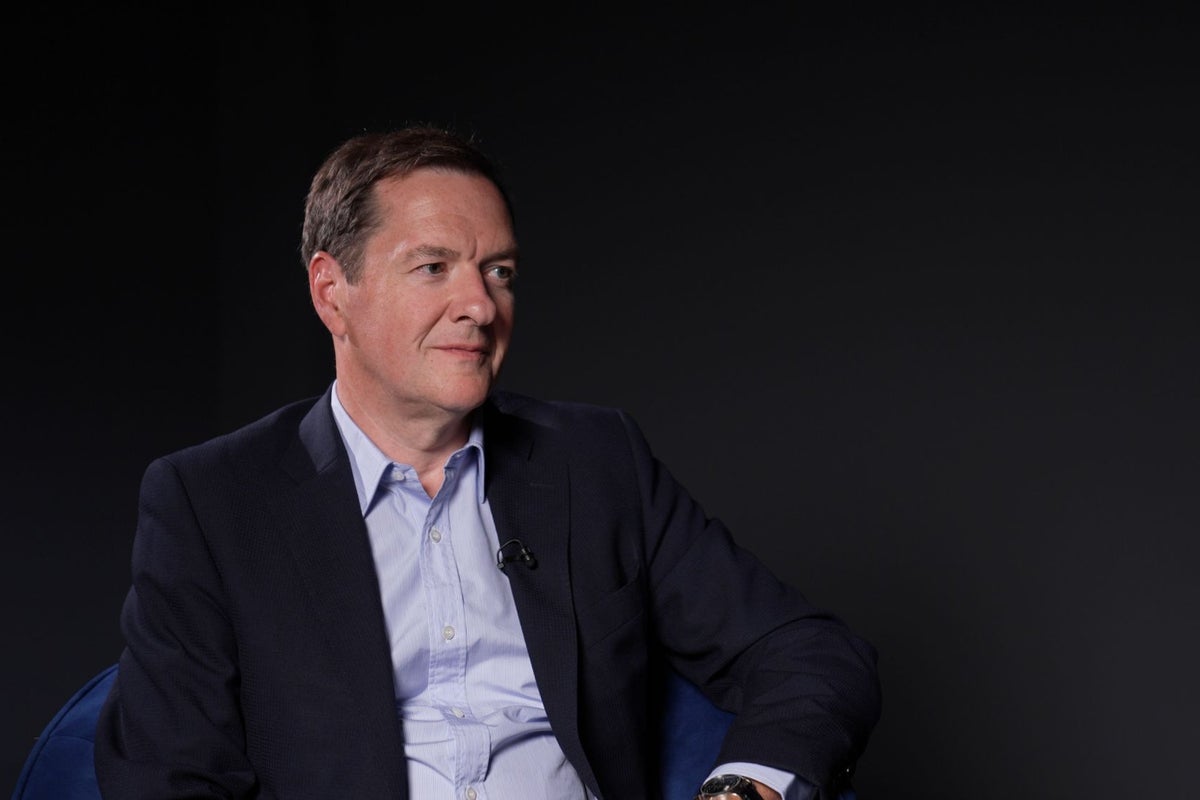
George Osborne, the former chancellor who saw his political career end with the Brexit referendum result a decade ago, has called for Britain to rejoin the European Union's customs union, arguing that leaving it was never properly debated and has devastated trade. His intervention is among the most direct from a senior Conservative figure since the 2016 vote.
The customs union case
Osborne's argument is straightforward. Rejoining the customs union, he says, would remove the trade barriers that have hampered British exports to the continent without requiring Britain to accept free movement of people, the issue that dominated the referendum campaign. The customs union and the single market are separate arrangements: the former governs tariffs on goods crossing borders, the latter covers regulatory alignment and services. Britain left both, but Osborne contends that the customs union exit was barely discussed.
"I would rejoin the customs union. It's a quite simple thing to do," he told The Independent. "That was never part of the Brexit debate. No one knew we were leaving it and it has had a devastating impact on trade." He dismissed the promise of alternative trade deals with the United States as "pretty fanciful now".
The UK's trade relationship with the EU has deteriorated measurably since the end of the transition period. Office for National Statistics data has consistently shown that trade with the EU as a share of total UK trade has declined, with customs checks, rules-of-origin requirements and regulatory divergence adding friction that businesses, particularly smaller ones, struggle to absorb.
A conspiracy of silence
Osborne's frustration extends beyond policy to what he describes as a collective refusal to acknowledge what has happened. "There's been a kind of conspiracy of silence about it," he said. "People now realise you can't look at Britain's growth problem without beginning to think, 'how can we revive trade with the continent, how can we get investment?'"
He named Andy Burnham, the mayor of Greater Manchester, as someone who should be making the case. Burnham has previously expressed a desire for Britain to rejoin the EU, but has recommitted to Labour's manifesto pledge not to seek membership of the EU, the single market or the customs union. Osborne said he did not understand the hesitation: unlike the single market, the customs union does not require free movement, which he acknowledged remains politically difficult to sell to British voters.
The reluctance is not hard to explain. Both main parties have calculated that reopening the Brexit debate risks reactivating the divisions that consumed British politics for years. Keir Starmer's Labour government was elected on an explicit promise not to take Britain back into the EU, the single market or the customs union. The Conservative opposition, under Kemi Badenoch, has no incentive to challenge the referendum result either.
Defence and the European rethink
Osborne pointed to defence as evidence that the Brexit vote's assumptions have already unravelled. In 2016, he said, voters were hostile to deeper European defence cooperation. Russia's invasion of Ukraine has reversed that position entirely. "Britain's security was intimately tied up with the continent, which it always was," he said, drawing a parallel with the Bayeux Tapestry, which he has helped bring to London as British Museum chair. The tapestry, depicting the Norman conquest, is a reminder that England's entanglement with the continent predates any modern political arrangement.
Defending the coalition record
Osborne also used the interview to defend his record as chancellor during the 2010-2015 coalition government, a period defined by deep cuts to public spending that made him a target of sustained criticism from the left. He said he was not ashamed. "I'm proud of being a partner to David Cameron, forming a coalition government and offering Britain stable government for six years," he said, adding that people now look back at that period and say "Wow" compared with what followed.
The comparison is pointed. The coalition was followed by the Brexit crisis, Theresa May's minority government, Boris Johnson's chaotic tenure, Liz Truss's 49-day premiership, and now Starmer's Labour administration, which Osborne described as part of the "utter chaos" since. Whether voters share his nostalgia is another matter. The austerity programme he oversaw cut local government budgets, welfare payments and public services in ways that many argue contributed to the grievances that drove the Leave vote in the first place.
The Conservatives' voter problem
On the current Conservative Party, Osborne was blunt. He said the Tories and Labour had "swapped their voters without realising": the Conservatives traded the middle class for the working class, Labour did the reverse, and neither has come to terms with the shift. He noted that when he was chancellor, holding a university degree was a leading indicator of voting Conservative. Now, the reverse is true.
"Ultimately it is quite hard to out-Reform Reform," he said of Badenoch's strategy. "They have got a problem: they've got to try and squeeze Reform, but the best way to do that is to look like the most credible replacement to the Labour government." He also dismissed Badenoch's insistence that she would not do an electoral deal with Nigel Farage, predicting she would if it was the only path to power.
Osborne offered no clear path back for the Conservatives, noting that the party has not decided whether it is trying to win back Reform voters, Liberal Democrat voters or Labour voters in the seats around the M25 that it lost at the last election.
A familiar pattern
Osborne's comparison between Brexit and the Bayeux Tapestry is more than a convenient metaphor for a museum chairman. The tapestry, which depicts the Norman conquest of 1066, was never intended as a complete narrative; it tells a story that its audience already knew the ending of. Osborne's point is that Brexit, similarly, is not the end of the story. Britain's relationship with the continent will continue to evolve because the problems it faces, from immigration to technology regulation to defence, cannot be solved without European cooperation.
Whether that evolution extends to rejoining the customs union is a different question. The political constraints Osborne identifies are real. Starmer's government has no mandate for it and no appetite to spend political capital seeking one. The Conservative Party remains defined by Brexit. Public opinion has shifted towards favouring closer ties, but not yet towards the specific mechanism Osborne proposes. The conspiracy of silence he describes persists because breaking it carries risks that no current party leader is willing to take.
People mentioned
-
George Osborne
-
David Cameron
Organisations
British Museum · Conservative Party · European Union