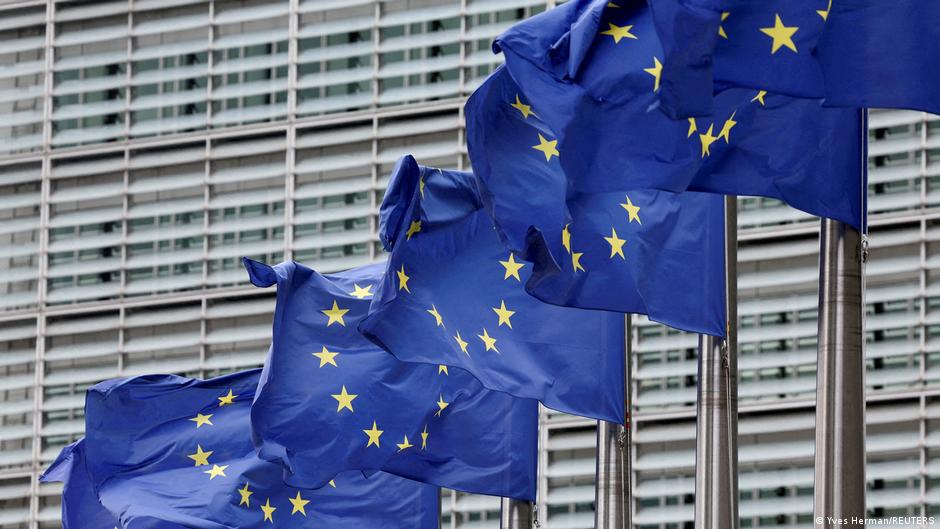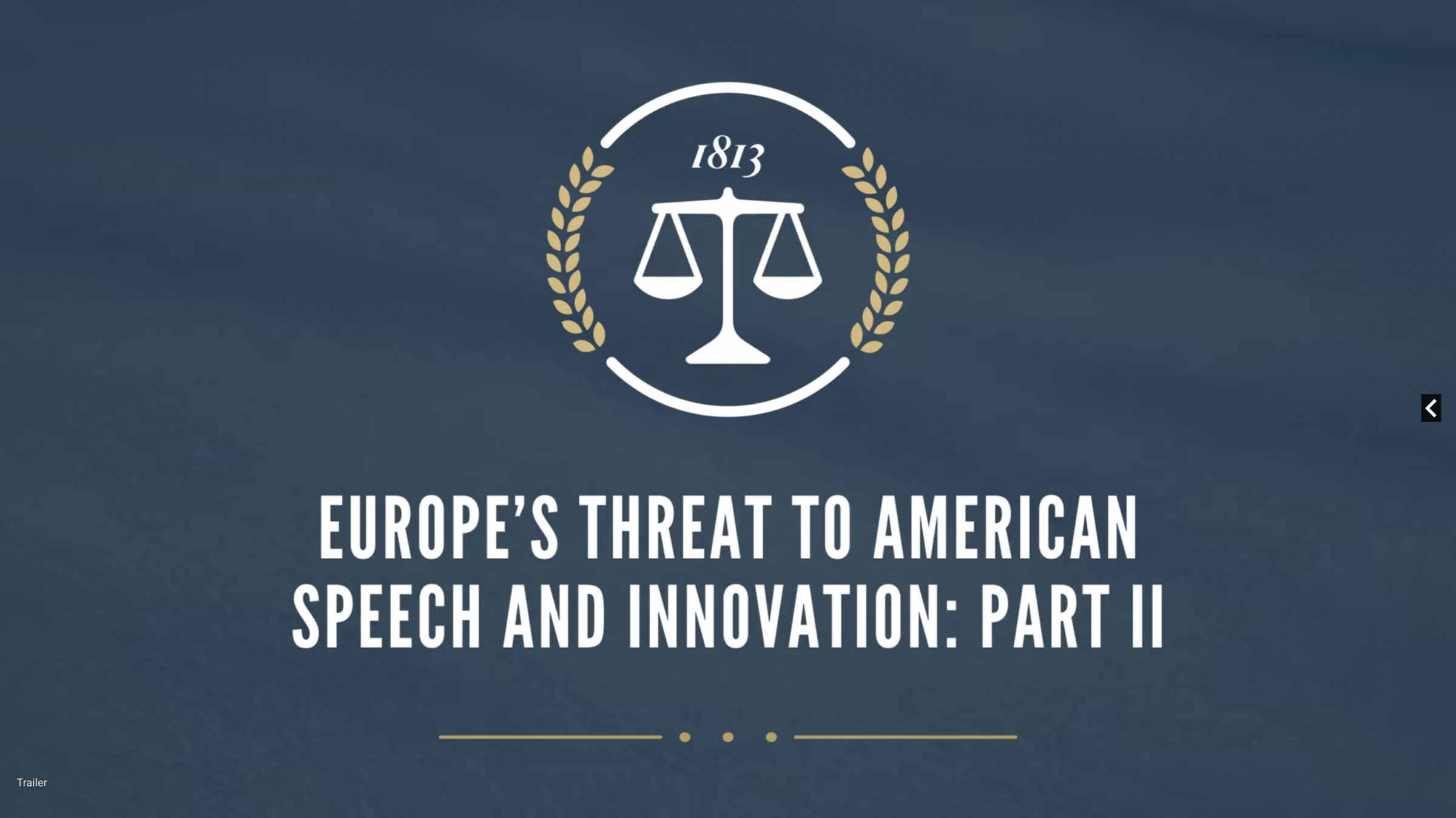
A 160-page interim report from the US House Judiciary Committee accuses the European Commission of running what it calls a decade-long effort to suppress political speech worldwide, including speech protected under the American constitution. The document, released on Tuesday under the title "The Foreign Censorship Threat, Part II", was assembled from tens of thousands of pages of internal communications subpoenaed from ten large technology companies, including Meta, Google, TikTok and X.
Its central claim is procedural rather than legal: that Commission officials convened more than 100 closed-door meetings with platforms between 2020 and 2025, and used them to push for the removal or downranking of content on subjects ranging from pandemic policy to immigration to gender identity. "Though often framed as combating so-called 'hate speech' or 'disinformation,' the commission worked to censor true information and political speech about some of the most important policy debates in recent history," the report states.
The 'Brussels effect' goes to the heart of the dispute
Most of what is described in the report would not, on its face, look like censorship to a European observer. Commission-led discussions with platforms about illegal content, election integrity and terrorist material are public, ongoing and broadly welcomed by governments across the bloc. The controversial element is reach. Because global platforms operate a single set of content rules, European regulatory expectations exported through voluntary codes and binding instruments such as the Digital Services Act end up shaping what American, Brazilian and Indian users see as well.
That mechanism, known in policy circles as the Brussels effect, is the load-bearing wall of the report. The committee argues it amounts to an "unprecedented incursion on American speech and political discourse by a foreign actor," because content moderation decisions ostensibly taken in Brussels alter the information environment of US citizens. The committee cites Commission Vice-President Věra Jourová's request for a meeting with TikTok chief executive Shou Chew to discuss "US election preparations" ahead of the 2024 presidential vote as the clearest example.
What the Commission actually said, and to whom
The European Commission has spent two days pushing back hard. Its digital affairs spokesman Thomas Regnier described the allegations as "pure nonsense" and "completely unfounded," and pointed to freedom of expression as a value the EU says it treats as fundamental. A February 2025 letter to Jordan from the Commission's tech chief, Henna Virkkunen, made a sharper historical point: "many Europeans have living memories of censorship and persecution during the Cold War under communist regimes," she wrote, arguing that European content rules were designed precisely to avoid repeating that experience.
On substance, the Commission argues that voluntary hate-speech and disinformation codes were always framed as interim measures pending the DSA, and that the DSA itself, which took full effect in 2024, was negotiated and adopted by the European Parliament and the Council of the European Union with explicit protections for freedom of expression built in.
Guidelines, euphemisms and the question of intent
The report's most politically charged finding concerns a 2023 publication by the EU Internet Forum, a Commission-chaired initiative that brings together governments, Europol and industry. The committee says the document listed "populist rhetoric," "anti-government/anti-EU" sentiment, "political satire" and "meme subculture" as categories of "borderline content" with potential links to violent extremism that platforms should moderate. The Commission responds that the forum's mandate covers terrorism, child sexual abuse and trafficking, and that the categories are descriptive of online radicalisation pathways, not instructions to censor political speech.
Internal TikTok emails cited in the report show the company monitoring "satire related to vaccinations" in response to Commission pressure as early as April 2020. Whether that constitutes censorship, prudent safety work or simply platform over-compliance is a question on which reasonable observers can disagree, and the report does not engage with that nuance.
The €120 million X fine as exhibit A
The report treats the European Commission's December 2025 decision to fine X €120 million for breaches of the DSA, including flaws in its paid verification system and restrictions on researcher data access, as evidence of political retaliation rather than routine enforcement. An analysis published by Tech Policy Press has since pointed out that the DSA restricts researcher access to data needed to assess EU-specific systemic risks, not American user data, undermining the report's framing of the fine as an attack on US speech.
That detail matters because the report's broader argument depends on the proposition that EU enforcement is calibrated against American politics rather than European law. If the fine is what the Commission says it is, a procedural penalty for non-compliance with transparency duties, then the case for treating it as censorship looks weaker.
A widening transatlantic front
The report did not land in a vacuum. In December 2025, US Secretary of State Marco Rubio announced visa restrictions on five Europeans he described as part of a "global censorship-industrial complex," a list understood to include Thierry Breton, the former European Commissioner for Internal Market who had clashed publicly with Elon Musk over X's compliance with the DSA.
On the same day the Judiciary Committee released its findings, French police officers searched X's Paris office and summoned Musk for questioning in April about the platform's algorithm and data practices. A group of German non-governmental organisations filed a separate election-data lawsuit against X the same day, seeking greater transparency over how political debates are mediated on the platform.
Wednesday's hearing and the speakers it chose
The committee's Wednesday hearing featured two witnesses whose cases have become rallying points for critics of European speech regulation. Graham Linehan, the Irish comedy writer behind Father Ted, was arrested at Heathrow Airport in September 2025 over tweets about gender issues and now lives in the United States. Päivi Räsänen, a Finnish MP, is facing prosecution in Finland over comments about homosexuality. Both are likely to use the platform to argue, as the report does, that European enforcement has spilled beyond Europe's borders.
The report also flags elections in the Netherlands, France, Germany, Poland, Spain, Belgium and Ireland as occasions on which Commission officials allegedly pressed platforms, and singles out Ireland's media regulator Coimisiún na Meán for hosting DSA election roundtables. That focus on Ireland is not coincidental: most large US platforms are headquartered in Dublin and regulated primarily under Irish and EU law.
People mentioned
-
Věra Jourová
-
Graham Linehan
-
Päivi Räsänen
Organisations
House Judiciary Committee · European Commission · TikTok · Meta · Google · EU Internet Forum