American defence officials delivered a blunt message to European capitals this week: the continent's remilitarisation efforts cannot lose momentum, and financial commitments to Ukraine must translate into actual weapons deliveries. The warning came during a virtual gathering of 50 nations convened to secure 300 Patriot missile interceptors for Kyiv's air defence network.
Elbridge Colby, the US undersecretary of defence, opened the Ukraine contact group meeting by praising Ukraine's recent defensive operations. He argued these demonstrated Europe's capacity to lead its own continental security rather than depend indefinitely on American protection. Yet his remarks carried an underlying pressure that European governments have heard repeatedly since Donald Trump returned to the White House.
The administration has made clear that European nations should increase defence spending substantially and purchase American weapons systems for transfer to Ukraine through Nato coordination mechanisms. The Patriot interceptor programme exemplifies this approach: Washington wants allies to fund and supply the missiles rather than drawing exclusively from US stockpiles.
The Patriot shortfall and its consequences
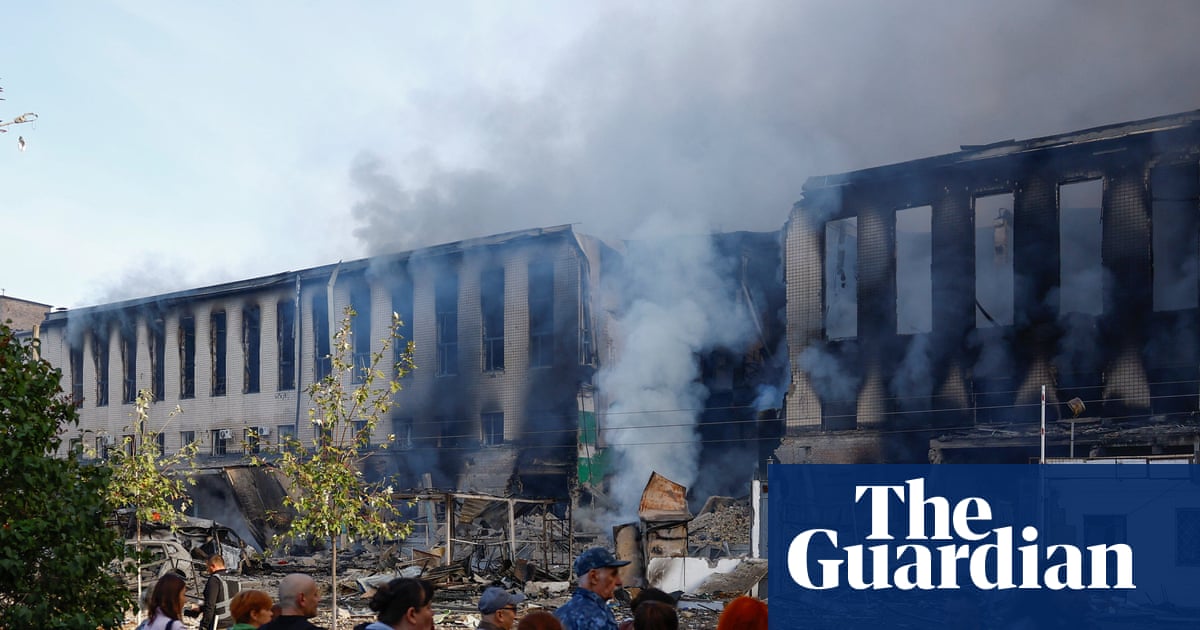
Ukraine's inability to intercept Russian ballistic missiles has produced measurable human and economic costs over the summer months. Civilian casualties climbed to their highest point since May 2022 as attacks on cities continued nearly without interruption. Food storage facilities and logistics warehouses have been destroyed, complicating both domestic supply chains and export operations.
Yevhen Khmara, Ukraine's defence minister, stated plainly that the ballistic defence situation remains difficult precisely because of insufficient Patriot missiles. He noted the Kremlin understands this vulnerability and actively exploits it in targeting decisions. The mathematical reality is stark: each interceptor costs approximately $3m, meaning the 300 missiles Ukraine seeks represent nearly $1bn in equipment.
Wes Streeting, the UK defence secretary, outlined Ukraine's full requirements during the meeting. Beyond the 300 Patriot missiles, Kyiv needs 500 air-to-air interceptors with counter-cruise missile capability and $2bn for drone programmes. The British government announced a £100m commitment for air defence equipment before the virtual session began, though this covers only a fraction of the total requirement.
European commitments vary by country
Germany's defence minister Boris Pistorius pledged his country would donate older Patriot Pac-2 interceptors from existing army stocks. He used his opening remarks to encourage other Ukraine allies to make similar contributions. The German approach differs from the British model: Berlin is releasing stored equipment while London is purchasing new systems from American manufacturers.
Both approaches face constraints. Older interceptors may require maintenance before deployment, while new purchases depend on US production capacity and delivery timelines. The broader question remains whether European defence industrial capacity can expand quickly enough to meet both continental security needs and Ukraine's immediate requirements.
Ukraine's budget gap threatens operations
Beyond equipment shortages, Kyiv faces a €23bn deficit in its defence budget for this year. Khmara indicated this shortfall could interrupt drone investment programmes that have become central to Ukraine's asymmetric warfare capabilities. The Ukrainian government hopes the European Union will accelerate disbursement of a €90bn two-year loan facility to help close the gap.
The timing of EU funding matters operationally. Drone programmes require continuous investment in components, software development and operator training. Interruptions would degrade capabilities that Ukraine has spent years building. European capitals must decide whether to front-load financial support or maintain the original disbursement schedule.
Parallel peace efforts continue
While defence ministers discussed weapons deliveries, diplomatic channels pursued separate tracks. US envoys Steve Witkoff and Jared Kushner visited Kyiv and Moscow within days of each other, marking the first such trips to discuss potential peace proposals. No breakthrough emerged from these conversations.
The Kremlin continues to demand territorial concessions and other conditions for ending the war. Meanwhile, UK prime minister Andy Burnham spoke with President Trump on Monday, with both leaders agreeing on the need to work towards a ceasefire preventing further loss of life. The gap between ceasefire discussions and battlefield realities remains substantial.
What the numbers reveal
The financial scale of European commitments becomes clearer when examining specific figures. The UK's £100m pledge sounds substantial until compared against the $3m per Patriot interceptor. Germany's decision to release stored Pac-2 missiles avoids new expenditure but depletes reserves that may need replacement. Ukraine's €23bn budget gap exceeds what any single European nation has committed this year.
Colby's insistence that real money and industrial capacity must replace words reflects Washington's frustration with announcement-to-delivery gaps. European governments have made numerous public commitments to Ukraine support. The contact group meeting sought to convert those commitments into specific, quantified equipment transfers with timelines.
People mentioned
Organisations
Pentagon · Nato · European Union · Ukrainian government · UK government · German government