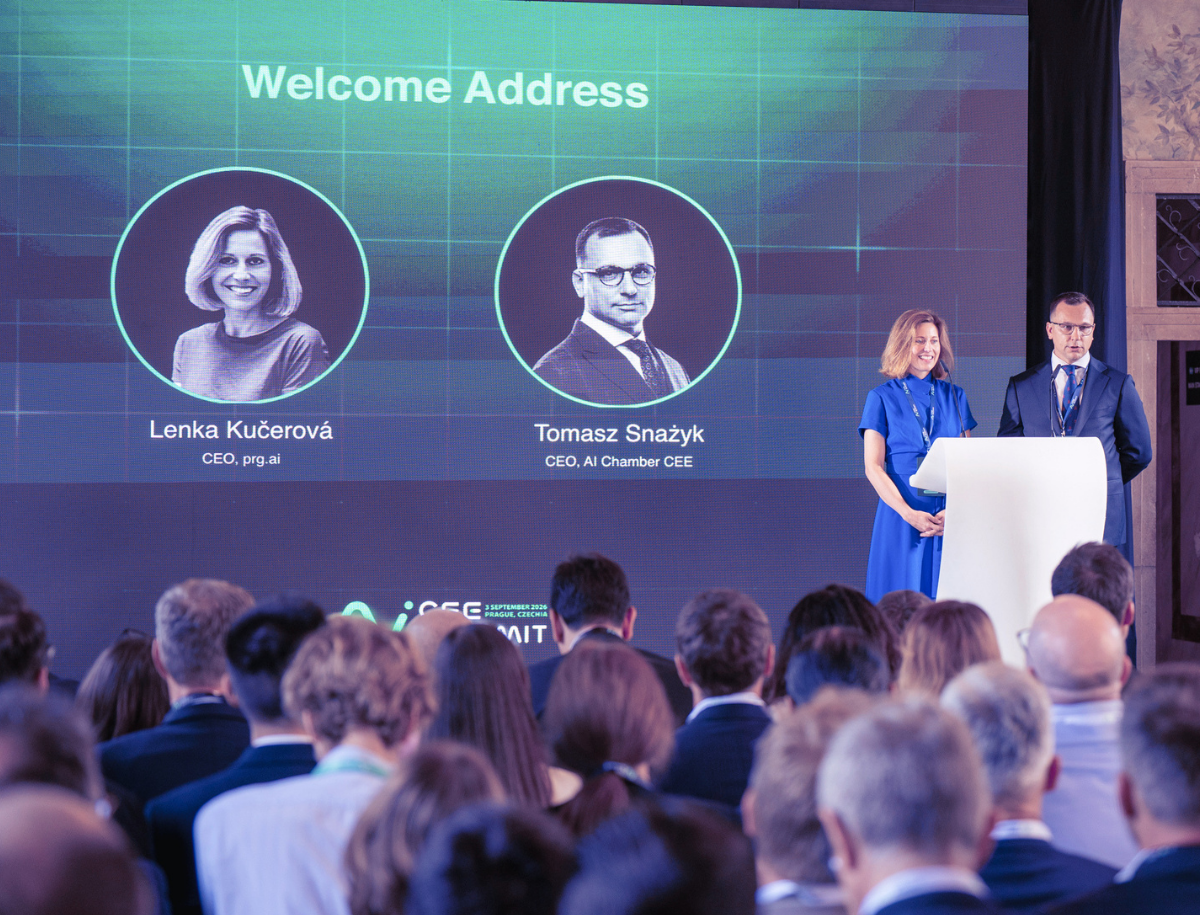
Nine governments from Central and Eastern Europe signed the Prague Declaration on Artificial Intelligence on 3 September, committing to align their positions on European Union AI policy and to share computing infrastructure. The agreement, signed at the close of the first CEE AI Summit held at Prague's Martinický Palace, covers Czechia, Slovakia, Poland, Croatia, Hungary, Lithuania, Latvia, Slovenia and Romania.
The declaration is the first formal attempt by the region to present a common front in Brussels on a file that is reshaping European industrial policy. Until now, CEE capitals have tended to react individually to proposals emanating from the European Commission's digital strategy unit, often in a defensive posture focused on shielding local industries rather than shaping rules.
What the declaration actually commits to
On paper, the text covers three areas: coordination on AI policy positions, the interconnection of national high-performance computing capacity and a permanent exchange of expertise. The signatories have also signed accompanying memoranda intended to convert these pledges into joint projects, though the summit released no budget figures and no timetable for delivery.
A particular focus is the planned network of so-called AI Factories and Gigafactories, the Commission's preferred vehicle for giving member states access to the kind of training compute that only the largest US and Chinese labs can currently afford. If the CEE network connects properly, a Lithuanian or Croatian startup could in principle tap Czech or Polish capacity without the data ever leaving the bloc.
A region built on talent, weakened by outflows
The talent question dominated the agenda. Several panels returned to a problem that has preoccupied regional policymakers for at least a decade: that CEE produces a steady stream of strong machine learning engineers, only to lose many of them to London, Berlin, Amsterdam and the United States. One session was bluntly titled "From Brain Drain to Brain Gain: Building Europe's Next AI Engineering Hub," drawing speakers from Lithuania, Slovakia, Slovenia, Poland and Romania.
Antoni Rytel of ElevenLabs, the voice AI company with substantial CEE operations, made the case that the region has a realistic competitive path, just not the one most observers assume. "We will never compete just by market scale, but what we can do, and what we have been doing, is compete on the quality of the people who work here," he said. His argument was that the visibility of globally successful companies, rather than raw headcount, is what shapes whether engineers choose to stay or leave.
Brussels sends senior figures, but no cheque
The Commission sent two of the officials who actually write European AI policy. Ekaterina Zaharieva, the Commissioner for Startups, Research and Innovation, opened the expert programme and joined a panel with Michal Pěchouček, rector of the Czech Technical University, and Vytautas Savickas, chief executive of data infrastructure firm Oxylabs. The afternoon featured Lucilla Sioli, who runs the EU AI Office, alongside MEP Diego Solier, Hungary's minister of science and technology Zoltán Tanács, and senior staff from Multiverse Computing and Google DeepMind.
The presence of those figures is a sign the Commission takes the regional effort seriously, but it is also a reminder of the asymmetry. CEE governments are coordinating among themselves; they are not negotiating with Brussels so much as presenting Brussels with a pre-agreed position. Whether that produces more favourable terms in the next round of the AI Act's implementing rules, due in 2027, is the open question.
Sovereignty, defence and the Ukraine shadow
Geopolitics sat closer to the surface than at most European tech conferences. A closed-door session covered dual-use technologies and the implications of the region's proximity to the war in Ukraine. Defence applications, including AI-enabled autonomous systems, were treated as a normal topic rather than an awkward sidebar. That reflects a wider shift in European procurement, in which NATO members are looking to onshore capabilities once bought almost exclusively from US suppliers.
Estonia's national AI programme sent a representative to the data panel, alongside the Czech grocery delivery company Rohlik and the Polish e-commerce operator Allegro, both of which have unusually large proprietary datasets for their size. Their presence suggests the summit organisers see commercial data, not just research data, as a strategic asset.
From declaration to delivery
The Prague meeting is the second concrete step under a process that began with the CEE AI Action Plan, launched in June 2025. That document set the ambition of making the region one of Europe's AI hubs, an aspiration that depended heavily on a coordinated follow-up. The declaration delivers the political alignment; the test will be whether the joint projects that are supposed to follow actually materialise, and whether the nine signatories manage to keep speaking with one voice when the Commission's next round of AI rules lands.
People mentioned
-
Lukáš Kačena
-
Ekaterina Zaharieva
-
Zoltán Tanács
-
Antoni Rytel
-
Michal Pěchouček
-
Vytautas Savickas
Organisations
AI Chamber of Poland · Czech National AI Platform · Czech Ministry of Industry and Trade · European Commission · European Parliament · ElevenLabs