A Singapore-based academic has intervened in a debate that resonates deeply in European capitals: whether a country's reliability as an international partner is diminished by the sheer number of treaties and organisations it joins. Tan Poh Hwee, president of the Asia Academy of Digital Economics and a corresponding fellow of the National Academy of Artificial Intelligence, published an opinion piece on 25 August arguing that the opposite of commitment is breach, not multiplicity. The piece was framed around artificial intelligence governance but its logic, Tan writes, reaches far beyond AI.
The Singapore view on institutional multiplicity
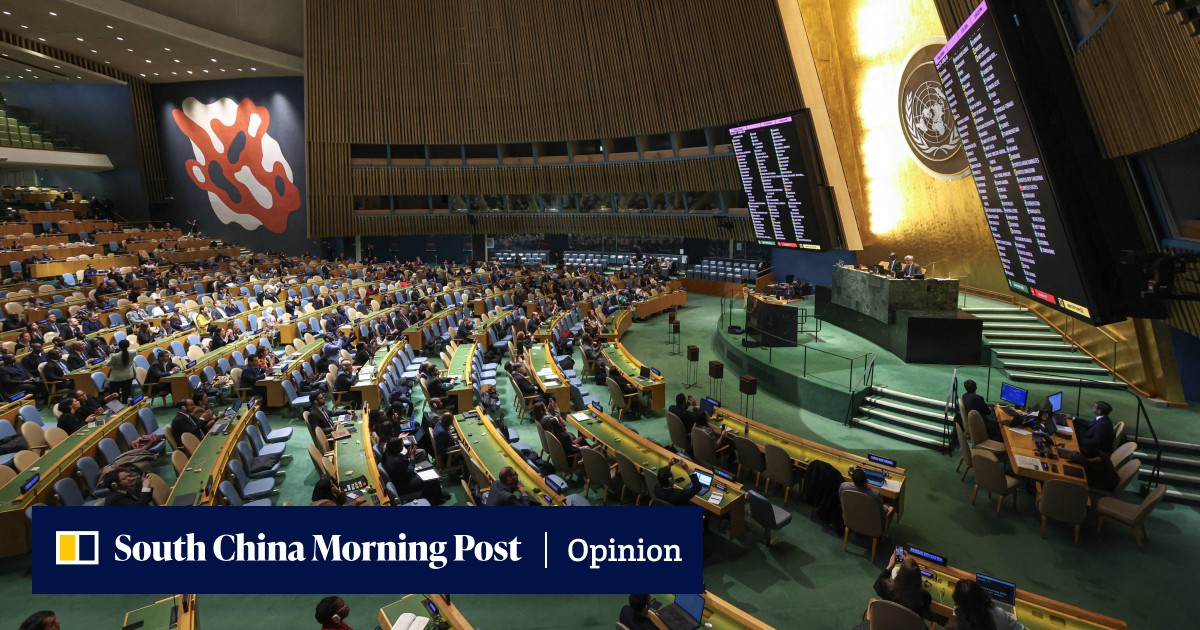
Singapore has long practised a foreign policy of broad, overlapping engagement. It is a member of the United Nations, the World Trade Organization, the Comprehensive and Progressive Agreement for Trans-Pacific Partnership, the Regional Comprehensive Economic Partnership, the ASEAN Defence Ministers' Meeting Plus, and numerous other groupings. That pattern is not accidental. For a small, trade-dependent city-state, exclusion from any relevant forum carries immediate economic and security costs. Tan's argument formalises what Singapore's diplomats have practised for decades: that signing a declaration in one room does not invalidate a pledge made in another.
The opinion piece identifies a seductive but dangerous demand now facing governments: prove the depth of your commitment by closing the door on everyone else. Tan calls this identity-based exclusivity, the idea that true allegiance requires institutional monogamy. He contrasts it with obligation-based exclusivity, where a specific treaty, a mutual defence clause, a non-proliferation commitment, genuinely requires a state to forego contradictory actions. The distinction matters because international institutions are becoming more fragmented and competitive, not less.
Why the argument lands in Europe
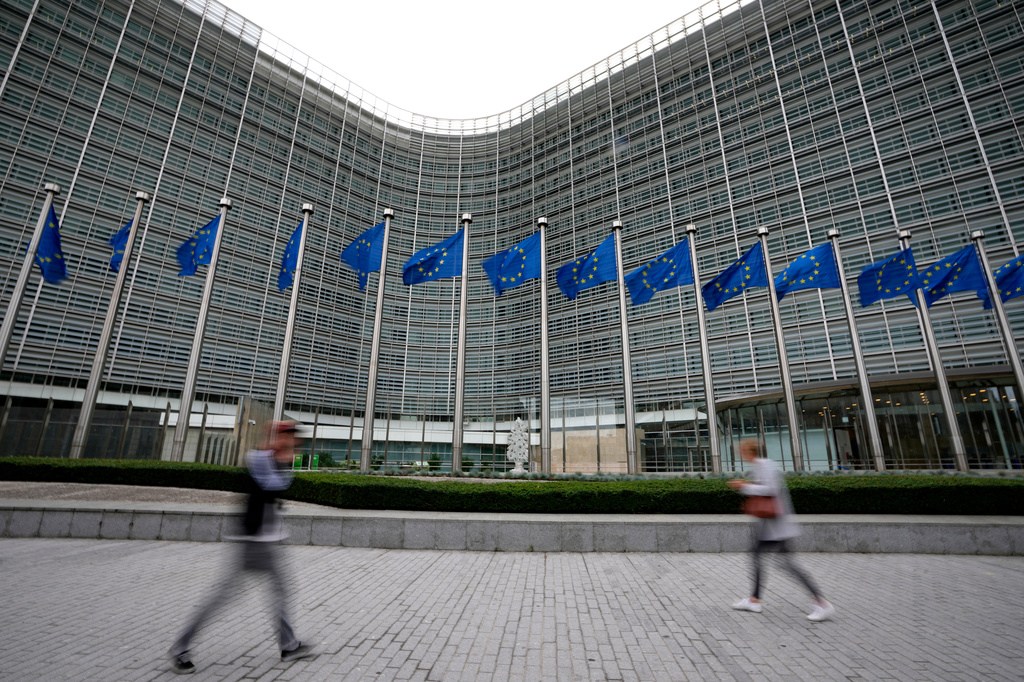
European capitals know this terrain intimately. Every EU member state belongs to the Union itself, to NATO (with the exception of Austria, Cyprus, Ireland and Malta), to the OECD, to the WTO, to the Council of Europe, to the OSCE, and to a thicket of regional formats from the Nordic Council to the Bucharest Nine. France, Germany and Italy also sit in the G7 and the G20. The United Kingdom, though no longer an EU member, retains memberships across the same lattice. If multiplicity signalled unreliability, the entire European security and economic architecture would be suspect.
Yet the charge of dilution surfaces regularly. When the EU pursued its Global Gateway infrastructure initiative, critics asked whether it duplicated the G7's Partnership for Global Infrastructure and Investment. When the European Commission proposed a European Defence Fund, NATO officials questioned whether it would divert resources from alliance capability targets. When France pushed for European strategic autonomy, eastern members warned it signalled a weakening of the transatlantic bond. Each debate implicitly treats institutional breadth as a zero-sum game.
Obligation versus identity in European practice
Tan's distinction between obligation-based and identity-based exclusivity maps cleanly onto European experience. Article 5 of the North Atlantic Treaty is obligation-based exclusivity: an armed attack on one ally is considered an attack on all, and the response is not optional. The EU's mutual assistance clause under Article 42(7) of the Treaty on European Union operates similarly. These are hard commitments that constrain behaviour in other forums. A country cannot credibly promise to defend an ally in NATO while simultaneously pledging neutrality in a conflicting bloc.
Identity-based exclusivity is different. It demands that a state signal loyalty by refusing to join, or by downgrading, parallel institutions. The logic appeared during the Cold War, when non-alignment was treated as a moral category rather than a tactical choice. It reappears today when analysts argue that European participation in China-led initiatives such as the Asian Infrastructure Investment Bank, joined by Germany, France, the UK and Italy among others, undermines the rules-based order. Tan's point is that the AIIB's governance rules, not the fact of membership, determine whether a European shareholder is breaching its other obligations.
The free-rider problem is orthogonal to membership counts
One of Tan's sharper observations is that free-riding and multiplicity are independent variables. A country can belong to a single alliance and still shirk its duties; another can participate in a dozen organisations while paying its dues, implementing rules and protecting sensitive information. The evidence supports him. Greece and Turkey, both NATO members since 1952, have repeatedly clashed over Aegean airspace and maritime boundaries without either leaving the alliance. Their reliability as allies is tested by those disputes, not by their simultaneous membership in the OECD, the WTO and the Council of Europe.
Conversely, the EU's own budget negotiations reveal free-riding within a single institutional framework. Net contributors and net recipients argue over the multiannual financial framework every seven years, with some members consistently pushing for rebates or opt-outs. The number of EU members, 27, tells you nothing about which capitals meet their cohesion fund absorption targets or their defence spending pledges. Compliance is a behavioural question, not a arithmetic one.
AI governance as the entry point
Tan's piece was prompted by the proliferation of AI governance initiatives: the Global Partnership on Artificial Intelligence, the OECD AI Principles, the UNESCO Recommendation on the Ethics of AI, the EU's AI Act, the US-led Political Declaration on Responsible Military Use of AI, the Bletchley Park process, the Seoul summit, and a growing list of bilateral and minilateral dialogues. Governments are being pressed to choose lanes. The United States has signalled that deep alignment on AI safety standards may require limiting data flows to jurisdictions with different regulatory philosophies. China has built its own standard-setting track through the Belt and Road digital silk road.
Europe sits in the middle. The European Commission wants the AI Act to become a global benchmark, which requires engagement with every forum where standards are written. At the same time, the EU-US Trade and Technology Council demands regulatory convergence with Washington. European companies, from ASML to SAP, need access to Chinese markets and supply chains. Tan's warning applies directly: if Europe treats each AI forum as a loyalty test, it will end up in a smaller room with less influence over the standards that will govern its own digital economy.
Strategic autonomy and the exclusivity trap
The concept of European strategic autonomy, championed by Emmanuel Macron and endorsed in various forms by the European Council, is often framed as a move toward identity-based exclusivity: Europe must be able to act alone, therefore it must build its own institutions, its own capabilities, its own standards. The risk Tan identifies is that autonomy becomes autarky. If the EU builds a defence industrial base that duplicates NATO's rather than complementing it, the result is not stronger European pillars but two weaker structures competing for the same budgets and talent.
The same dynamic appears in trade. The EU has negotiated free trade agreements with Canada, Japan, Singapore, Vietnam, Mexico and the Mercosur bloc, while simultaneously participating in WTO reform talks and the Indo-Pacific Economic Framework. Each agreement contains rules of origin, regulatory cooperation chapters and dispute settlement mechanisms that overlap. Critics say this creates a spaghetti bowl of conflicting obligations. Tan would say the problem is not the number of bowls but whether the recipes contradict each other. The EU's practice of aligning FTA chapters with WTO-plus standards suggests it manages the multiplicity rather than succumbing to it.
What the data on compliance actually shows
Empirical work on treaty compliance supports Tan's scepticism toward the multiplicity critique. Studies by the OECD on peer reviews of anti-bribery conventions, by the WTO on trade policy reviews, and by NATO on defence investment pledges all find that compliance correlates with domestic political capacity, judicial independence and bureaucratic quality, not with the number of treaties a state has ratified. Countries with strong administrative states implement more of what they sign, regardless of how much they sign. Countries with weak implementation capacity struggle even with a single complex agreement.
This has a direct European implication. The next enlargement round, Ukraine, Moldova, the Western Balkans, will add members with vastly different administrative capacities. The EU's absorption capacity debate usually focuses on budget shares and voting weights. Tan's framework suggests the real question is whether candidate countries can implement the acquis across dozens of policy areas simultaneously. If they cannot, adding them to more institutions (the Schengen area, the euro, the banking union) will not improve compliance; it will simply increase the number of breaches.
The diplomatic costs of performative exclusivity
There is a diplomatic cost to performing exclusivity. When the EU insisted that its Eastern Partnership countries choose between association agreements with Brussels and membership in the Eurasian Economic Union, the result was not clearer alignment but frozen conflicts and lost leverage. Ukraine's 2013 decision point was framed as a binary choice; the Maidan uprising followed. A more flexible architecture, allowing deep and comprehensive free trade with the EU while maintaining customs cooperation with Russia, might have produced a different trajectory. Tan's logic suggests that the demand for identity-based exclusivity created a crisis that obligation-based flexibility could have managed.
The same lesson applies to the Global South. African, Latin American and Asian capitals increasingly resist pressure to pick sides between Western and Chinese-led initiatives. They join the Belt and Road, the African Continental Free Trade Area, the EU's Global Gateway, and the US's Prosper Africa simultaneously. European diplomats who interpret this as strategic hedging rather than pragmatic portfolio management misread the calculation. These countries are not signalling indifference to rules; they are maximising access to capital, technology and markets while negotiating the terms of each engagement.
What European policymakers should take from this
The practical upshot for Brussels and national capitals is not to join every club on offer. It is to stop treating institutional breadth as a proxy for strategic confusion. The EU's credibility as a global actor depends on whether the AI Act is enforced consistently, whether the Carbon Border Adjustment Mechanism survives WTO scrutiny, whether the European Peace Facility delivers artillery shells to Ukraine on schedule. Those are obligation questions. Whether the Commission also participates in the Global Partnership on AI, the OECD AI Principles review, and the UN's Global Digital Compact is an identity question, and the answer should be yes, provided the substantive commitments do not contradict.
People mentioned
-
Tan Poh Hwee
Organisations
Asia Academy of Digital Economics · National Academy of Artificial Intelligence · European Union · NATO · OECD · World Trade Organization