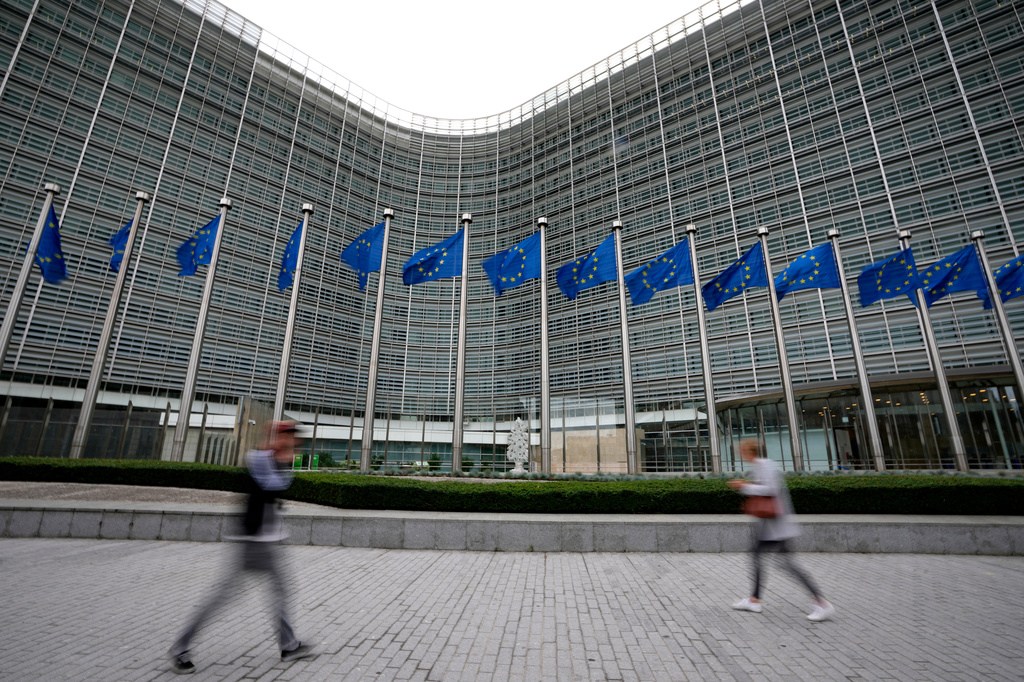
Washington is moving from rhetoric to formal trade action against the European Union's digital regulatory framework. The Trump administration has announced plans to open a Section 301 investigation into whether the Digital Markets Act and the proposed EU Space Act constitute discriminatory trade practices that disadvantage American technology companies. The investigation, confirmed by the Office of the US Trade Representative, marks the most significant escalation yet in a transatlantic dispute that has been building since the DMA entered into force in 2023.
The Digital Markets Act in Washington's crosshairs
The DMA, which the European Commission describes as a competition and consumer protection measure, has designated seven gatekeepers to date. Five are American: Alphabet, Amazon, Apple, Meta and Microsoft. Since enforcement began, the Commission has levied €1.59 billion in fines against US firms under the DMA alone, including a €890 million penalty against Google in July 2026 for non-compliance with interoperability and self-preferencing requirements. Those fines sit atop billions more in separate antitrust decisions against the same companies stretching back more than a decade.
In Brussels, the legislation is framed as a tool to ensure fair digital markets and strengthen European digital sovereignty. Commission officials argue the thresholds, market capitalisation above €75 billion, annual EU turnover above €7.5 billion, and 45 million monthly active users, are objective and apply regardless of nationality. But in Washington, the disproportionate impact on US firms is viewed as evidence of discriminatory intent. The US Chamber of Commerce has calculated that compliance costs for the five American gatekeepers exceed €2.3 billion annually, a figure the Commission disputes.
Space Act provisions draw State Department objections
The proposed EU Space Act, currently moving through the European Parliament and the Council, has added a second front to the dispute. The original Commission text creates a "giga-constellation" category beginning at 1,000 satellites, a threshold that would capture SpaceX's Starlink constellation, now exceeding 6,000 operational satellites, while no European operator currently approaches that scale. The draft also included reflectivity standards that industry analysts say would fall hardest on operators flying at lower altitudes to deliver low-latency broadband, a market dominated by US companies.
The US State Department, SpaceX and the US Chamber of Commerce have all filed formal objections during the consultation period. In a submission seen by this publication, the State Department warned that parts of the Act "could create non-tariff barriers and impose unacceptable regulatory burdens on American companies." The European Parliament's industry committee has since proposed amendments raising the threshold and softening the reflectivity requirements, but the final text remains under negotiation between Parliament and the Council.
A coordinated US pushback
The Section 301 announcement did not emerge in isolation. Since taking office in January 2025, the second Trump administration has appointed a team that views EU digital regulation as a strategic threat to American technological leadership. Commerce Secretary Howard Lutnick and USTR Ambassador Jamieson Greer have placed the DMA and Space Act at the centre of trade discussions with Brussels, making clear that tariff relief on other sectors, including steel, aluminium and agricultural products, is contingent on progress on digital rules.
Andrew Puzder, the US Ambassador to the EU, has been delivering that message directly in Brussels since presenting credentials in March. Michael Kratsios, who served as US Chief Technology Officer during Trump's first term and now holds the White House science advisor role, has articulated the administration's core argument: that rules written to appear neutral but whose practical burdens fall overwhelmingly on American firms constitute a hostile act against US commerce, not legitimate regulation.
The China dimension
Underpinning the US position is a geopolitical calculation that transcends commercial interest. The White House AI Action Plan, published in February 2026, is explicitly built on reducing regulatory friction so American companies can maintain a lead in artificial intelligence. Washington argues that every month US firms spend on DMA compliance, redesigning operating systems, opening proprietary interfaces, sharing training data, is a month Chinese competitors gain.
That argument found powerful expression in July when the Commission ordered Google to provide competing AI services greater access to Android features and made AI chatbots with search functionality eligible to receive Google Search data. The decision effectively brought American AI assistants with search capabilities under the same rules governing traditional search engines. Critics in Washington say this strips the intellectual property protections that made the innovation commercially viable in the first place. The Commission counters that the remedy addresses a demonstrated risk of leveraging dominance in search into the adjacent AI market.
Europe's counter-narrative
Brussels rejects the discrimination charge. Commission officials point out that the DMA's thresholds were designed to capture firms with entrenched market power regardless of origin, and that European companies such as Spotify and Deutsche Telekom have been among the most vocal complainants about gatekeeper practices. They also note that the Space Act applies to any operator selling services into the EU market, and that the 1,000-satellite threshold reflects a genuine regulatory gap: no existing international framework governs mega-constellations of that scale.
European diplomats argue that the US characterization ignores the degree to which American platforms have shaped global digital markets to their advantage, and that the DMA represents a belated attempt to restore contestability. They also point to the €10 billion in annual revenue the five US gatekeepers generate in Europe, revenue that, in their view, carries an obligation to comply with democratically enacted rules.
Section 301 mechanics and timeline
Section 301 of the Trade Act of 1974 gives the USTR broad authority to investigate and retaliate against foreign trade practices that burden or restrict US commerce. The process typically begins with a formal notice in the Federal Register, followed by a public comment period and hearings. If USTR finds actionable practices, it can impose tariffs or other trade restrictions. During Trump's first term, Section 301 was used to challenge digital services taxes in France, Italy, Spain and the UK, resulting in suspended tariff threats after those countries agreed to withdraw their measures pending an OECD agreement.
The current investigation is expected to be announced formally within weeks. USTR has not specified whether it will target the DMA, the Space Act, or both. Industry sources in Brussels expect the initial notice to cast a wide net, covering not only the two flagship regulations but also the Digital Services Act, the AI Act's extraterritorial provisions, and national implementations of the EU's data governance framework. The investigation could take 12 to 18 months to conclude, though the administration has signalled it may move faster given the AI competition timeline.
People mentioned
-
Juan Andres Caro
Organisations
European Commission · US Department of Commerce · Office of the US Trade Representative · America First Policy Institute · SpaceX · US Chamber of Commerce