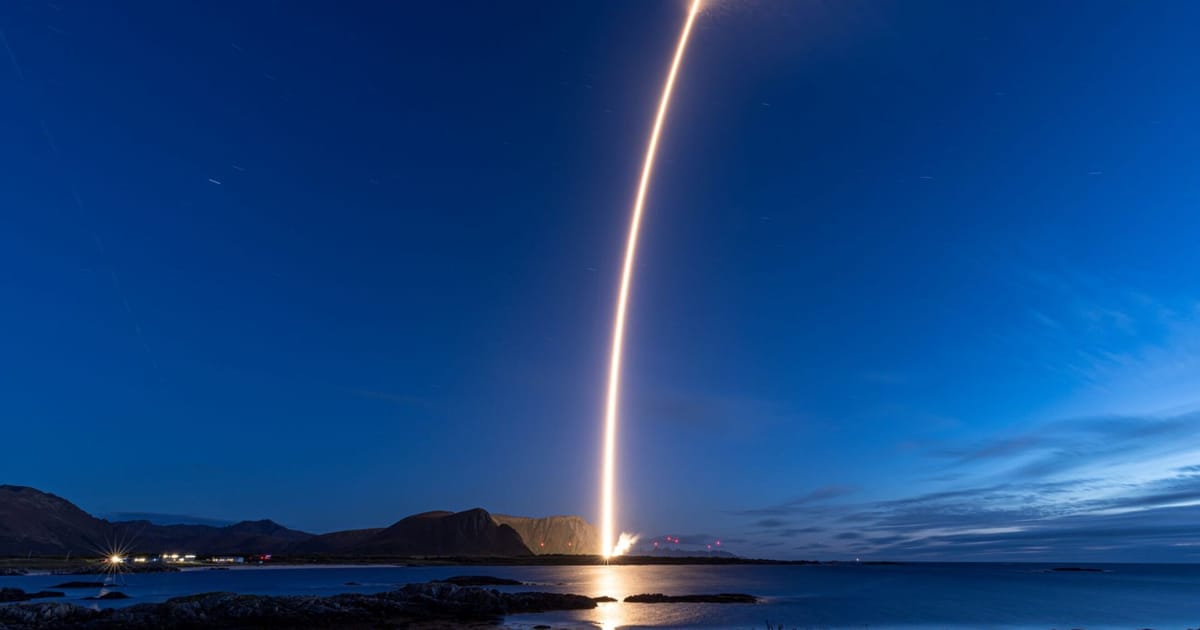
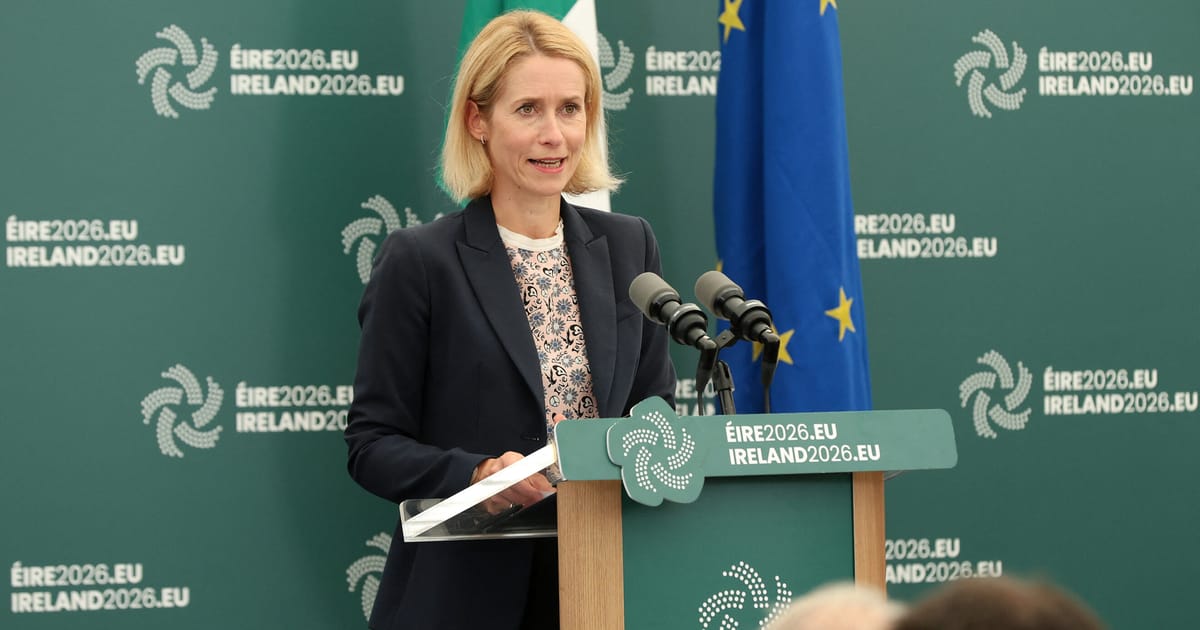
Airbus Defence and Space, France's Thales and Italy's Leonardo are preparing to sign a binding framework agreement by the end of 2026 that would fold their satellite operations into a single jointly owned company, the three groups have confirmed. The venture, known internally as Project Bromo, has been under discussion for years and was formally announced in 2025; it has now moved into the final stretch before being filed with the European Commission, where a ruling is expected by mid-2027.
Lorenzo Mariani, chief executive of Leonardo, confirmed the timetable in an interview with Handelsblatt. The framework agreement would lock in the ownership split, governance and asset perimeter before the deal is formally notified in Brussels. Once cleared, the new entity would become the largest dedicated satellite manufacturer in Europe and one of the few outside the United States with the scale to bid for entire government constellations.
The transaction is structured as a joint venture rather than a takeover, which the companies argue preserves a balance of French, Italian and German industrial influence inside a single corporate envelope. The arrangement echoes the earlier MBDA missile partnership, which has pooled missile activities across the same three groups since 2001.
Why the timetable has suddenly tightened
The acceleration has less to do with cost-cutting than with demand. European governments are ordering communications and reconnaissance satellites at a pace not seen since the late 1990s. Germany's Bundeswehr plans to spend €35 billion on space technology in the coming years, part of a broader post-2022 rearmament cycle triggered by the war in Ukraine and political pressure to guarantee independent military communications.
That windfall has already transformed the unit economics at Airbus Defence and Space. The division lost money in most of the last decade; in 2025 it returned roughly €800 million of profit, and Michael Schöllhorn, who runs the division, has told investors the figure could climb to as much as €1.3 billion by 2029. Thales and Leonardo have reported similar order books at their space activities, after years of losses that prompted the consolidation talks in the first place.
Closing the gap with SpaceX is the stated ambition
The companies' rationale is industrial survival. SpaceX operates the world's largest commercial satellite constellation, Starlink, and launches at a fraction of the cost of any European provider thanks to reusable Falcon 9 rockets. Amazon's Project Kuiper is adding capacity in low Earth orbit, while US primes such as Lockheed Martin and Northrop Grumman continue to dominate large geostationary government contracts.
European ministers have grown impatient. The EU's space and defence strategy explicitly called for consolidation to produce European champions capable of bidding for sovereign programmes without relying on US or Israeli subsystems. Pooling Airbus's and Thales Alenia Space's satellite manufacturing lines, and folding in Leonardo's space electronics and propulsion activities, is the response those ministers had been pressing for since at least the 2022 Versailles summit.
Smaller suppliers see a different picture
Not everyone in the European supplier base is convinced. Germany's mid-sized space companies, which provide subsystems, antennas and ground software to all three would-be parents, have raised concerns privately that a combined buyer with more than half of Europe's satellite manufacturing capacity could dictate prices and specifications for years. Similar worries are circulating in Spain and the Netherlands, where second-tier suppliers depend on orders from the same primes.
The history of European defence consolidation offers mixed lessons. MBDA has produced genuine export wins, but it has also narrowed the supplier base, and procurement officials in several capitals have openly complained about reduced competition in guided weapons. Whether Project Bromo would replicate that pattern, or whether the larger order book offsets the loss of rivalry, is the central question Brussels will have to resolve.
What the Commission will be weighing
The Commission will examine the deal under its standard merger regulation, with a preliminary Phase I ruling possible within 25 working days if no serious doubts arise, or a Phase II in-depth probe of up to 90 working days if competition concerns warrant it. Defence and security considerations can influence the assessment, although EU merger law does not contain a formal national-security exemption equivalent to the United States' CFIUS process; member states can, however, raise essential security interests through separate procedures.
The Commission has been willing to demand remedies in past aerospace deals. Its 2000 review of the Arianespace launcher venture imposed conditions on access to launch infrastructure, and the 2004 restructuring of EADS required governance concessions. Whether Project Bromo triggers similar demands, for example on second-sourcing, intellectual property sharing with smaller suppliers, or commitments to maintain European launch procurement, will shape what emerges from Brussels.
People mentioned
Organisations
Airbus Defence and Space · Thales · Leonardo · European Commission · Bundeswehr